

Elephant Twins Found Alive in Kenya
Last updated: September 6, 2026
4 min read
Elephant twins are one of the rarest sights in the wild, and a surviving pair is rarer still. In January 2022 a female elephant called Bora gave birth to twins in Kenya’s Samburu National Reserve, and against the odds both calves were alive and with their mother three months later. This is the story of why that mattered, why twins almost never make it, and what happened to them afterwards.
The twins, a male and a female, were first spotted in mid-January, roughly a day old, by guides from Elephant Watch Camp in Samburu. After that first sighting the family moved out of the reserve and were not seen for weeks, which is normal for a herd with newborns. Then in March a team from Ewaso Lions photographed them in a remote area outside the reserve, alive, well, and visibly gaining weight. For anyone who follows elephants, that confirmation was a small miracle.
Why elephant twins are so rare
African elephants normally produce a single calf every four to five years. Pregnancy lasts around 22 months, the longest of any land mammal, so reproduction is slow by design. Twins account for roughly one percent of elephant births, which makes any twin pregnancy unusual before the calves are even born.
The hard part comes after birth. A mother elephant produces enough milk for one calf, not two, and two newborns competing for that supply put enormous strain on her. In most twin cases one calf, and sometimes both, does not survive the first weeks, because there is not enough milk to go around. That is why surviving twins make headlines and ordinary single calves do not.
A grim precedent in Samburu
The Samburu ecosystem had seen this before, and it did not end well. The only previous recorded twin birth in the area was in 2006, in neighbouring Shaba National Reserve, and both calves died shortly afterwards. That history is exactly why the team was cautious about Bora’s pair in January and so relieved to see them again in March.
What Save the Elephants said
Iain Douglas-Hamilton, founder of Save the Elephants, has watched Samburu’s herds for decades and put the situation plainly. Speaking about Bora’s calves, he noted that elephant twins rarely survive as twins because one or both usually die, and that it is a big stress on the mother to have two calves to feed.
The circumstances made that stress worse, not better. These calves were born into drought, not into a good season. When the Ewaso Lions team found them again in March, Save the Elephants put the news exactly that way: despite the terrible drought, Bora had managed to feed both babies. The credit went to the mother, not to the conditions.
Why Bora looked like a good bet
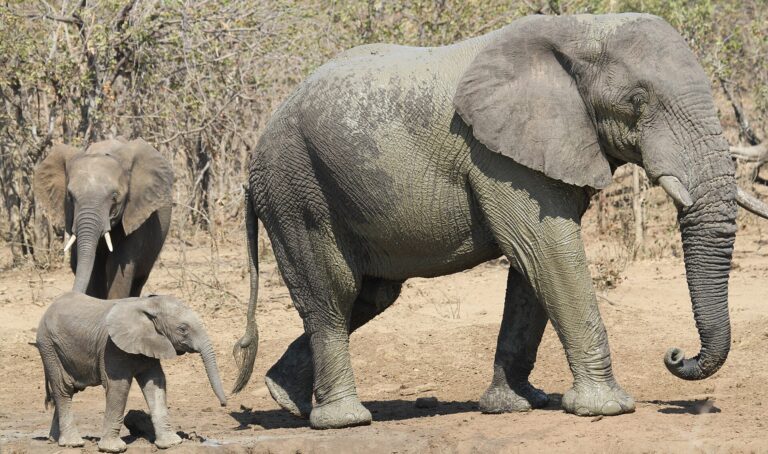
Bora is not a first-time parent. She is a member of the Winds II family group monitored in Samburu, and she had already raised a calf born in 2017, around five years old at the time of the twins’ birth and still travelling with the herd. An experienced mother who has brought one calf through weaning knows how to manage feeding, protection and the long walks to water.
Family helps too. Elephants live in tight matriarchal herds where older females, often called allomothers, shield and shepherd the youngest members. What Bora did not have was the other half of the equation. A twin pair needs an experienced mother and enough food in the landscape, and through 2022 northern Kenya could not supply the second.
What happened next
The drought kept going. Five consecutive rainy seasons failed across the Horn of Africa, and by late 2022 Kenya’s wildlife authorities had counted 205 elephant deaths attributed to it. In November 2022 Save the Elephants reported that the female twin had died. The male calf survived, and he and Bora were seen looking healthy and well fed.
That is a harder ending than the story seemed to promise in March, and it is the honest one. One of two is still a better outcome than Samburu’s previous twins managed, and it happened in the worst conditions the region had seen in decades. Bora’s skill as a mother is the part that held. The rain is the part that did not.
Samburu has since had a second set. In November 2023 a female called Alto was seen with twin calves, both female, the first there since Bora’s pair.
Elephant conservation gets measured one family at a time, and this is what that looks like from the inside. If you enjoy following elephant family life, you may also like our look at two calf sisters squabbling over their mother’s milk, a smaller drama from the same world.
Read next
- Elephant Conservation 2026: How to Save the Last Giants: Poaching trends, the 1989 ivory ban, the zoo and sanctuary debate, trophy hunting.
- Elephant Pregnancy: Why Gestation Lasts 22 Months: Twenty-two months is the longest gestation of any land mammal.
- Elephant Calves Fight Over Milk: A Sheldrick Wildlife Trust clip of two sisters squabbling over their mother’s milk, and what it shows about weaning, allomothering, and a former orphan raising wild-born calves.
- Orphaned Elephants Thriving on Goat Milk: A pandemic supply failure pushed Reteti Elephant Sanctuary onto locally bought goat milk.


the calf section, yeah. bora being only five years old with a previous calf already at that age is the bit i keep getting hung up on. african bushies usually wait longer between births. samburu has had decent rainfall the last two seasons so the timing might actually be right for once.
milk-sharing in twin elephants is barely documented because survival rates are so low. the Save The Elephants team has notes from a 2006 Samburu case where the mother actively favoured the stronger calf and the weaker one died within a week. Iain Douglas-Hamilton’s note on the stress is the polite version, in practice the mother often just cannot produce enough.
any chance you could expand on the Winds II herd dynamics? curious whether the matriarch’s presence changes survival odds for twin births specifically, or if it is just the mother’s milk production that matters. the Samburu records seem like the only decent dataset on this.
Ted, the Winds II matriarch question is one I should have spent more time on. Honestly the literature is thin, most of the published twin-survival work is from Amboseli (Moss, Lee) not Samburu. Bora having a previous calf at five years old is statistically unusual so the existing models do not quite fit. Will dig and follow up properly.