

Crocodile Attacks a Baby Elephant
Last updated: October 27, 2026
3 min read
In late July 2022 a short clip went round showing a crocodile lunging out of a waterhole and clamping onto a baby elephant’s trunk. The calf twists and flails, the herd scatters, and then the mother arrives, stamps on the reptile until it lets go, and walks her baby out. It was shared by the Indian civil servant Supriya Sahu, and the original location was never established, which is worth saying up front. What the footage does show clearly is why a trunk is the worst possible thing to lose and why a mother elephant reacts the way she does.
Why the trunk is the worst place to be bitten
The crocodile grabbed the one body part an elephant genuinely cannot do without. The trunk is a fusion of nose and upper lip, containing about 90,000 small muscle bundles (a 2023 microCT study published in Current Biology) and no bone at all. It handles breathing, smelling, drinking, feeding, touching, communicating and lifting. A calf that loses part of its trunk is disabled for life and struggles to feed and drink. That is why the calf fights so hard and why the mother responds with immediate lethal force rather than a warning.
How crocodiles hunt at the waterhole
Crocodiles are ambush predators. They do not run prey down. They lie almost fully submerged with only eyes and nostrils above the surface and wait, because a waterhole is the one place every land animal has to visit eventually. The strike is explosive: a crocodile can throw the front half of its body clear of the water in a fraction of a second.
An adult elephant is far beyond any crocodile. A calf at the water’s edge is not, and the trunk, which has to dip low to drink, is the reachable part. Crocodiles test other large animals the same way, including hippo calves, and they get more territorial in the breeding season, when a basking adult is much less willing to share a stretch of water.
India’s three crocodilians
If an encounter like this happens in India, one species is the likely candidate. India has three crocodilians, each in a different niche:
- Mugger crocodile (Crocodylus palustris): broad-snouted and the most widespread of the three, in lakes, marshes and slow rivers across the subcontinent. This is the species that shares inland waterholes with elephants.
- Saltwater crocodile (Crocodylus porosus): the largest living reptile, along the coasts and in mangrove estuaries such as the Sundarbans and Bhitarkanika.
- Gharial (Gavialis gangeticus): critically endangered, fish-eating, with a long thin snout. The IUCN assessment completed in 2017 estimated 300 to 900 mature gharials across India and Nepal.
Where gharials and muggers share a river they separate out their basking, feeding and nesting spots rather than compete head on. Crocodiles also hold a settled place in Indian culture, appearing in Hindu art and mythology as guardians of gateways and water.
How elephants manage the risk
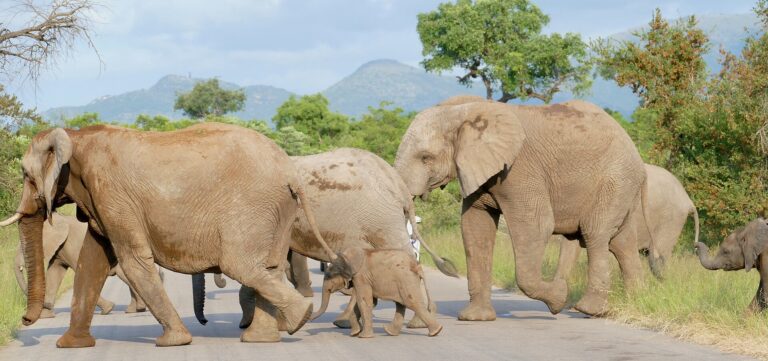
An attack like this is the exception. Herds manage waterhole risk in ways that cut the odds: adults tend to reach the edge first, and calves are usually kept toward the middle of the group, hemmed in by larger bodies. Elephants are strong swimmers and use the trunk as a snorkel in deep water, so they are not afraid of water itself, only of what is in it.
A herd that has had a close call at a particular spot tends to be visibly more careful there afterwards. That kind of learning, held by the matriarch and passed down, is the practical version of the elephant memory cliche.
What the mother’s reaction tells us
The striking part of the clip is not the attack, it is the response time. Elephants live in tight matriarchal herds where calves are raised cooperatively by mothers, sisters and aunts, and a mother will put herself between her calf and almost anything. She has the mass to make that work: an adult female weighs somewhere around 2,700 kg and can deliver a crushing stamp.
Crocodile attacks on calves are not new and are nowhere near common enough to affect elephant populations. What each clip does is show, in fifteen seconds, an animal whose trunk is its lifeline and a mother whose first instinct is to put her own body in the way. Our Asian elephant species profile covers the social side in more depth.
Updated 14 September 2026: dated the gharial population estimate.
Updated 27 October 2026: corrected the trunk muscle count to the 2023 microCT figure of about 90,000 fascicles.


the saltwater croc and gharial side of this is undercovered. mana pools had a near-miss in 2019 where a bull crossed and a croc shadowed the family for about a hundred metres before backing off. the seven-species-down-to-three figure for India is the bit i did not know, the territoriality during mating season explains a lot of the timing of these attacks.
some places marketed as elephant sanctuaries still allow bathing and contact in india, the line between welfare-grade and tourist-trap is blurrier than this piece suggests. crocodile-attack videos pull engagement but the day to day welfare issue is much more about chains and concrete enclosures imo. would rather see coverage of the sanctuary audits.
how does herd size correlate with calf protection in the wild though? you would think a bigger herd at a watering hole means more deterrent against opportunistic crocs but maybe the crowding actually puts younger calves at the edge where the croc gets the angle. would love to see the Save The Elephants data on this.
Jen, the herd-size question is genuinely contested. Larger groups put more eyes on the calves and more legs around the watering hole, but they also push the youngest to the periphery where the croc can isolate one. The Save The Elephants Tsavo data leans toward intermediate-size herds being the safest for calves, though the forest elephant social structure throws that off entirely.