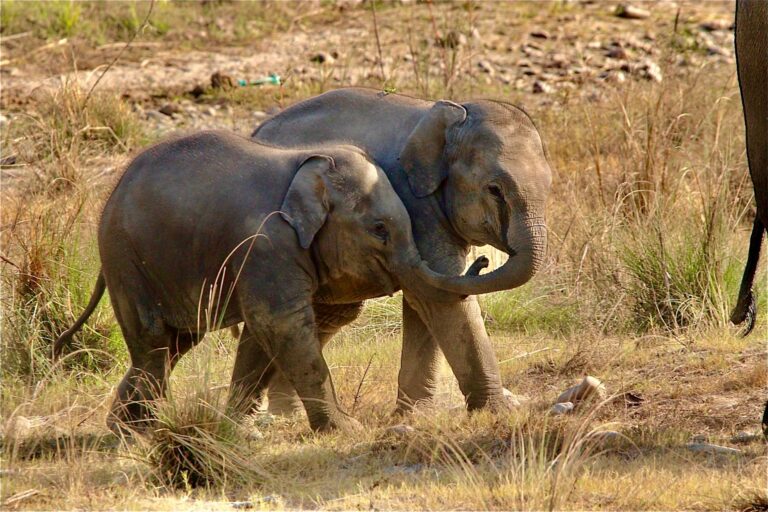
African Elephant Population Still Low Despite Decline In Poaching
Last updated: September 14, 2026
3 min read
Poaching of African elephants peaked in 2011 and has been falling for most of the years since. The population has not recovered at the same pace. Part of the reason is arithmetic: a species that loses half a region in a decade cannot breed its way back quickly. The rest is that ivory was never the only pressure on elephants, and for forest elephants it is no longer the biggest one.
What the poaching numbers actually show
The CITES Monitoring the Illegal Killing of Elephants programme, MIKE, tracks a measure called PIKE: the proportion of elephant carcasses found at monitored sites that were illegally killed. PIKE peaked in 2011. Wittemyer and colleagues, publishing in PNAS in 2014, used carcass data to estimate that around 100,000 African elephants were killed for ivory between 2010 and 2012, with roughly 40,000 of those in the 2011 peak year alone.
In October 2017, reporting on 2016 data, CITES said continental poaching had declined for the fifth year in a row. One specific claim in that report is often stretched: it was eastern Africa, not the continent, where poaching fell back to pre-2008 levels. More recently, CITES MIKE data shows poaching levels holding steady between 2020 and 2024. For forest elephants the improvement is clearer still, with the annual rate of population loss falling from around 7 percent a year over 2002 to 2011 to around 0.7 percent a year over 2016 to 2023.
Why are African elephant numbers still low?
First, the losses compound. The IUCN African Elephant Status Report 2016 found that eastern Africa, the region worst hit by poaching, had lost almost half its elephants over the preceding decade, driven mainly by a fall of more than 60 percent in Tanzania. Elephants breed slowly. A cow carries a calf for 22 months and raises one calf at a time, so a halved population does not rebuild in a few good years.
Second, killing has generally stayed ahead of replacement. CITES noted in 2017 that poaching rates across Africa remained above the rate at which elephant populations grow, meaning the overall number was still likely to be falling even as the trend improved. Eastern Africa was the exception that year: reported illegal killings there came in below reported natural deaths.
Third, and increasingly, the threat has changed shape. The December 2024 forest elephant assessment by the IUCN African Elephant Specialist Group identifies habitat loss and human-elephant conflict as the larger danger now, with industrial agriculture and mining cutting into forests that were remote a generation ago. Conservation leads working on that assessment report that conflict-related deaths have begun to exceed the number of elephants killed for ivory.
Where the population stands
Since 2021 the IUCN has assessed African elephants as two separate species, so a single continental total is misleading. The Great Elephant Census estimated 352,271 savanna elephants across 18 countries from surveys in 2014 and 2015. The species is listed as Endangered. The African forest elephant report released in November 2025 estimated 135,690 in areas surveyed from 2016 to 2022, and is listed as Critically Endangered. That forest figure is roughly 16 percent higher than the 2016 estimate, but the increase comes from better coverage and DNA-based survey methods rather than from a recovery. Central Africa holds around 96 percent of the world’s forest elephants, with Gabon alone accounting for about 95,000 of them.
What closed the ivory markets
2016 saw the highest weight of large-scale ivory seizures recorded since the international commercial trade was banned in 1989, close to 40 tonnes, according to the Elephant Trade Information System report compiled by TRAFFIC for CITES. Then CITES Secretary-General John Scanlon suggested syndicates might be staging a panic sell-off, having realised that speculating on extinction was a bad bet with an ever greater chance of being caught. CITES was careful to add that it could not say whether the seized ivory represented old stockpiles being moved or fresh trade.
The demand-side closures came in sequence. The United States brought in a near-total ban on commercial trade in African elephant ivory in July 2016. China closed its domestic market on 31 December 2017. Hong Kong’s full ban took effect on 31 December 2021. In the United Kingdom, the Ivory Act 2018 finally came into force on 6 June 2022.
Those closures are a large part of why poaching fell. None of them help a farmer whose crop was flattened overnight, and that is the problem the 2024 assessment now puts at the top of the list.
Related reading
- Elephant Conservation 2026: How to Save the Last Giants: Poaching trends, the 1989 ivory ban, the zoo and sanctuary debate, trophy hunting.
- Elephant Poaching Trends: Where the Pressure Is Now: Poaching is far below the 2011 peak but has stopped improving.
- The Ivory Trade: A Plain-Language Guide to How It Works: Where ivory comes from, how it moves, why the 1989 CITES ban only half worked, and what the DNA forensics and the 2017 China closure actually changed.
- AfESG Elephant Status Reports: What the Numbers Actually Say: The IUCN African Elephant Specialist Group published its forest elephant status report in November 2025: 135,690 animals, up 16 percent on 2016 because of better counting.
Updated 14 September 2026: corrected African elephant figures and report dates.