10 Elephant Myths Debunked: What Is True and What Is Not
Last updated: November 8, 2026
3 min read
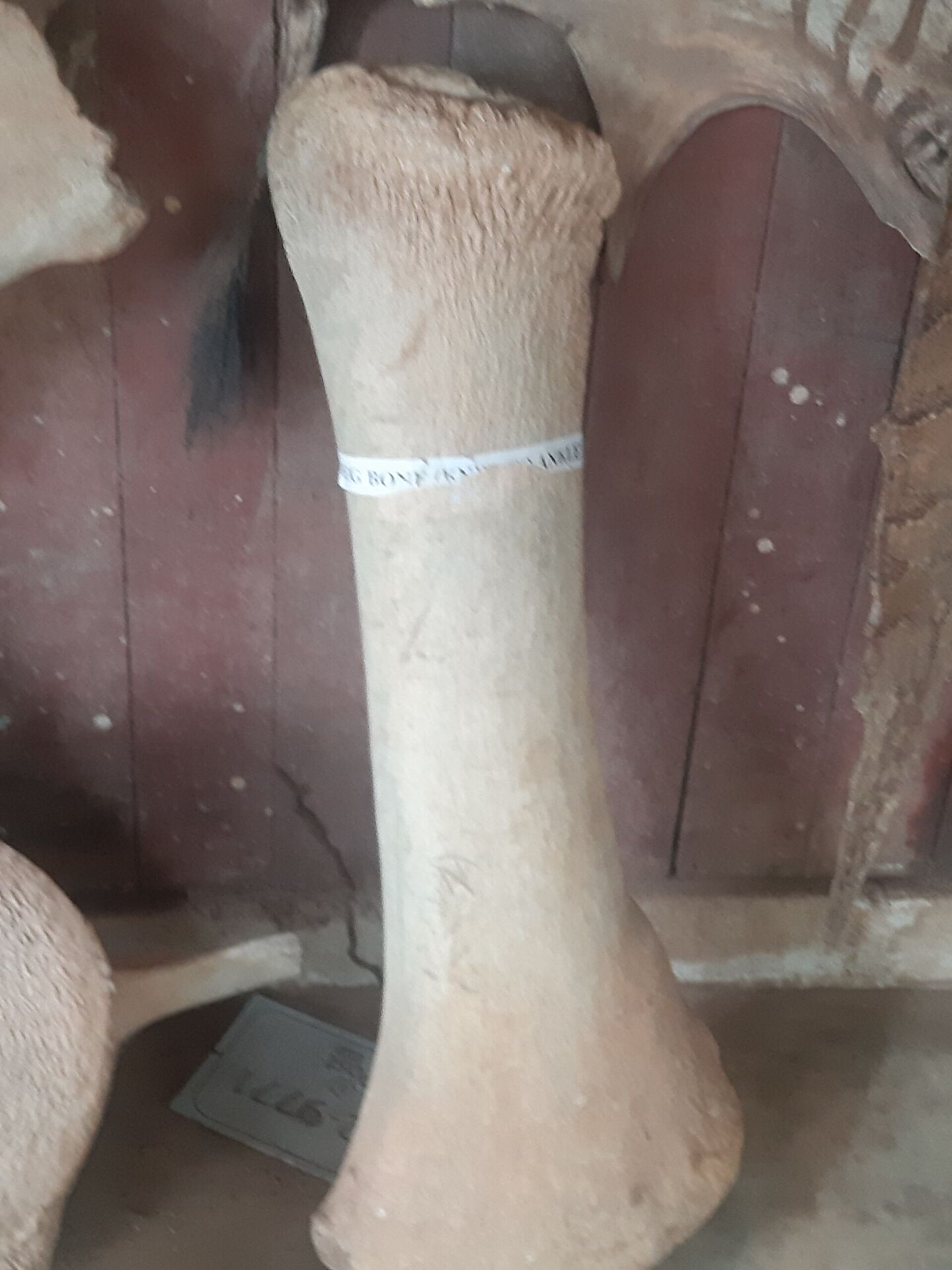
Elephant Leg Bone, by Fanti Salms, CC BY-SA 4.0, via Wikimedia Commons.
Elephants have generated more folklore than most species. Some of it survives because it is partly true. Some survives because it is a good story. Here are ten of the most common myths, examined.
Myth 1: Elephants have secret graveyards
Not really. Elephant remains are sometimes concentrated at watering holes where old or sick elephants converge in their last weeks, which produces piles of bones. There is no evidence of a culturally chosen burial site. The graveyard idea is romantic but unsupported.
Myth 2: Elephants are afraid of mice
Mostly not. Captive elephants are largely indifferent to mice. The myth goes back at least to Pliny the Elder and was reinforced by the Walt Disney film Dumbo. There is some evidence that elephants are wary of small, fast-moving objects near their feet, but mice specifically are not the threat.
Myth 3: Elephants never forget
Partially true. Older elephants do retain extremely long-term memories of water sources, social connections and individuals, and this memory is one of the key survival advantages of matriarchies. They do not have perfect recall like a computer, but the long-term memory is genuinely exceptional among mammals.
Myth 4: Elephants die of grief
Probably not directly, but the underlying observation is real. Elephants who lose family members show measurable stress responses for months or years. In captive settings, deeply bonded individuals do sometimes die within weeks of each other, though chronic stress and secondary illness are a more likely mechanism than acute grief.
Myth 5: Elephants sweat
Asian elephants have sweat glands between their toes, but elephants lack sweat glands across most of their skin. They cool through their ears, water, dust and shade. Elephant skin generally lacks sebaceous glands.
Myth 6: Elephants are the only animals besides humans that recognise themselves in a mirror
Not quite. Asian elephants have passed the mirror test, first demonstrated in 2006, but they share that result with great apes, dolphins, magpies and, with some debate, the cleaner wrasse.
Myth 7: Elephants can run at 40 km/h
Partially true. The fastest reliably measured speed is around 25 km/h in short bursts. Earlier estimates of 40 km/h came from stride length calculations that have not held up under modern video analysis. Still fast enough that no human outruns one.
Myth 8: Elephants live to 100 or more
No. Wild African elephants typically live 60 to 70 years, and the individuals followed longest by researchers have died in their sixties: Echo, the best documented matriarch in the Amboseli study, was about 65 when she died in 2009. The oldest captive Asian elephant on record was Lin Wang at Taipei Zoo, who reached 86. The 100-year claim is folklore.
Myth 9: The trunk has 100,000 muscles
A 2023 reconstruction of one Asian elephant calf trunk found about 90,000 muscle fascicles. That is a one-specimen fascicle count, not a count of separate anatomical muscles.
Myth 10: Elephants are aggressive towards humans
Context-dependent. Bull elephants in musth and cows with calves can be highly defensive. In human-elephant conflict zones in India and Sri Lanka, elephants kill several hundred people a year. On safari with a responsible operator keeping distance, the risk is very low. The aggression myth misrepresents a species that is mostly placid when left alone.
Read next
Our elephant facts pillar, famous elephants in history, and elephant facts that surprise.
Frequently asked questions
Do elephants really have graveyards?
No. There is no evidence of culturally chosen burial sites. Remains sometimes pile up at watering holes where old or sick elephants converge in their last weeks, which is where the myth comes from.
Are elephants afraid of mice?
Mostly not. Captive elephants are largely indifferent to them. There is some evidence of wariness around small fast-moving objects near the feet, but mice specifically are not the threat the folklore suggests.
Do elephants really never forget?
Older elephants do have extremely long-term memories of water sources, social connections and individuals, and it is genuinely exceptional among mammals. It is not perfect recall, just very long-lasting biological memory.
Can elephants sweat?
Asian elephants have sweat glands between their toes, but elephants lack them across most skin. Cooling uses the ears, water, dust and shade. Elephant skin generally lacks sebaceous glands.
How long do elephants live?
Wild African elephants typically live 60 to 70 years, with the best documented individuals dying in their sixties. Captive Asian elephants have lived to 86. The 100-year claim is folklore.
Related reading
- 100 Elephant Facts: Everything to Know About Earth’s Largest Land Animal: Our master elephant fact sheet: anatomy, cognition, matriarchal society, infrasound, the trunk, tusks and ivory, diet.
- 15 Elephant Facts That Surprise Almost Everyone: Fifteen checkable elephant facts, including the sleep figure most articles get wrong and which Angolan bull actually holds the record.
- 12 Famous Elephants in History (And What Happened to Them): Surus, Abul-Abbas, Hanno, Jumbo, Topsy, Lin Wang, Ahmed, Echo, Satao, Tim, Happy and Tarra: twelve named elephants, what they were actually known for, and how each of their stories ended.
- Elephant Quiz Trivia Game: An eight-question elephant quiz with the answers, plus the anatomy, behaviour and conservation facts you need to get them right.
Updated 14 September 2026: corrected sweat-gland and trunk anatomy claims.