Elephant Matriarchs: Why the Oldest Female Runs the Herd
Last updated: September 14, 2026
3 min read
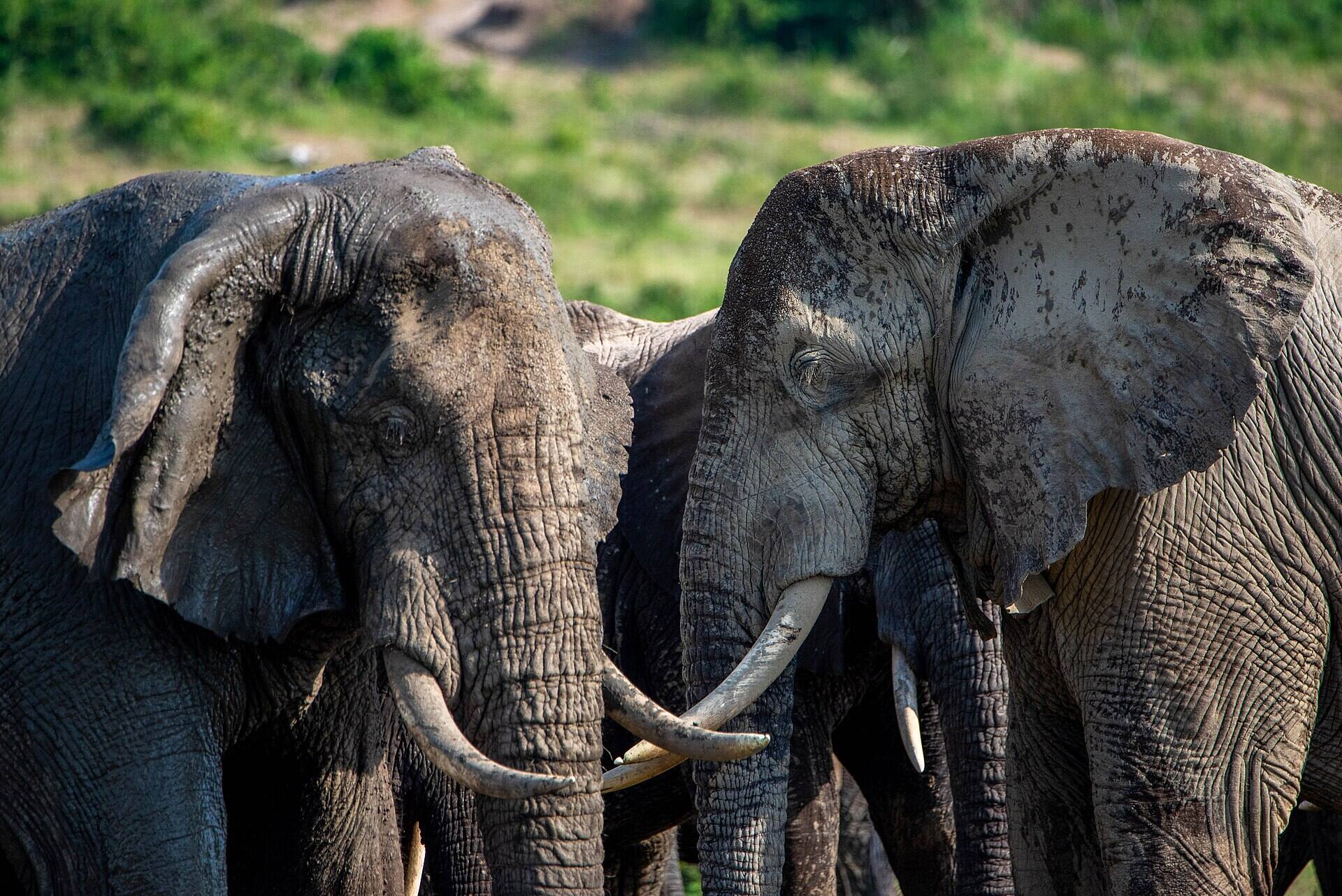
African elephant dual, by Timothy Akolamazima, CC BY-SA 4.0, via Wikimedia Commons.
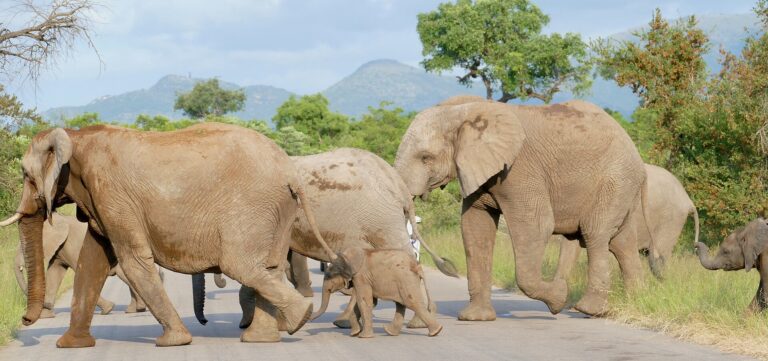
Elephant herds are matriarchies. The oldest female leads, decides routes, mediates disputes and carries the group’s memory of its whole range. Three decades of fieldwork have turned that from a nice observation into a measurable one: her age predicts how well the family survives.
Who leads
A family group is typically 6 to 20 closely related females and their young, and the oldest female is the matriarch. She is rarely the most aggressive animal in the group. What she has is the longest record of where water was in bad years, the most experience of how the group has handled threats before, and the standing that comes from having outlived everyone younger.
When she walks the herd follows. When she signals alarm they bunch and turn. Younger females take initiative on routine movement, but the consequential calls, whether to cross to a distant water source, whether to risk a route past a village, how to react to a strange elephant, are hers.
Why her age matters
Karen McComb and colleagues showed in a 2001 Science paper that families with older matriarchs responded more strongly to rare callers and were better at judging social threats.
The follow-up is sharper. In 2011, in Proceedings of the Royal Society B, the same group published playback experiments using recorded lion roars in Amboseli. Families adjusted their defensive response to three roaring lions versus one across the board. Where they differed was sex: male lions are the real danger to elephant calves, and families led by younger matriarchs consistently under-reacted to male roars. Sensitivity to that distinction rose with matriarch age and peaked in the oldest.
Drought memory
The strongest evidence for institutional memory comes from Tarangire in Tanzania. Charles Foley and colleagues documented the severe drought of 1993 there: 16 of 81 calves died in nine months, a 20 percent loss against a normal annual rate of around 2 percent.
The losses were not evenly spread. The family clans that left the park during the drought lost far fewer calves than the clan that stayed. Both of the clans that left contained animals old enough to have lived through the previous severe drought, in 1958 to 1961. The clan that stayed had no survivors from that earlier drought and was led by a younger female. The researchers proposed that older elephants might have remembered drought refuges. Mother age, calf age and sex, and family migration also affected survival.
That is memory doing real work, and it lives in one animal’s head until it is passed on.
Conflict mediation
Matriarchs also settle things inside the group. Disagreements over feeding sites, how to handle a visiting bull, how to respond to another family: these tend to resolve around the matriarch’s presence and her low-frequency rumbling rather than through escalation. Her authority is social rather than physical, which is why the group’s behaviour changes when she is gone even though nothing about the habitat has.
When the matriarch dies
Behavioural work in Amboseli and Samburu has recorded prolonged responses to a matriarch’s death: family members touching the body, returning to the site over weeks, and disturbed behaviour for months afterwards. Leadership passes to the next oldest female, usually a daughter or sister, but she inherits the position without inheriting the knowledge or the network.
This is why poaching pressure on matriarchs is worse than the body count suggests. Their tusks are the biggest, and they come forward in defence of the family, so they are the ones shot. Taking them removes the experienced decision-maker and the accumulated map in the same shot. Family groups in heavily poached populations have been documented splintering afterwards. Conservation groups increasingly talk about culling and poaching as lost social structure rather than lost individuals, and this is why.
Frequently asked questions
What is a matriarch elephant?
The oldest female in a family group. She leads, makes the major decisions, holds the group’s memory of water and threats, and settles disputes inside the family.
How old is a typical matriarch?
Usually somewhere between 40 and 60. Echo, the best-documented Amboseli matriarch, was around 64 when she died in 2009.
Do bulls ever lead herds?
No. Bulls leave the natal family group in adolescence and live alone or in loose bachelor groups. Older bulls do influence younger ones, including calming aggressive young males in musth, but that is a separate structure from the matriarchy.
Why does the matriarch system matter so much?
Because elephants live in places where the useful information is rare and widely spaced: where water persists in a bad year, which lion is dangerous, which route is safe. That information cannot be worked out from scratch in a season. It has to be remembered by someone who was there.
What happens when a matriarch dies?
The next oldest female takes over, usually a daughter or sister. The handover is rarely clean, and family groups have been documented fragmenting after matriarch deaths in heavily poached populations.
Read next: our elephant facts guide, our elephant conservation guide, and Asian elephant vs African elephant.
Updated 14 September 2026: corrected matriarch response and drought-memory claims.