Asian Elephant vs African Elephant: Side-by-Side Comparison
Last updated: September 14, 2026
3 min read
African-Asian-Ears, by Kjrajesh, CC BY-SA 3.0, via Wikimedia Commons.
Asian and African elephants are different enough to sit in different genera. They split from a common ancestor around seven million years ago. Here is the side by side: size, anatomy, range, behaviour and status.
Size
African bush elephants are the largest. Bulls reach 4 m at the shoulder and around 7,000 kg. Asian bulls top out at roughly 3.2 m and 5,400 kg. African forest elephants are the smallest of the three species at 2 to 2.5 m and around 2,500 kg.
Side by side, an African bush bull stands a clear head taller than an Asian bull and carries a heavier frame. The proportions differ too: African bush elephants dip between shoulders and hips, Asian elephants are humped or level along the back.
Ears
The easiest field mark. African elephant ears are large and roughly shaped like the African continent. Asian elephant ears are smaller and more rounded. African elephants also flap more, because on open savanna the ear is a radiator and it earns its size.
Tusks
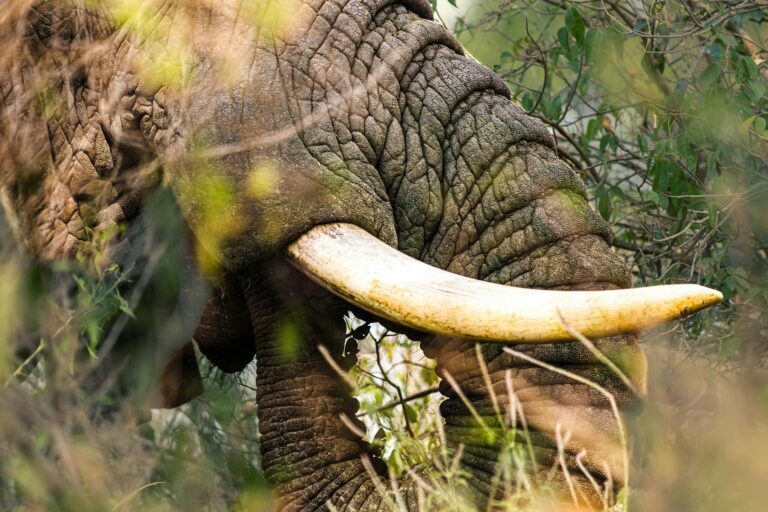
Male and female African elephants generally carry visible tusks, but tusklessness occurs in both sexes. Among Asian elephants only around half of males do, and tusked females are rare. Asian tusks are typically shorter and finer.
Forest elephant tusks are straighter, harder and pinker than bush elephant tusks, which is exactly why they fetch a premium on the illegal market.
Trunk
African elephants have two opposable projections at the trunk tip, one above and one below. Asian elephants have one. African trunks are also more heavily ringed, with deeper grooves.
Both can lift a couple of hundred kilos and pick up a single peanut. The one-finger versus two-finger architecture is the most reliable tell in a close photograph.
Head and back
Asian elephants have a twin-domed forehead with a clear depression between the domes. African elephants have a single sloping forehead. Asian backs are humped or level, with the high point along the back. African backs slope down between shoulders and hips.
Range and status
African bush elephants range across sub-Saharan savanna from Mali to South Africa. African forest elephants hold the Congo Basin and the West African rainforest. Asian elephants run from India and Sri Lanka through Nepal, Bhutan, Myanmar, Thailand, Cambodia, Laos, Vietnam and southern China to Sumatra and Borneo.
All three are in trouble, and the IUCN grades them separately. African bush elephants are Endangered, African forest elephants are Critically Endangered, and Asian elephants are Endangered. The pressures differ by range but the direction of travel does not.
Frequently asked questions
How can you tell an Asian elephant from an African elephant?
Ear shape first. African elephants have large ears shaped like the African continent; Asian elephants have smaller, rounder ears. Then: African elephants have a sloped forehead, two trunk fingertips, and almost all carry tusks. Asian elephants have a twin-domed forehead, one trunk fingertip, and only around half of males are tusked.
Are Asian and African elephants the same species?
No, and not even the same genus. African elephants are Loxodonta, Asian elephants are Elephas, split around seven million years ago. They do not interbreed in the wild. The one confirmed hybrid, a male calf called Motty, was born at Chester Zoo on 11 July 1978 to an Asian mother and an African father. He arrived six weeks premature and died ten days later.
Which is bigger?
African bush elephants. Bulls reach 4 m and around 7,000 kg, against roughly 3.2 m and 5,400 kg for Asian bulls.
Do Asian elephants have tusks?
About half of males do. The rest, called makhnas, have short tushes that barely show. Tusked females are rare, though small tushes do occur. Almost all African elephants of both sexes carry tusks.
Why do African elephants have bigger ears?
Because they evolved on hot, dry savanna where a large ear works as a radiator. Blood vessels run close to the surface, and flapping cools the blood passing through. Asian elephants evolved in shaded forest and never faced the same heat load.
Read next: our elephant species guide, our elephant facts guide, and elephant matriarchs.
Continue exploring at our store
If this article sparked your interest, head over to the We Love Elephants store for related reads and gear.
Updated 14 September 2026: qualified an absolute claim about elephant tusks.