Do Elephants Call Each Other by Name?
4 min read
A calf wanders a little too far from its mother, and a low rumble rolls across the savanna. Is that rumble just a general “come back” call, or does it say something closer to “you, over there”? In 2024 a team of researchers published evidence for the second reading. Wild African elephants, they reported, address one another with individually specific calls.
That finding sits at the edge of what scientists know about animal minds, so it is worth being careful about what it shows and what it does not.
Why names are such a big deal
Names are a human universal, and almost no other species has anything like them. The study’s authors point out that dolphins and parrots do address each other, but they do it by imitating the calls of the animal they are addressing. A human name is different. It does not sound like the person it belongs to. It is an arbitrary label that the group agrees on.
Lead author Mickey Pardo, who did the work as a postdoctoral researcher at Colorado State University and Save the Elephants, put the contrast this way: dolphins and parrots copy the signature call of the one they address, while elephants do not appear to rely on imitation, which is closer to how human names work.
How the researchers tested it
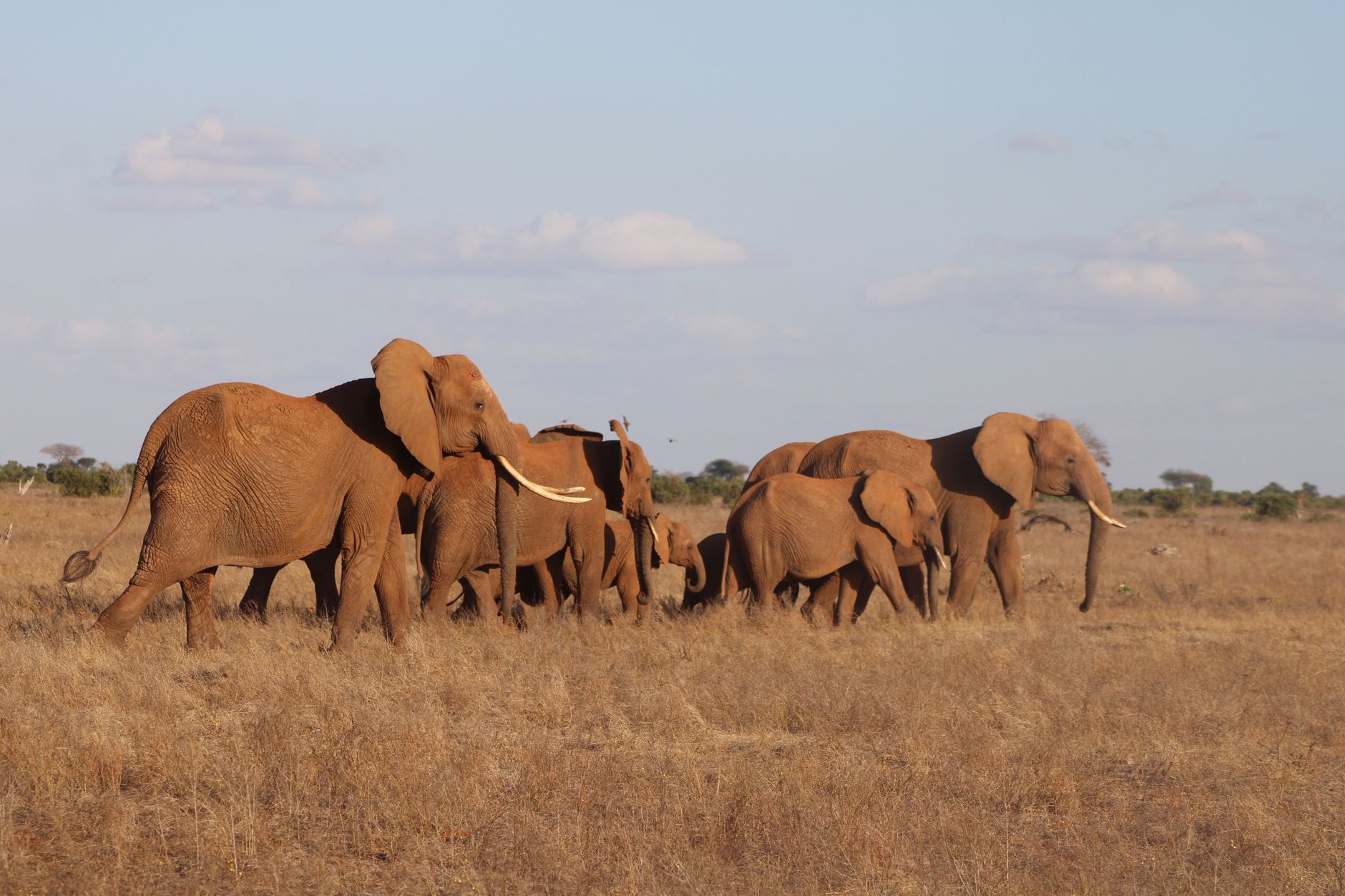
The team used recordings of wild elephants in two parts of Kenya: Samburu National Reserve and Amboseli National Park. The final dataset held 469 distinct calls, from 101 unique callers to 117 unique receivers.
The question was simple. If a call carries a name, then the acoustic structure of the call should tell you who it was meant for. The researchers trained a machine-learning model (a type called a Random Forest) to predict the receiver from the sound of the call alone. It could. It could do so even when the call did not resemble the receiver’s own vocalisations, which is the point that separates elephants from dolphins and parrots.
Pattern-finding by a computer is only half of a test, though. The other half was asking the elephants.
The playback test
In the field, the researchers played recorded calls back to individual elephants. Some were calls that had originally been addressed to that elephant. Others were calls from the same caller that had originally been addressed to a different elephant. Elephants responded affirmatively to calls addressed to them, by calling back or approaching the speaker. Calls meant for other elephants got less of a reaction.
The Save the Elephants release adds a useful detail. Pardo said the result shows elephants can tell whether a call was intended for them just by hearing it, even out of its original context.
When elephants seem to use names
The researchers do not claim elephants name each other in every call. They used the model to look at which calls were most likely to carry a name, and the pattern was telling. Name-bearing calls were more common over long distances, and when adults addressed calves, than when adults greeted each other at close range. Adults also used them more than juveniles did, which hints that young elephants may take years to learn the habit.
That fits what we already know about how elephants live. A herd spreads out across a lot of ground, and the family unit is the centre of a calf’s world. If you need to pull one particular animal out of the group from far away, an individual label is a handy tool. For more on who runs those family groups, see our guide to elephant matriarchs.
What we still do not know
Here the research runs out, and it is better to say so plainly. The study does not say which part of a call is the name. It does not tell us how elephants learn the names, or whether two elephants use the same label for the same individual. The paper’s own summary of that last question is cautious: its figure title describes mixed evidence on whether different callers use similar labels for the same receiver. And the word “name” is shorthand. The evidence shows individually specific, name-like calls, which is a strong claim, but not proof that elephants think of each other the way we think of a named friend.
There is also a hint of more to come. Study co-author Kurt Fristrup said that using arbitrary sonic labels for other individuals suggests other kinds of labels or descriptors may exist in elephant calls. Whether that proves true is a question for future fieldwork.
Where this fits with what we know about elephant calls
Elephants already had a reputation as talkers. According to the CSU release, their calls convey the caller’s identity, age, sex, emotional state and behavioural context, and their vocal range reaches down into infrasound, below what human ears can hear. Our posts on elephant infrasound and how elephants communicate cover that ground. Name-like calls add something new on top of it: not only what an elephant is feeling, but who it is talking to.
Senior author George Wittemyer drew a wider lesson. In his view the use of arbitrary labels suggests elephants may be capable of abstract thought. That is an interpretation, not a measurement, but it matches the rest of the picture of a long-lived animal with a rich social life.
Have you watched elephants calling across a distance, at a waterhole or on safari? Add what you saw in the comments.
Sources
- Pardo et al., African elephants address one another with individually specific name-like calls, Nature Ecology & Evolution
- Colorado State University, Elephants have names for each other like people do, new study shows (10 June 2024)
- Save the Elephants, Like us, elephants have names too (10 June 2024)