Elephant Feet: A Cushioned Sole That Can Feel the Ground
4 min read
An elephant is the largest animal on land, and all of that weight rests on four feet. The reason they cope sits under the skin of each foot. According to the Smithsonian’s National Zoo, elephants actually walk on their toes and have a thick, fibrous pad on the bottom of each foot. The pad absorbs shock. It protects the leg and toe bones from jarring and cushions each step.
The pad turns out to be far more than a rubber heel. Anatomists have cut it open, scanned it and counted the nerve endings inside it. What they found changes how I think about every elephant footprint.
What is inside the cushion
A team led by Gerald Weissengruber at the Veterinary University of Vienna examined the feet of African elephants with standard anatomical and histological methods, plus CT and MRI scans. Their paper in the Journal of Anatomy describes large subcutaneous cushions that distribute forces during weight bearing and store or absorb mechanical forces.
The cushion is built like a honeycomb. Sheets and strands of fibrous connective tissue form larger compartments and smaller chambers, and the chambers are filled with fat. Collagen, reticulin and elastic fibres run through the tissue. A firm net with soft filling is a sensible way to spread a heavy load over a wide area.
The cushions sit between the bones of the foot and the thick skin of the sole. The researchers also found, in both the front and the back limbs: a sixth ray, the prepollex in the front foot and the prehallux in the hind foot. These are cartilaginous rods that support the metacarpal or metatarsal compartment of the cushion. None of the rays touches the ground directly.
A foot that feels
You might expect a pad that takes this much punishment to be numb. The Vienna team found the opposite. The vascular supply is good, and numerous nerves run through the entire cushion. Vater-Pacinian corpuscles, which are nerve endings that respond to pressure and vibration, sit in the collagen of the cushions and in the dermis. Meissner corpuscles, another touch receptor, sit in the skin of the sole.
The authors compared the tissue with other animals. The make-up of the elephant cushion resembles the digital cushions of cattle and the foot pads of humans. It does not resemble the digital cushions of horses. Their conclusion was that, besides their mechanical job, the foot cushions seem to be very sensitive structures.
Listening through the ground
Elephant rumbles do not only travel through air. A study in the Journal of the Royal Society Interface by researchers at Oxford and Save the Elephants notes that low rumbles propagate through the air and through the ground. The team recorded seismic and acoustic rumbles together in Kenya. When they used the same method to locate the calling animal, the seismic recordings gave higher accuracy than the acoustic ones in their set-up. Combining both did not improve the result.
That is the wild side of the story. The anatomy side comes from a 2007 study of Asian elephants, also in the Journal of Anatomy. Its authors note that unique elephant postures seen in field studies suggest elephants use their feet to listen to seismic signals, but nobody had described the sensory mechanism. So they counted the Pacinian corpuscles in a front foot and a hind foot.
The corpuscles sat in the dermis and the distal digital cushion, and they were most densely packed along the front, back, inner and outer parts of each foot. The highest share was in the front of the forefoot, 52.19 percent, and the back of the hindfoot, 47.09 percent. The corpuscles were encapsulated and often grouped in large clusters.
The authors stop short of a verdict. They propose that Pacinian corpuscles are one possible mechanism elephants use to detect seismic waves. That is a reasoned hypothesis built on anatomy, not a measured hearing test, and I would keep that distinction in mind when you read the claim elsewhere. It sits well beside what we know about the air-borne side of the same signals, which I cover in the post on elephant infrasound.
Why this matters for elephants in human care
The Vienna paper also says something about welfare. The authors point out that captive elephants in particular are frequently affected by foot disorders, while precise data on the normal structure of the cushions were sparse. A foot that is both a load-bearing shock absorber and a sensitive organ is a lot to ask of hard, flat ground. For more on conditions in captivity, see our look at the welfare picture for captive Asian elephants.
The foot is one more example of an elephant body doing several jobs with one structure. The trunk does it with muscle, as we show in Inside the Elephant Trunk. The foot does it with fat, fibre and nerves.
What we still do not know
The 2007 count came from one front foot and one hind foot of Asian elephants. Whether every elephant uses its feet to listen in the way the postures suggest is still open. What the anatomy shows is that the equipment is there.
If you have watched an elephant freeze, lean forward and lift a foot, I would like to hear what you saw. Add what you know in the comments.
Sources
- Weissengruber et al. 2006, The structure of the cushions in the feet of African elephants, Journal of Anatomy (PubMed)
- Bouley et al. 2007, Pacinian corpuscles in the foot of the Asian elephant, Journal of Anatomy (PubMed)
- Reinwald et al. 2021, Seismic localization of elephant rumbles as a monitoring approach, Journal of the Royal Society Interface (PubMed)
- Smithsonian’s National Zoo, Asian elephant
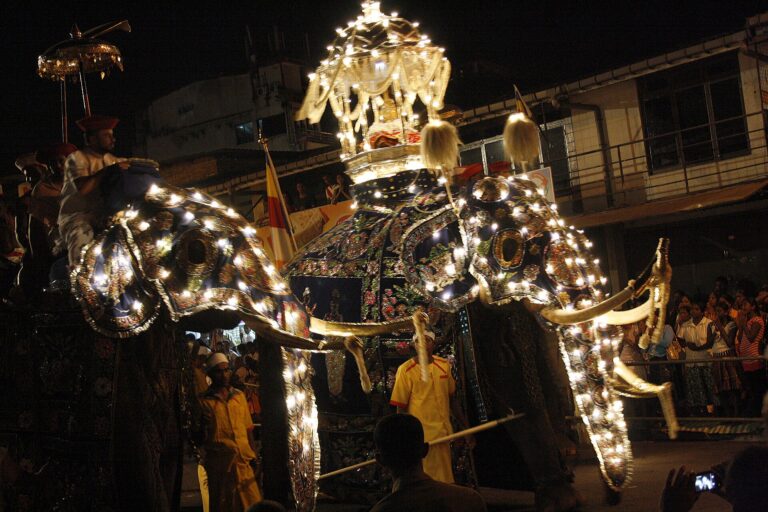
Photo: Martinvl, CC BY-SA 4.0, via commons.wikimedia.org.