Elephants in Cambodia: Mondulkiri and the Eastern Plains
Last updated: October 14, 2026
4 min read
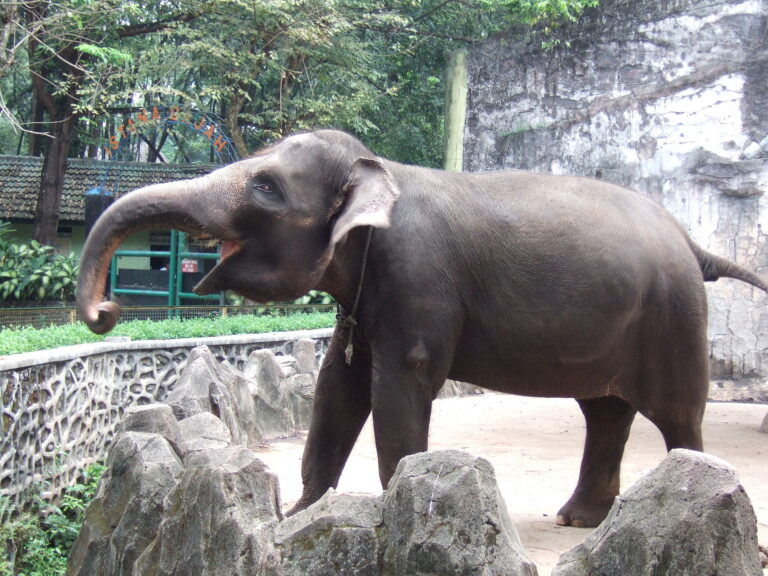
Elephant conservation and indigenous experiences in Cambodia Project, by Peoumono, CC BY-SA 4.0, via Wikimedia Commons.
Cambodia is home to somewhere between 400 and 600 wild Asian elephants, most of them concentrated in the Eastern Plains landscape of Mondulkiri province and a smaller number in the Cardamom Mountains. What sets Cambodia apart from its neighbours is not the size of the population but the culture around it: here, the captive elephant tradition belongs to the indigenous Bunong people, and that has shaped a model of elephant tourism quite different from Thailand’s.
Where Cambodia’s elephants live
The stronghold is the Eastern Plains landscape in the country’s far east, a mosaic of protected forest whose core is Srepok Wildlife Sanctuary, the former Mondulkiri Protected Forest, renamed when it moved to the Ministry of Environment in 2016, alongside the neighbouring Phnom Prich Wildlife Sanctuary. This is dry deciduous and semi-evergreen forest, the kind of open dipterocarp woodland that once stretched in an unbroken belt across the region. The Eastern Plains is a transboundary landscape: Srepok runs up to the Vietnamese border and the protected forest continues on the far side as Yok Don National Park, which in principle gives elephants a cross-border range of some 14,000 square kilometres across eight adjoining protected areas. In practice that connectivity is badly fragmented, broken by roads, plantations and settlements.
The Cardamom Mountains in the southwest hold a second, smaller population in wetter, more rugged terrain. Neither group is large enough for long-term genetic health on its own. Without managed corridors that let elephants move between blocks of forest and meet new mates, both populations risk slow decline through isolation rather than any single dramatic cause.
The Bunong and a changed kind of tourism
The Bunong are an indigenous Mon-Khmer-speaking people of the eastern Cambodian highlands who have kept elephants for centuries, traditionally for forest haulage and for ceremonial roles woven into their spiritual life. An elephant in a Bunong family was a working partner and a marker of status, not a tourist prop.
Since around 2010 the picture has shifted sharply. Most Bunong-owned elephants now work within welfare-focused sanctuaries that pay the owning families directly, rather than channelling money through tour operators. This matters because it keeps the income with the community that has carried the tradition, and it removes the financial pressure to overwork an elephant for paying riders. It is a rare example of conservation, tourism and indigenous rights pulling roughly in the same direction.
Mondulkiri’s observation-only sanctuaries
Two projects near the provincial town of Sen Monorom set the standard for how to see elephants in Cambodia:
- Elephant Valley Project: founded in 2006 by ELIE (Elephant Livelihood Initiative Environment), it was built around retired logging elephants and is run in collaboration with Bunong families. Visitors walk the forest and watch elephants roam and feed.
- Mondulkiri Project: a smaller operation on a similar model, offering guided forest walks alongside rescued elephants.
Both decline to offer elephant rides or bathing sessions. Visits are observation-only, which means the elephants set the pace and the day, not the schedule of a paying group. If you only take one thing from this page, let it be that: a reputable Cambodian elephant experience is one you watch, not one you climb onto.
Conservation pressures
The dominant threat is habitat loss, and the named culprits are specific: large-scale conversion of forest to rubber and cassava plantations. Logging, including illegal logging, has continued to chew into the Eastern Plains despite official protected status. Poaching for ivory and meat has historically been less intense in Cambodia than in some neighbouring countries, but it is rising and cannot be ignored.
On the ground, conservation work is led by WWF Cambodia and Wildlife Alliance, with substantial investment in ranger training and in restoring corridors that reconnect isolated forest blocks. Corridor work is the quiet, unglamorous side of elephant conservation, and in a country where the populations are this fragmented, it is also the most important.
Best time to visit
The cool dry season, roughly November to February, is the best window for a Mondulkiri visit. Forest tracks in the wet season are often impassable, and Sen Monorom sits at altitude, so evenings can feel genuinely cool by Cambodian standards. Plan a multi-day stay: a single rushed afternoon does not do the forest justice.
Read next
Frequently asked questions
How many elephants are in Cambodia?
Between 400 and 600 wild elephants, plus around 70 captive elephants. Most wild elephants live in the Eastern Plains landscape in Mondulkiri.
Where can I see elephants in Cambodia?
The Elephant Valley Project in Mondulkiri is the standard reference for ethical elephant tourism in Cambodia. It is observation-only and pays Bunong families directly.
Can you ride elephants in Cambodia?
Some camps still offer rides, but the reputable sanctuaries do not. We recommend Mondulkiri’s no-ride sanctuaries.
Are Cambodian elephants Asian or African?
Asian elephants (Elephas maximus indicus), the same subspecies found across mainland Southeast Asia.
Who are the Bunong?
An indigenous Mon-Khmer-speaking people of the eastern Cambodian highlands with a long tradition of keeping elephants for forest work and ceremony.
Related elephant coverage
- Elephant Conservation 2026: How to Save the Last Giants: Poaching trends, the 1989 ivory ban, the zoo and sanctuary debate, trophy hunting.
- Elephants in Cambodia: From Royal Mounts to Mondulkiri Sanctuaries: Cambodia holds 400 to 600 wild elephants and 73 in captivity.
- Elephants in Vietnam: The Last Hundred and the Yok Don Model: Around 100 wild elephants are left in Vietnam.
- Elephants in Thailand: Wild Numbers, Sanctuaries, and Ethics: Where Thailand’s 4,000-plus wild elephants live, what the captive tourism industry really looks like, and how to tell a working sanctuary from a rebranded ride camp.