
Elephant Teeth: Six Molars Across a Lifetime
Last updated: October 26, 2026
4 min read
Elephants do not shed teeth the way we do. They run through six progressively larger sets of molars across a lifetime, each new set pushing the worn one forward and out. When the sixth set wears down, usually in the late 60s, the animal can no longer chew enough food to survive. Elephant lifespan is set by dentistry.
Key facts at a glance
| Molar sets | Six per jaw quadrant, 24 teeth across a lifetime |
| Weight of a final molar | Around 4 kg |
| Length of a final molar | Up to about 30 cm |
| Replacement pattern | Horizontal: new molars push old ones forward and out |
| Wear-out age | Typically the late 60s |
| Most common natural cause of death | Tooth wear-out |
How elephant tooth replacement works
Human teeth come in two sets and replace vertically: the adult tooth pushes up from below and the milk tooth drops out. Elephants use a different system entirely. At any one time an elephant has one or two functional molars in each jaw quadrant. As they wear, a new and larger molar develops at the back of the jaw and grinds forward like a conveyor. The worn front edge fragments and is swallowed or spat out. The cycle repeats six times.
The rough progression: the first molar is in use in calfhood, the second by two or three, the third by eight to ten, the fourth around twenty, the fifth from the mid thirties, and the sixth and last from around forty five onwards. That final set has to see out the rest of the elephant’s life, which is another twenty to twenty five years if nothing else gets there first.
Why the molars are so big
An adult elephant works through 100 to 300 kg of vegetation a day, depending on species and size, and almost all of it is abrasive: grass loaded with silica, woody bark, tough leaves. Processing that volume needs enormous grinding surfaces, and those surfaces wear.
Each molar carries a series of transverse ridges, called lamellae, that work like a washboard for shredding fibre. The pattern differs between the genera. Asian elephant molars carry more numerous, narrower, tightly packed ridges. African molars carry fewer, broader, lozenge-shaped ones, which is where Loxodonta gets its name.
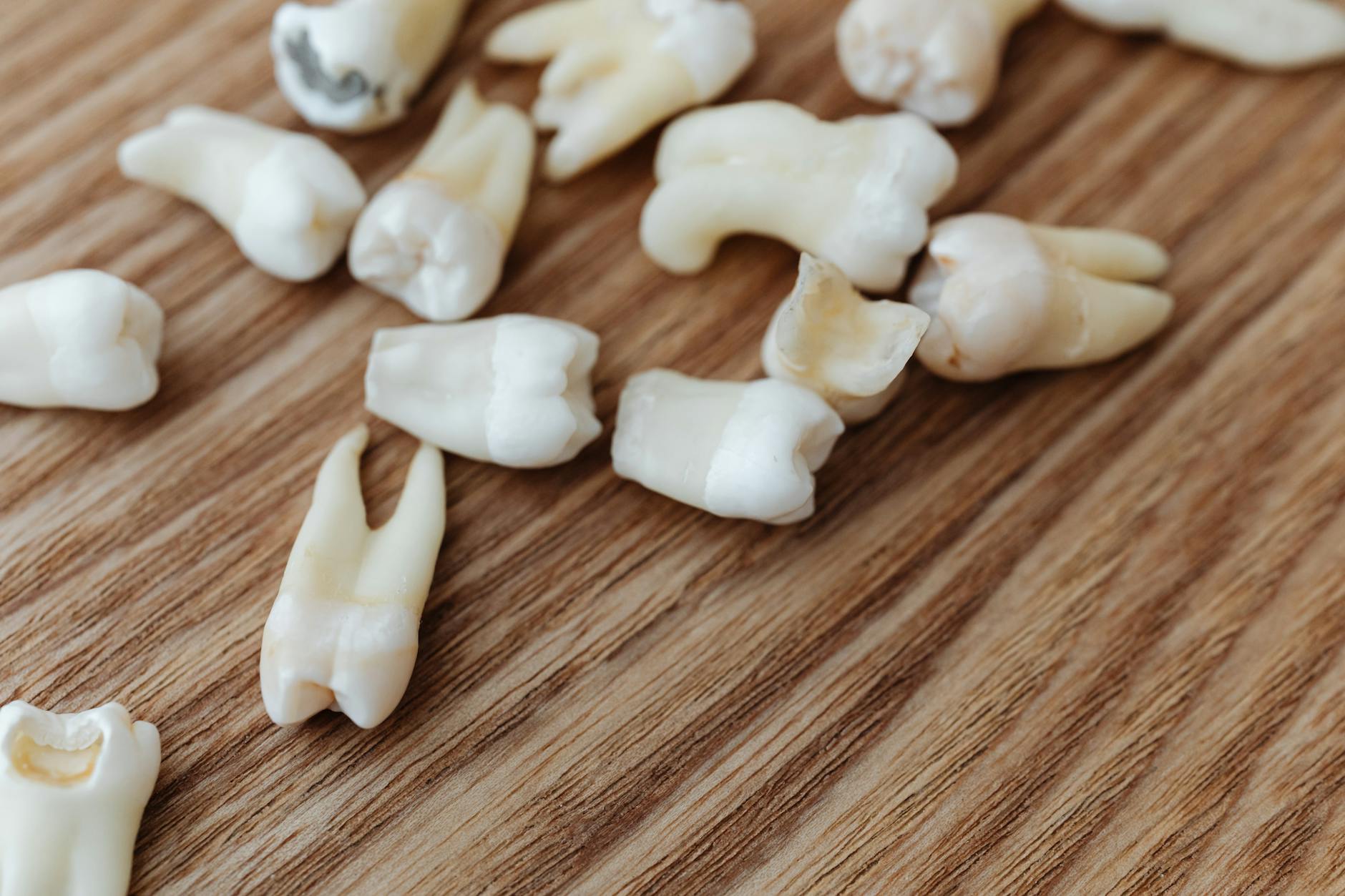
A fully erupted final molar weighs about 4 kg and runs to around 30 cm. That is the size of a house brick, and the elephant carries several of them in the jaw at once, which is a large part of why the skull is built the way it is.
The last set: end of life
Once the sixth set is gone the animal cannot process enough food to hold its weight. The decline is slow: visibly thinner flanks, longer and longer spent feeding, a shift to soft riverside vegetation that needs less grinding. Eventually feeding stops working at all. This is the most common natural cause of death in wild elephants and the reason wild lifespan clusters so tightly in the late 60s.
Field researchers tracking known individuals describe the final period as an undignified one, usually spent near water where the animal can scoop up soft aquatic plants for as long as it can manage.
Diet and wear rate
Wear is diet-dependent. Coarse dry-season grass and bark grind molars down faster than soft leafy browse, so a captive elephant on mixed soft feed wears its teeth more slowly than a wild bush elephant on savanna grass.
Captive survival depends on place and period. A 2026 analysis found survival in its 1992 to 2024 zoo cohort was comparable with or higher than the studied wild African and semi-wild Asian reference populations. The dental advantage exists and is simply swamped by everything else.
Tusks are not molars
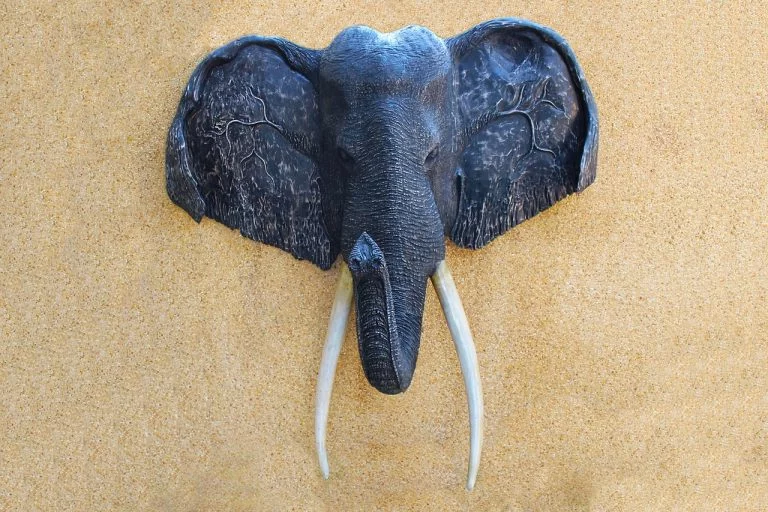
A common point of confusion. Tusks are elongated upper incisors. They grow continuously from the root and are used for digging, levering, stripping bark and defence. Molars sit deep in the jaw and do nothing but chew. Different teeth, different jobs, different fates: a poached elephant loses its tusks in a moment, a worn-out elephant loses its molars over decades.
Reading age from a molar
Because the sequence is so regular, teeth are how researchers age an elephant with no birth record. Richard Laws set out the standard framework in 1966, working from 385 elephant jaws collected in western Uganda and describing thirty age classes tied to molar eruption and wear. Sylvia Sikes published a field version of the method two years later. The technique is still the backbone of elephant ageing, alongside shoulder height and tusk circumference for younger animals.
It is most precise in the middle of the sequence. Once an elephant is on its fifth or sixth set, the estimate widens, which is exactly why claims about extremely old elephants are so hard to check.
What lasts after death
Elephant skulls and molars decay slowly. In dry African conditions a skull can lie intact for decades and the molars far longer. That is why extinct and historic elephant populations are known largely through their teeth: the enamel outlasts everything else, and the ridge pattern on a single molar carries enough information to place the animal.
Frequently asked questions
How many sets of teeth do elephants have?
Six sets of molars per jaw quadrant across a lifetime, 24 teeth in total. They do not have one permanent adult set.
How do elephant teeth get replaced?
Horizontally. New molars form at the back of the jaw and push the worn ones forward until the front edge breaks up and falls away.
How big is an elephant molar?
The final set weighs around 4 kg per tooth and runs up to about 30 cm long.
What happens when the last set wears out?
The elephant slowly starves. It seeks softer vegetation, spends more of the day feeding, loses condition and eventually cannot feed at all.
Are tusks teeth?
Yes, but not molars. They are elongated upper incisors that grow continuously from the root.
More on ageing and lifespan in our piece on the world’s oldest elephants, and on herd leadership in elephant matriarchs.
This article is part of our elephant facts guide, which links every post on elephant bodies, minds and family life.
Updated 14 September 2026: updated the captive survival evidence.



Six molars across a life and the last one wears down in your late 60s. The lifespan limit being set by one tooth is unforgiving but elegant biology.
The horizontal replacement mechanism is the part that catches people out. Most assume new teeth come up from below like ours. The forward-and-out push is much more mechanical than that.
Question: are there documented cases of elephants surviving past tooth-wear-out because they could access soft riverside food long enough to compensate?
Yes, a small number of long-lived wild matriarchs have managed an extra year or two on soft aquatic vegetation. Echo in Amboseli was at the end of that runway when she died. But it is months and rare years, not full extra decades.
Sylvia Sikes’ molar-age method is still the workhorse it was in the 1960s. Methods that simple and robust are rare in field biology.
The brick-sized molars are hard to picture until you stand next to an elephant skull. Four bricks of teeth in one jaw is part of why the head is so massive.
Yes, the elephant skull is essentially built around the tooth carriage. Lighten the teeth and the skull would weigh less and look completely different.