Elephants in Cambodia: From Royal Mounts to Mondulkiri Sanctuaries
Last updated: October 27, 2026
4 min read
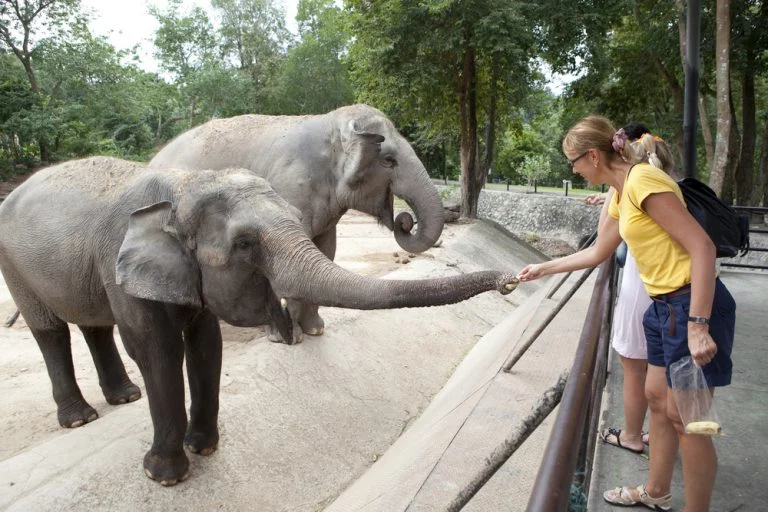
Elephant conservation and indigenous experiences in Cambodia Project, by Peoumono, CC BY-SA 4.0, via Wikimedia Commons.
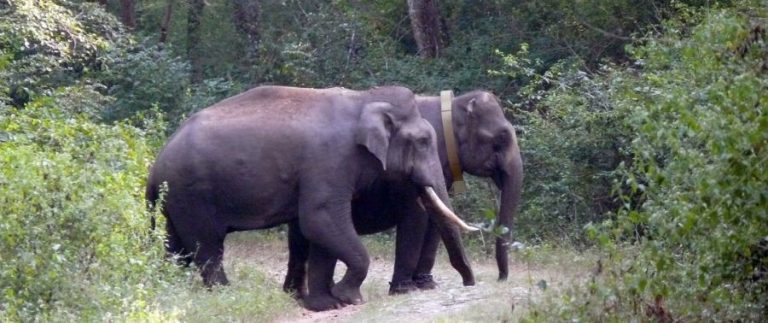
Elephants were central to the Khmer Empire, carrying kings and hauling stone. A legacy estimate put Cambodia at 400 to 600 wild Asian elephants. A 2026 DNA study estimated at least 450 in Cambodia’s Eastern Plains, but no new national total is available, mostly in the Cardamom Mountains in the southwest and the eastern forests of Mondulkiri. The story is partly war and habitat loss, and partly a slow community-led recovery.
The Khmer Empire’s elephants
Elephants are all over the archaeological record at Angkor. Reliefs at Angkor Wat and the Bayon show them in battle and in royal procession, and the Terrace of the Elephants at Angkor Thom is named for the carved parade running along its face. The best written account comes from the Chinese envoy Zhou Daguan, who stayed at the Khmer court from 1296 to 1297 and described the king leaving his palace standing on an elephant, sword in hand, the animal’s tusks encased in gold. Working and war elephants were clearly a routine part of Khmer power, though no reliable count of them survives.
Decline through the 20th century
Twentieth-century Cambodia was a hard place to be an elephant. Decades of war, the Khmer Rouge period, and the years of instability that followed damaged both wild habitat and the working-elephant tradition. Forest clearance for rubber and cassava carried on afterwards and accelerated through the 2000s. The wild population today is a small fraction of what the country once held.
The current population
Fauna and Flora and other groups working in the country put the wild total at 400 to 600, concentrated in the Cardamom Mountains and the eastern plains of Mondulkiri, with smaller scattered groups elsewhere. Precise regional splits are hard to come by: a faecal DNA study of eastern Cambodia published in 2014 estimated around 300 elephants in Mondulkiri, of which 136 were in Phnom Prich Wildlife Sanctuary, and later genetic sampling in the Prey Lang landscape found only around 50 individuals across three protected areas. The Cardamom population is the most isolated and the most exposed to ongoing forest clearance.
Separately, Cambodia had 73 elephants left in captivity as of 2023, most of them in Mondulkiri with Bunong indigenous families. They have gradually been redirected out of logging and riding work into forest-based tourism run with community-conservation organisations.
Mondulkiri’s community projects
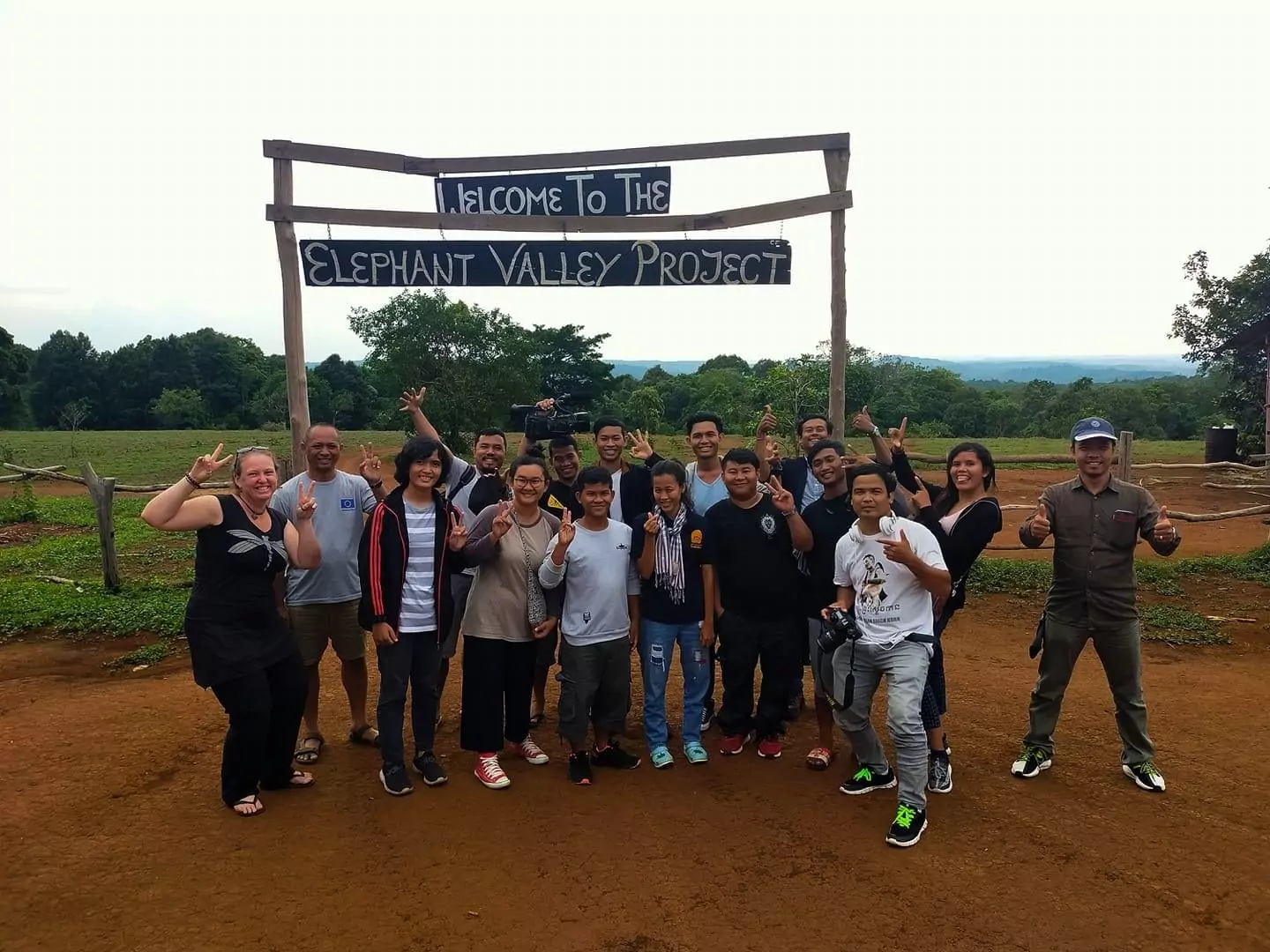
The Elephant Valley Project near Sen Monorom is the longest-running of them, launched in 2007 by the local NGO Elephant Livelihood Initiative Environment. It has 12 elephants on more than 1,500 hectares in partnership with the Bunong community at Pu Trom, employs 58 people, most of them Bunong, and pays the families who own the elephants living there so nobody is left worse off for retiring one. The Mondulkiri Project, run by the Cambodia Elephant Rescue Organisation, works on similar lines from the same town. Our guide to Mondulkiri and the Eastern Plains covers both in more detail.
Wildlife Alliance and the Cardamoms
Wildlife Alliance runs ranger patrols in the Cardamoms, focused on snare removal and forest law enforcement, within the Southern Cardamom REDD+ project covering nearly 450,000 hectares of Koh Kong province. Its rangers report removing around 20,000 snares a year and more than 275,000 in total, and the organisation says there has not been a successful elephant poaching case in Cambodia since 2006, against 38 recorded between 2000 and 2004. The remaining question in the southwest is not poaching but whether forest clearance can be stopped, and the political track record there is mixed.
Visiting ethically
Asian Captive Elephant Standards (ACES) audits and certifies elephant camps in Thailand, Laos, Cambodia and Indonesia against the 214 criteria in its 2026 criteria. Those criteria set limits for riding and bathing with visitors rather than banning them, so certification is not a no-riding label. In Cambodia, the only ACES-certified venue on its register in October 2026 is Kulen Elephant Forest near Siem Reap, certified since 2022. The Mondulkiri projects are not ACES-certified, so judge them on what they do: no riding, no performances, and money going to Bunong families. World Animal Protection’s elephant-friendly list, reviewed in December 2025, includes the Elephant Valley Project.
Do not expect to see wild elephants. Cambodia’s populations are too small, too dispersed and in forest too dense for general tourism, and any operator promising wild sightings is overselling.
Read next
Frequently asked questions
How many elephants are there in Cambodia?
A legacy estimate put the national population at 400 to 600. A 2026 DNA study estimated at least 450 in Cambodia’s Eastern Plains, but no new national total is available. A further 73 were in captivity as of 2023, most of them in Mondulkiri.
Where can I see elephants in Cambodia?
Kulen Elephant Forest near Siem Reap is the ACES-certified option, which on its own does not rule out riding. The Elephant Valley Project and the Mondulkiri Project near Sen Monorom are the established community-based projects in the east. Wild elephant viewing is not realistic for general visitors.
Are there still elephants at Angkor Wat?
No. The Angkor authority announced the end of elephant rides in June 2019 after campaigning over welfare, including the death of an elderly female, Sambo, from heat and heart failure in 2016. The 14 elephants were moved to Bos Thom Community Forest during late 2019 and early 2020, where Kulen Elephant Forest now keeps them.
What happened to Cambodia’s elephants during the Khmer Rouge?
The Khmer Rouge period and the wars either side of it were devastating for Cambodian wildlife. Habitat was cleared, working-elephant traditions were broken, and wild numbers dropped sharply. Recovery has been slow and has depended almost entirely on peacetime conservation work.
Are Mondulkiri ecotourism sites ethical?
Neither the Elephant Valley Project nor the Mondulkiri Project holds ACES certification. World Animal Protection has assessed the Elephant Valley Project and lists it as elephant friendly (December 2025). The Mondulkiri Project is not on that list and lets visitors feed its elephants; it says it uses no riding, chains or performances. Both work with Bunong communities.
Also worth reading
- Elephant Conservation 2026: How to Save the Last Giants: Poaching trends, the 1989 ivory ban, the zoo and sanctuary debate, trophy hunting.
- Elephants in Cambodia: Mondulkiri and the Eastern Plains: Cambodia has 400 to 600 wild elephants and a captive tradition that belongs to the Bunong, which has produced a notably better model of elephant tourism.
- Wild Elephants in Vietnam: Down to the Last Couple of Hundred: Vietnam held roughly 2,000 wild elephants in the 1980s.
- Elephants in Laos: The Land of a Million Elephants: Laos was Lan Xang, the Kingdom of a Million Elephants, and now holds roughly 800.
Updated 14 September 2026: dated Cambodia’s elephant estimates.
Updated 27 October 2026: corrected the ACES details and added World Animal Protection’s listing of the Elephant Valley Project.