Elephants in Sumatra: The Critically Endangered Subspecies
Last updated: October 27, 2026
4 min read
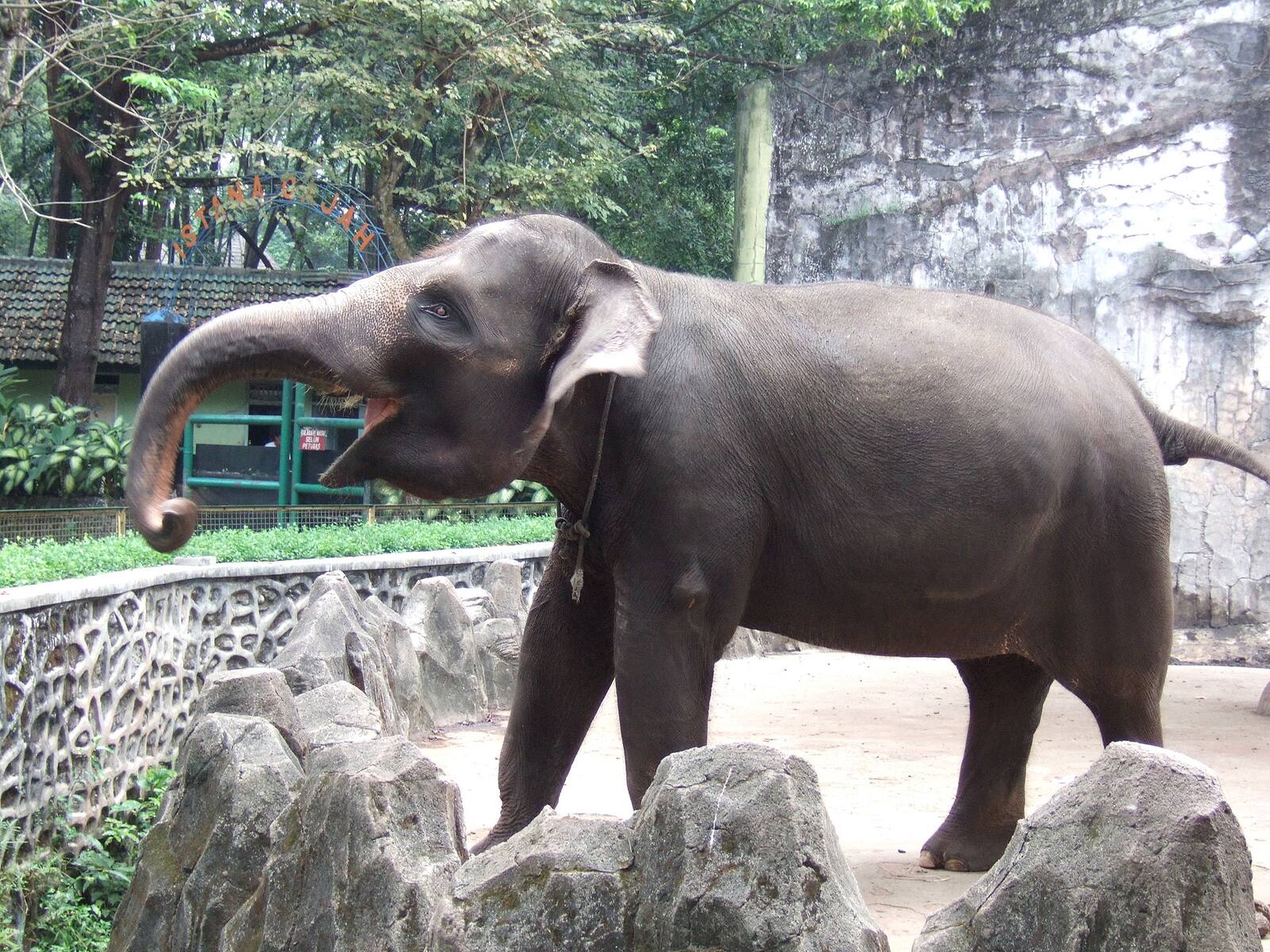
Sumatran elephant Elephas maximus sumatranus, Ragunan Zoo, by Midori, CC BY 3.0, via Wikimedia Commons.
The Sumatran elephant (Elephas maximus sumatranus) is one of the most threatened large mammals on Earth. A 2007 estimate put the population at 2,400 to 2,800. An older draft plan estimated 924 to 1,359. Indonesia’s draft 2026 to 2036 elephant action plan estimates 1,320 to 1,635; its authors say the higher figure reflects new data, not population growth. The IUCN uplisted the subspecies to Critically Endangered in 2011, after finding the population had fallen by at least 80 percent over three generations. This page explains what makes this elephant distinct, where its last herds survive, why the losses keep coming, and what is being done.
Which elephant lives here
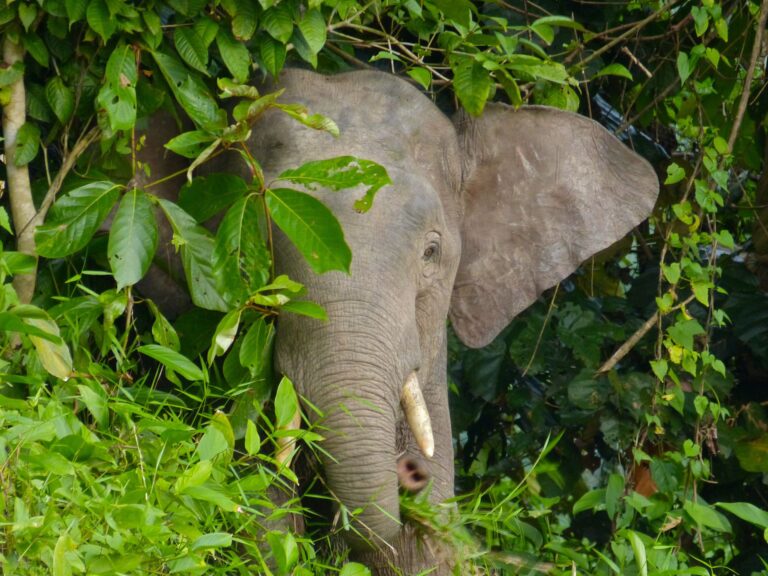
The Sumatran elephant is smaller than mainland and Sri Lankan elephants. The Bornean elephant is the smallest recognised subspecies. Compared with the mainland Asian elephant it has shorter limbs, lighter skin pigmentation and more rounded ears. An adult is noticeably more compact than the elephants seen in Thailand or India.
Genetic studies confirm it as a distinct subspecies, and some researchers argue the differences are sharp enough to warrant full species status. Whatever the taxonomy settles on, the practical point holds: this is a unique, irreplaceable population, and losing it would mean losing a branch of the elephant family tree rather than losing some elephants.
Where they survive
Sumatra’s remaining elephants live in scattered forest blocks rather than one continuous range. The key strongholds are Bukit Tigapuluh, Way Kambas in Lampung province, Tesso Nilo in Riau province, Bukit Barisan Selatan, and Gunung Leuser in the north.
Every one of these populations is small and cut off from the others by plantations, roads and settlements. Bukit Tigapuluh holds one of the larger groups, perhaps around 200 animals. Way Kambas is another important site, with estimates ranging from roughly 180 up to 280 depending on the survey. The danger in that pattern is well understood: herds too small and too separate to stay genetically healthy on their own.
Why they are critically endangered
The single biggest driver is the loss of lowland forest. WWF’s assessment at the time of the uplisting found that more than 69 percent of potential Sumatran elephant habitat had been lost within 25 years, converted to oil palm, paper-pulp plantations and farmland. Elephant habitat is concentrated in exactly the flat, fertile lowlands that are easiest to clear, so it has been hit hardest of all.
On top of that come three steady killers.
- Human-elephant conflict: as forest shrinks, elephants raid plantations and villages, and landowners retaliate.
- Poisoning: deliberate poisoning of crop-raiding elephants is a recurring cause of death.
- Poaching: Sumatran elephants are still killed for ivory.
These pressures feed each other. A herd squeezed out of its forest is forced into plantations, which raises conflict, which raises poisoning. Habitat loss is not one problem among several. It is the engine driving the others.
Conservation projects
Conservation in Sumatra is a fight to keep at least one viable population alive in each remaining forest block.
The Way Kambas Elephant Conservation Centre runs breeding and rescue work, caring for elephants displaced or orphaned by conflict. The best-known innovation is the elephant flying squad, started by WWF at Tesso Nilo in 2004. A flying squad is a small team of rangers with trained captive elephants, plus noise and light equipment and a vehicle, used to herd wild elephants away from villages and plantations before a confrontation turns deadly. It cut losses well enough that several squads now operate across Riau province, run variously by WWF, by plantation companies and by the national park.
The Frankfurt Zoological Society, WWF Indonesia and the Eyes on the Forest coalition run monitoring, anti-poaching patrols, GPS-collar tracking and corridor restoration. The shared goal is connectivity: linking isolated forest blocks so small herds are not left to fade in genetic isolation.
Where to visit
The Way Kambas Elephant Conservation Centre in Lampung is the most accessible place to learn about Sumatran elephants, and visits are possible with advance arrangement. Seeing wild elephants in Sumatra is logistically demanding and is not part of standard tourism circuits, so most visitors experience these animals through a conservation centre rather than in the wild.
Why this elephant matters to the whole forest
Saving the Sumatran elephant is not only about the elephant. These animals shape the forest around them. As they move they disperse the seeds of many rainforest plants in their dung, often over long distances, and their feeding and trampling open clearings that let new growth take hold. Where elephants vanish, the structure of the forest changes.
Sumatra’s elephants also share their shrinking habitat with the Sumatran tiger, the Sumatran orangutan and the Sumatran rhinoceros, all critically endangered. Protecting a viable elephant population in a block such as Tesso Nilo or Gunung Leuser tends to protect that whole web at once, which is why elephant conservation here is treated as a flagship for the island’s wider biodiversity.
Frequently asked questions
How many Sumatran elephants are left?
A 2007 estimate put the population at 2,400 to 2,800. Indonesia’s draft 2026 to 2036 elephant action plan estimates 1,320 to 1,635 across fragmented populations.
Why are Sumatran elephants critically endangered?
Habitat loss to oil palm and paper-pulp plantations, plus ivory poaching, poisoning and human-elephant conflict. More than 69 percent of potential habitat was lost in 25 years, and the IUCN uplisted the subspecies to Critically Endangered in 2011 on a decline of at least 80 percent over three generations.
What is being done to save them?
Breeding and rescue at Way Kambas, the elephant flying squad system pioneered at Tesso Nilo, GPS-collar tracking, anti-poaching patrols, and corridor restoration between remaining forest blocks.
How do they differ from mainland Asian elephants?
Smaller overall, with shorter limbs, lighter pigmentation and more rounded ears. They are a recognised distinct subspecies, and some researchers argue for full species status.
Where do Sumatran elephants live?
Bukit Tigapuluh, Way Kambas, Tesso Nilo, Bukit Barisan Selatan and Gunung Leuser. All the populations are small and isolated from one another.
Read next
Related reading
- Elephant Species: Complete Guide to All Living Elephants 2026: The three living elephant species and their subspecies: taxonomy, range, diet.
- Sumatran Elephant: Critically Endangered Forest Subspecies: Fewer than 3,000 left, extinct in more than half their former ranges, and squeezed by oil palm across the whole island.
- How Many Elephant Species Exist Today?: Three living elephant species: the African bush elephant, the African forest elephant and the Asian elephant, plus the four Asian subspecies and their current IUCN status.
- Bornean Pygmy Elephant: Borneo’s Small, Endangered Elephant: Around 1,500 Bornean pygmy elephants survive in Sabah.
Updated 14 September 2026: dated the Sumatran estimates and corrected the subspecies comparison.
Updated 26 October 2026: updated the Sumatran elephant estimate to Indonesia’s 2026 draft action plan.