
Elephants in Rwanda: Akagera’s Reintroduced Herd
Last updated: October 26, 2026
3 min read
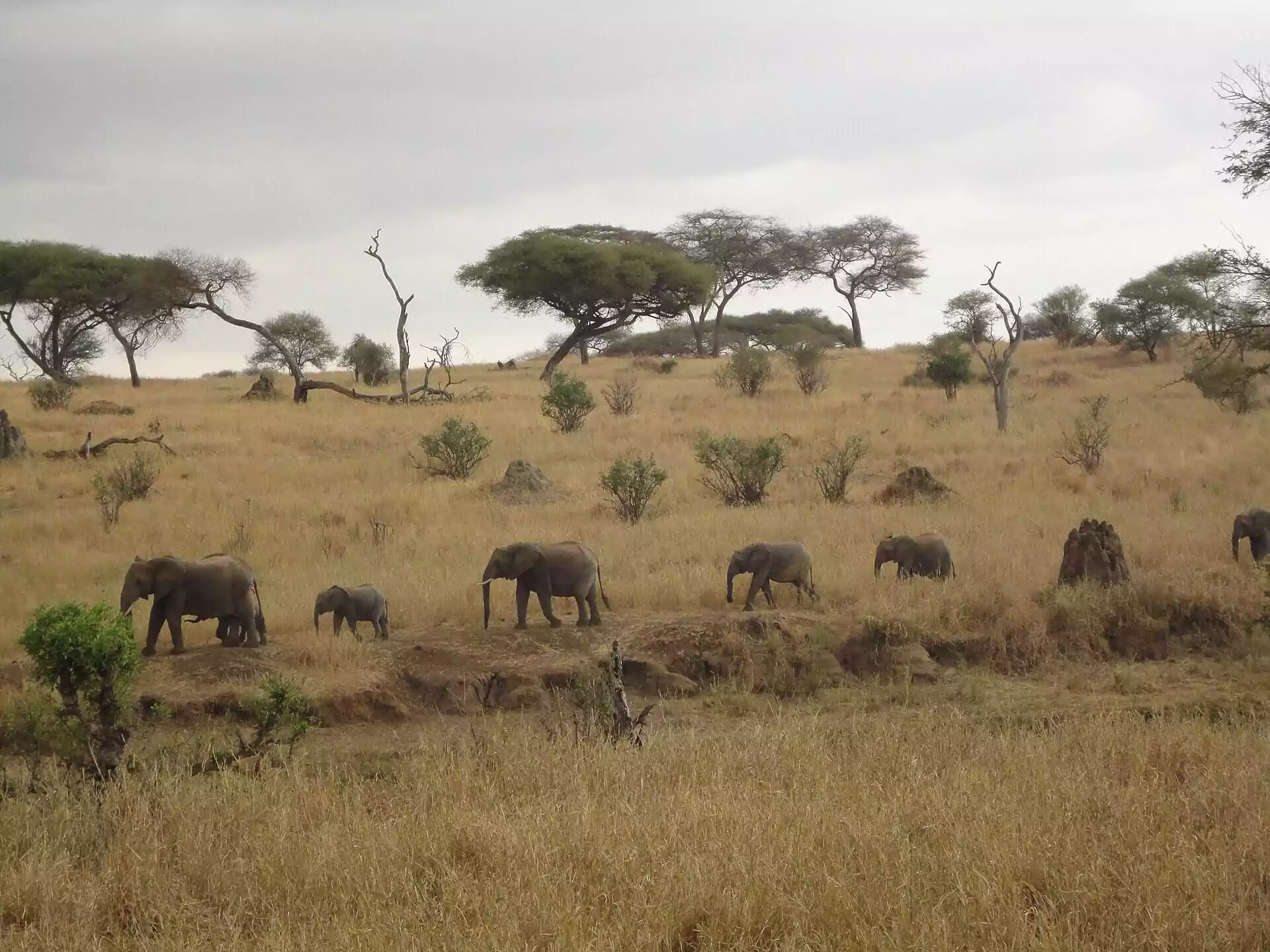
Elephants in Akagera National Park, by Gilson1111, CC BY-SA 4.0, via Wikimedia Commons.
Rwanda’s elephants live in one place, Akagera National Park in the east of the country, and every one of them descends from a translocation carried out fifty years ago. It is one of the more unusual founding stories in African conservation.
The 1975 translocation
A population of elephants in the Bugesera district, south of Kigali, had become a serious crop-raiding problem, and the adults were culled. Twenty-six young animals, 12 females and 14 males, aged around seven, were spared and moved to Akagera in 1975. They became the founding herd of everything in the park today.
Of the original 26, only a few ever habituated to people. The best known is Mutware, a solitary bull who lived through the 1994 war, lost his tusks, and became the park’s most recognisable elephant.
Akagera today
Akagera has been managed by African Parks under an agreement with the Rwandan government since 2010, and the recovery since then has been substantial. Lions were reintroduced in 2015, after an absence of about fifteen years, with two males brought from Tembe Elephant Park in South Africa. Eighteen eastern black rhinos followed from South Africa in 2017, five more from European zoos in 2019, thirty white rhinos in 2021, and seventy more white rhinos in 2025 in the largest single rhino translocation on record.
The elephant herd has grown steadily from those 26 founders. An August 2015 aerial count recorded 90 elephants. A newer published count is not available. Nobody has reported any subsequent elephant translocation into Akagera, so the whole population still traces back to 1975, which makes its genetic base narrow by any standard.
Conservation pressures
Akagera covers about 1,122 square kilometres and is surrounded by some of the most densely settled farmland in Africa, with smallholder cultivation running right up to the boundary. Human-elephant conflict along that edge is the dominant pressure, not poaching.
The main intervention has been a 120 km fence along the park’s western boundary, built as part of the security upgrade that followed the African Parks agreement. It has substantially reduced the number of animals leaving the park and raiding crops, which is the single biggest reason the relationship between the park and its neighbours has improved.
Where to visit
Akagera is the only place in Rwanda to see elephants. Self-drive and guided game drives both produce reliable sightings. Accommodation runs from campsites at Mihindi and Shakani through to Magashi Camp at the higher end, and park revenue is reinvested in Akagera under the management agreement.
Most international visitors pair it with mountain gorilla trekking at Volcanoes National Park in the northwest and chimpanzees at Nyungwe. Neither of those has elephants.
Read next
Our elephant species guide, elephant conservation pillar and elephant facts hub.
Frequently asked questions
How many elephants are in Rwanda?
An August 2015 aerial count recorded 90 elephants in Akagera. A newer published count is not available.
Where did Rwanda’s elephants come from?
From a single translocation in 1975. Twenty-six young elephants, aged around seven, were moved to Akagera from Bugesera after the adults of that population were culled for crop damage.
Can I see elephants in Volcanoes National Park?
No. Volcanoes is the mountain gorilla park in the volcanic highlands. Elephants live only in Akagera, in the eastern lowlands.
Who manages Akagera National Park?
African Parks, under a long-term agreement with the Rwandan government dating from 2010. African Parks manages more than twenty protected areas across thirteen African countries.
Carry on reading
- Elephant Conservation 2026: How to Save the Last Giants: Poaching trends, the 1989 ivory ban, the zoo and sanctuary debate, trophy hunting.
- Elephants in Chad: Zakouma’s Recovery Story: Zakouma National Park lost close to 90 percent of its elephants to organised poaching by 2010.
- Elephants in South Africa: Kruger, Addo, and Private Reserves: Around 44,000 elephants, roughly 31,300 of them in Kruger, and a population rebuilt from 11 survivors at Addo.
- When Elephants Attack: Around 500 people a year are killed by elephants in India and about 150 in Sri Lanka.
This article is part of our elephant species guide, which links every species, subspecies and country guide on the site.


Akagera’s elephants descended from 26 calves brought in 1975. That bottleneck is genetically narrow but the population has been stable through the Akagera revival. African Parks took it over in 2010 and the rebound has been quick.