Elephants in South Africa: Kruger, Addo, and Private Reserves
Last updated: October 14, 2026
4 min read
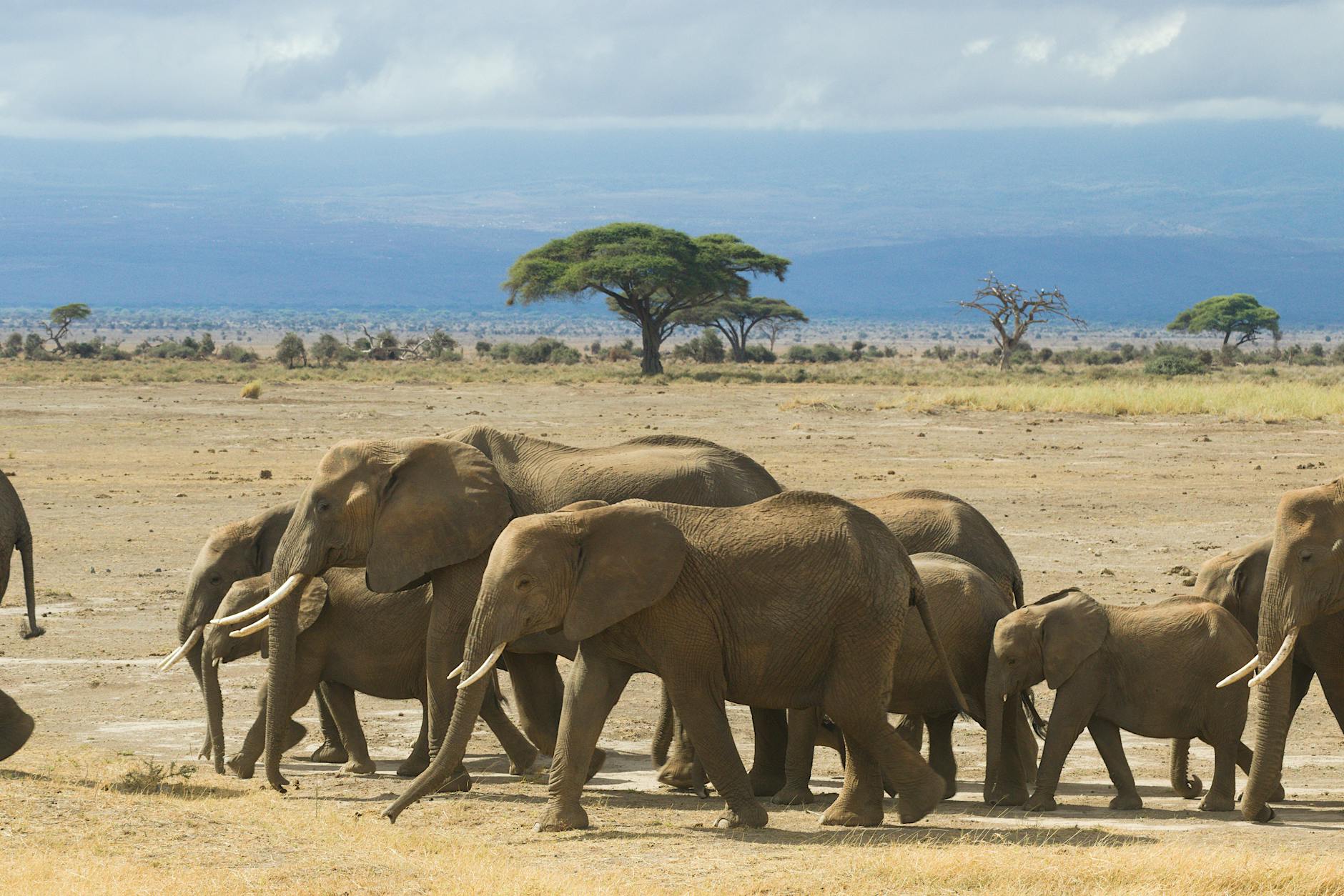
Photo by Philipp Schwarz on Pexels
South Africa holds around 44,000 elephants, and it is one of the most actively managed elephant landscapes anywhere in the world. The flagship population is in Kruger National Park, which a 2020 sample-based aerial survey put at about 31,300 animals. The rest are spread across Addo Elephant National Park, the private reserves of the Greater Kruger region, KwaZulu-Natal’s Hluhluwe-iMfolozi, and smaller parks such as Mapungubwe and Marakele. What makes South Africa unusual is not the numbers but the story behind them: a population rebuilt from near-collapse and now actively shaped by human decisions.
Where they live
- Kruger National Park: the flagship, at roughly 31,300 elephants in the 2020 estimate, across more than 19,000 square kilometres of bushveld. It is the largest national park in South Africa.
- Addo Elephant National Park: in the Eastern Cape, proclaimed in 1931 with 11 surviving elephants. Recent counts put it at around 780.
- Hluhluwe-iMfolozi, KwaZulu-Natal: a smaller but established population, largely built from elephants translocated out of Kruger.
- Private reserves: Sabi Sand, Timbavati, Madikwe and others, holding reintroduced populations largely sourced from Kruger stock.
The Addo recovery story
Addo deserves its own paragraph, because it is one of the great elephant comeback stories. In the early 20th century the elephants of the Addo bush were treated as a problem for local farmers, and a professional hunter was brought in to destroy the herd. By the time the park was proclaimed in 1931, only 11 were left alive. Nearly a century of strict protection, expanded boundaries and natural breeding has turned those survivors into a population approaching 800, one of the densest anywhere in Africa. Addo is proof that an elephant population on the edge of being wiped out can be brought back, given land and time.
A population shaped by translocation
South Africa’s elephant map is not natural in the way Tanzania’s or Botswana’s is. It has been heavily engineered through translocation. Many of the country’s elephants live in reserves that were once entirely elephant-free and were then stocked with animals moved, often as whole family groups, from Kruger over the past forty years or so. Moving an animal that weighs several tonnes is a serious logistical operation, and doing it at this scale, repeatedly, across decades, makes South Africa’s translocation programme one of the largest interventions of its kind on Earth. It is why so many private reserves can now offer reliable elephant sightings: the elephants were deliberately put there.
Carrying capacity and the culling debate
Success creates its own dilemma. A fenced park cannot expand the way a wild ecosystem can, so a growing elephant population eventually presses against the limits of its land. Elephants are powerful ecosystem engineers: they push over trees, strip bark and reshape vegetation, and in parts of Kruger those impacts are substantial and much argued over.
Kruger’s elephant numbers were actively controlled by culling until 1994, when the cull was suspended on welfare grounds. It has not been resumed, although the parks authority has explicitly kept culling on the table as a possible future tool. The current approach favours gentler levers: closing artificial water points so elephants redistribute themselves rather than concentrating, along with selective translocation of family groups to other reserves. It is a genuinely hard balance between the welfare of individual elephants and the health of the habitat they share with every other species in the park.
It is worth knowing that the numbers themselves are contested. Counting elephants in a park the size of Kruger is hard, and the park’s scientists have gone back and forth between total counts, sample-based aerial surveys and statistical modelling. The 2020 figure of about 31,300 carries a confidence range of roughly 28,500 to 34,200, which is a spread of nearly 6,000 animals. Any argument about carrying capacity has to sit on top of that uncertainty.
Best time to visit
The dry winter season, roughly May to September, is the prime time for elephant viewing. Sparse vegetation and shrinking water sources push elephants into the open and towards rivers and waterholes. The wet summer season, around November to March, is lush and green with many newborn animals, but thicker bush and rain-affected roads make sightings less predictable. If you want a strong chance of good elephant encounters, plan for the dry months. Whichever reserve you choose, pick operators that keep a respectful distance and avoid any that promote close-approach or hands-on contact tourism.
What South Africa teaches about conservation
South Africa’s elephants sit at the opposite end of the spectrum from places like Sumatra or Vietnam, where the fight is to keep a tiny population alive. Here the challenges are the challenges of success: fenced land with more elephants than it was designed for, the ethics of culling, and a population that exists in part because people moved it there. Conservation is not only about rescuing the last survivors. Once a population recovers, it has to be actively and thoughtfully managed for the long term. The story of Addo’s 11 elephants becoming close to 800, and of Kruger’s 31,000, shows both how far recovery can go and how much careful work it then demands.
Read next
Frequently asked questions
How many elephants are in South Africa?
Around 44,000. The flagship population is Kruger National Park, estimated at about 31,300 in 2020.
Where can I see elephants in South Africa?
Kruger National Park, Addo Elephant National Park, and the private reserves of the Greater Kruger landscape are all reliable. Hluhluwe-iMfolozi in KwaZulu-Natal is a smaller alternative.
Does South Africa cull elephants?
Active culling was suspended in 1994. Current management uses water-point closure and selective translocation instead, though the authority has reserved the right to cull in future.
How did Addo go from 11 elephants to nearly 800?
Strict protection, expanded park boundaries, and natural increase since the park was proclaimed in 1931. Addo is one of the longest-running elephant recovery success stories anywhere.
Are private reserves good for elephant viewing?
Often very good. Many of the Greater Kruger private reserves offer high-quality elephant encounters with experienced guides. Avoid any operator that promotes close-approach or contact tourism.
Read next
- Elephant Conservation 2026: How to Save the Last Giants: Poaching trends, the 1989 ivory ban, the zoo and sanctuary debate, trophy hunting.
- 7 Best Places To See Elephants In The Wild Worldwide: Seven of the best places on earth to see wild elephants, from Chobe and Tarangire to the Kinabatangan River and the Nilgiri biosphere, with where to go in each.
- African Bush Elephant: The Largest Land Animal on Earth: Size, range, social structure and conservation status of the African bush elephant.
- Elephants in Rwanda: Akagera’s Reintroduced Herd: Every elephant in Rwanda descends from 26 young animals moved to Akagera in 1975.