

Hungry Wild Elephants In Vietnam Go On Rampage
Last updated: October 26, 2026
3 min read
Hungry wild elephants in Vietnam have been raiding farms, and in several cases attacking the country’s captive elephants in the process. The incidents below were reported through 2017 in Dak Lak and Dong Nai provinces. They are worth revisiting because the underlying pressure has not gone away.
Wild herds turning on tame elephants
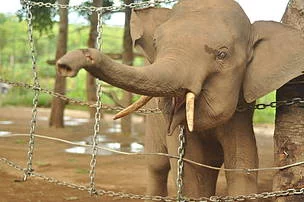
In a number of provinces there were repeated clashes between wild elephants and captive ones, and food was behind all of them. At least five such incidents were reported between March and August 2017.
The worst involved a herd of seven wild elephants that attacked and injured two captive animals at Forest Management Station No. 6 in Yok Don National Park. The wild groups involved usually numbered six or seven, and they came in towards ranger stations and settlements looking for food. In an earlier incident in Krong Na commune, Buon Don district, wild elephants injured seven captive animals and killed one.
With only around 100 wild elephants left in the whole of Vietnam, and captive elephants concentrated in the same few districts, there is very little room for either group to avoid the other.
Why it keeps happening
Shrinking habitat
In Dak Lak province, where many of the incidents occurred, large areas of forest have been converted to farmland. Less forest means less wild food, which pushes elephants towards human settlements, which produces exactly the conflicts described above. Estimates reported at the time put the elephants’ available space at around 50,000 hectares in the 1990s, down to under 30,000 hectares two decades later.
Plantations on the forest edge
Much of the converted land grows crops elephants like. In Dinh Quan district in Dong Nai, wild elephants became notorious for wrecking crops and equipment, and the province invested in a major electric fencing project to separate plantations from the herds. When a herd does get into a plantation it does not feed tidily: farmers report thousands of trees destroyed in a night.
The dry season
Dry-season shortages sharpen everything. One farmer in Thanh Son commune reported losing over 400 banana trees in a single night to a herd of twelve, which also took out cashew trees, water tanks and pipes. Another in the same area lost three hectares of crops to six elephants, including 1,500 banana trees, 300 pepper plants and 20 jackfruit trees. That run of raids started in early February and affected close to 30 farmers, carried out at night by a herd of twelve to fifteen animals. Nobody was hurt.
Musth, the periodic high-testosterone state in bulls, was raised at the time as a possible aggravating factor in the attacks on captive elephants. We have not seen it confirmed for any of these specific incidents, so treat it as a plausible contributor rather than an established cause.
The captive side of the problem
Dak Lak’s captive elephant population was reported at around 43 animals, with no calves born to captive females there in decades and many of the remaining cows past breeding age. A captive population that small and that old is not a population at all, it is a countdown.
What was being done
Because so few wild elephants remain, authorities have been careful about protecting them from retaliation by farmers. Local guards were posted to turn approaching herds away with whistles and fire, and forest rangers ran outreach urging farmers not to use electric current, poison or explosives against raiding animals.
At national level, Vietnam ran an urgent elephant conservation plan covering 2013 to 2020. In December 2016 WWF worked with Vietnamese authorities on an emergency project to protect the country’s largest remaining herd. The Ministry of Planning and Investment approved VND 74 billion, around 3.3 million US dollars, for urgent protection of wild herds in Dong Nai province, with the money going towards assessing the population and planning habitat expansion.
On the captive side, owners and tourism businesses were told to keep their elephants out of areas where wild herds were being seen, and to stop chaining them out in the forest overnight.
Protecting the captive elephants treats the symptom. The thing driving all of it is that the wild herds have nowhere left to eat.
We have not found reliable up-to-date figures for how these particular herds are faring now. If you have current information from Dak Lak or Dong Nai, leave a comment and we will update the page.
This article is part of our elephant conservation guide, which links all our reporting on threats, trade, captivity and what helps.
Keep reading
- 100 Elephant Facts: Everything to Know About Earth’s Largest Land Animal: Our master elephant fact sheet: anatomy, cognition, matriarchal society, infrasound, the trunk, tusks and ivory, diet.
- Wild Elephants in Vietnam: Down to the Last Couple of Hundred: Vietnam held roughly 2,000 wild elephants in the 1980s.
- Elephants in Vietnam: The Last Hundred and the Yok Don Model: Around 100 wild elephants are left in Vietnam.
- Elephants in Sumatra: The Critically Endangered Subspecies: Around 2,400 to 2,800 Sumatran elephants survive in scattered forest blocks.



Land should be set aside for these diminishing animals, people should practice birth contro