Mali Desert Elephants: 473 Counted in 2025
Last updated: September 14, 2026
3 min read
The Gourma elephants of Mali walk the longest annual migration of any elephant population on record: a loop of around 600 km through Sahel scrub and acacia woodland. They are the most northerly elephants in Africa and one of only two desert-adapted populations anywhere. They have spent the last decade surrounded by armed conflict, and they are still there.
Who they are
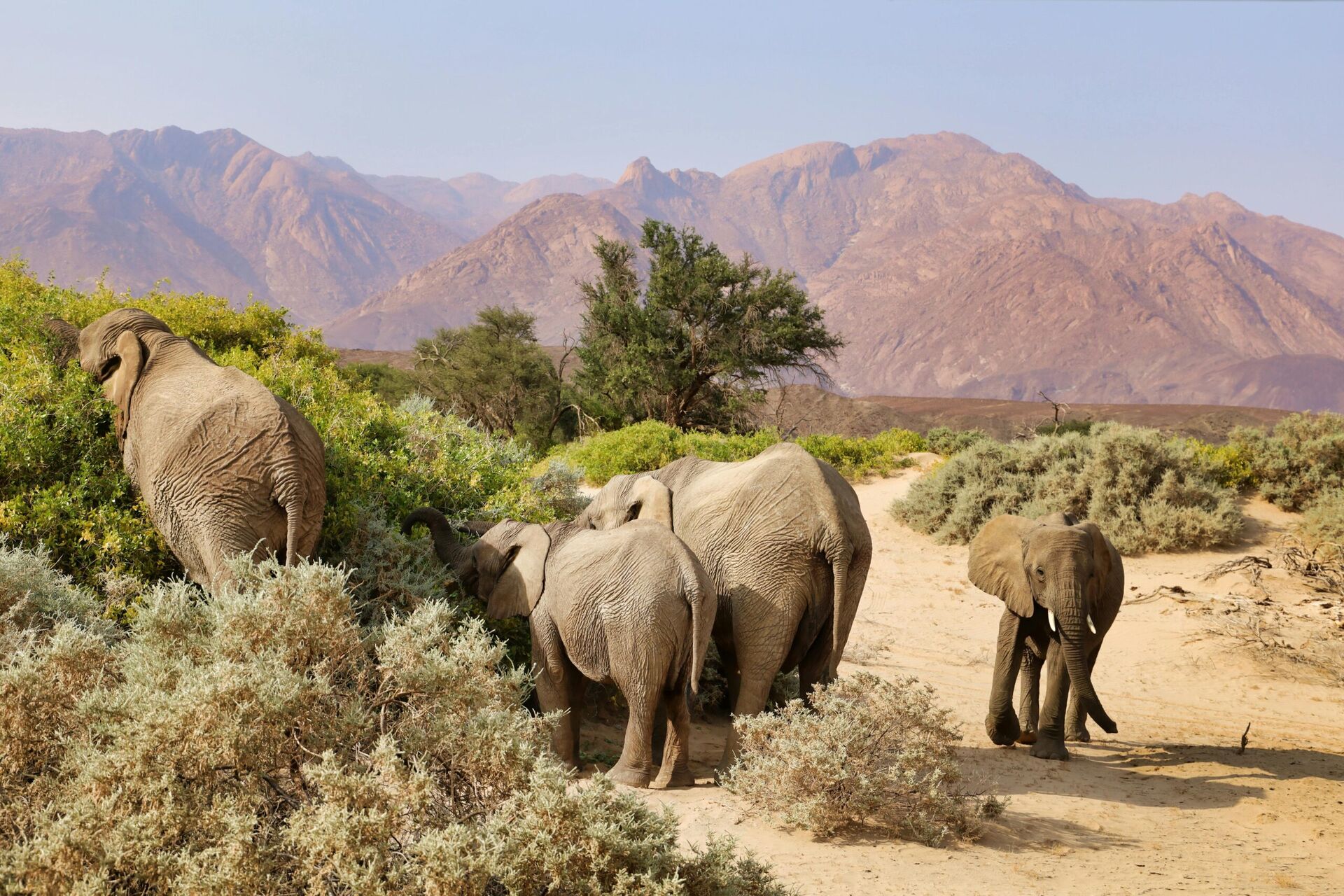
Mali’s desert elephants belong to the African bush elephant species, but they live in about the harshest environment any elephant occupies. The Gourma herd moves in an annual circuit across more than three million hectares, from the bend of the Niger river in the dry season out toward the Burkina Faso border in the wet months.
They are leaner than savanna elephants and pale with dust, they go longer between drinks than most elephants, and they get through the dry season on browse when there is no grass. It is behavioural adaptation rather than genetic divergence: they are not a separate subspecies.
The migration
The 600 km loop is the longest elephant migration documented anywhere. Collaring work in the 2000s, carried out with Save the Elephants as a research partner, produced the first full map of the route and showed how precisely the animals time their movements to seasonal grass growth and how carefully they route around villages.
Conflict and its toll
Northern and central Mali have been at the centre of a long-running armed conflict involving the Malian state, Tuareg separatists and jihadist groups. From 2012 onwards the security situation made conservation work intermittently impossible, and poaching re-emerged as a serious threat after 2015 in a landscape that had largely escaped the killing that emptied other Sahel populations in the 1980s.
The response was an anti-poaching unit trained by Chengeta Wildlife, which brought elephant poaching back down to very low levels. That the population held together through this is the surprising part of the story.
How many are left
A systematic survey involving the project’s ecoguards counted 473 elephants in 2025, up from 316 counted in 2023. Estimates from the mid-2000s put the population somewhere between 350 and 700, so the herd has not recovered to its historic size, but the trend over the last few years is upward rather than downward. Given where the landscape has been since 2012, that is a real result.
The Mali Elephant Project
The project has been the constant here since the WILD Foundation began work in the Gourma in 2003. It is directed by Susan Canney, of Oxford, with Nomba Ganame as field manager, who won the Tusk Prince William Award for Conservation in Africa in 2024. Biome Conservation has been the lead funder since 2010.
The model is community-led conservation in a conflict zone. Local people are employed as ecoguards, and the number has gone from 46 in 2011 to 1,472 in 2025, doing patrols, monitoring and firebreak work: 2,297 km of firebreaks were cut in 2024 alone. Work with the government led to the creation of the Gourma Biosphere Reserve, 4.2 million hectares, in 2021.
What survival depends on
Three things. Continued community engagement, without which the elephants would be killed for meat and ivory by passing groups. Restoration of seasonal water sources, since parts of the historic range have dried out. And a Sahel security situation that stays workable, which is outside anyone’s control here.
If you want to support the population, the Mali Elephant Project is the credible recipient.
Read next
Our elephant conservation pillar, elephant species guide and ivory trade explainer.
Frequently asked questions
How many Mali desert elephants are left?
473 were counted in a 2025 survey, up from 316 in 2023.
Where do Mali’s elephants live?
The Gourma, in central Mali south of Timbuktu. They walk a roughly 600 km annual loop between the Niger river bend and the wet-season range toward the Burkina Faso border.
Are they a different species?
No. They are African bush elephants (Loxodonta africana) with strong behavioural adaptations to desert and Sahel conditions, not a separate subspecies.
What is the biggest threat?
The combination of armed conflict and ivory poaching. The security collapse from 2012 onwards drove both direct killing and the breakdown of the conservation infrastructure that would otherwise prevent it.
Can you visit them?
Not at present. Northern and central Mali have been off limits to tourists since 2012, and conservation visits are arranged only for credentialed researchers and donors with substantial security planning.
Related reading
- Elephant Conservation 2026: How to Save the Last Giants: Poaching trends, the 1989 ivory ban, the zoo and sanctuary debate, trophy hunting.
- Elephants in Mali: The Gourma Desert Herd: A few hundred elephants in the Sahel walk the longest documented elephant migration on Earth, and the people protecting them work in an active conflict zone.
- Elephant Poaching Trends: Where the Pressure Is Now: Poaching is far below the 2011 peak but has stopped improving.
- Elephants in Namibia: Desert-Adapted Survivors: Namibia holds around 24,000 elephants, including the desert-adapted herds of the Kunene.