Elephants in Kenya: Where, When and What You Will See
Last updated: November 26, 2026
3 min read
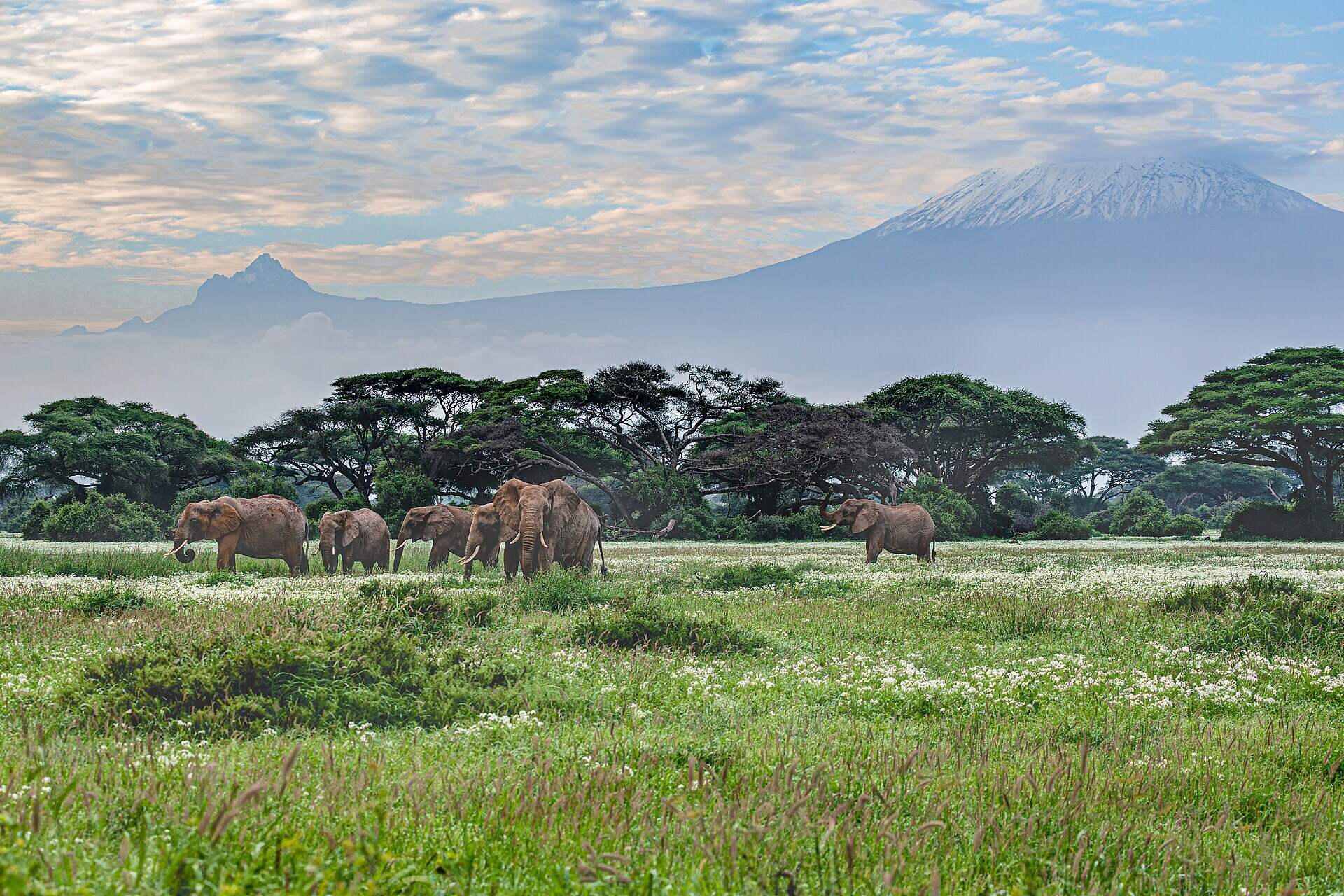
Amboseli National Park and Mt. Kilimanjaro, by Ninaras, CC BY 4.0, via Wikimedia Commons.
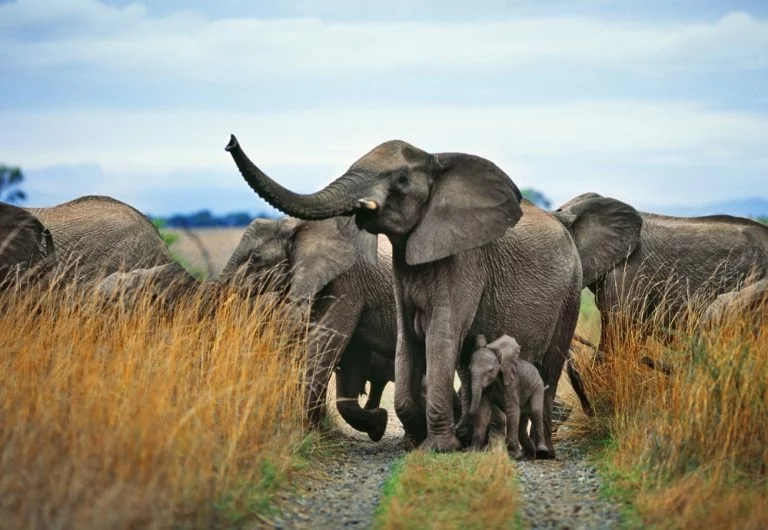
Kenya is one of the best places on Earth to see elephants. The country’s 2025 official estimate was 42,072 elephants, and its main viewing parks are accessible and well mapped.
Amboseli
Amboseli is the iconic Kenyan elephant park. Reliable dry-season concentrations, Kilimanjaro as a backdrop, and a population of well-studied bulls make it the single most photographed elephant population on the planet.
The Amboseli Elephant Research Project, founded by Cynthia Moss in 1972, has identified every elephant in the park individually and followed them across generations. It is the longest-running study of wild elephants anywhere, and the bulls that came out of it, Tim, Craig, Tolstoy, are known well beyond Kenya.
Tsavo East and West
Tsavo is Kenya’s largest protected area and the last real stronghold of the super tuskers: bulls carrying tusks of more than 100 pounds, around 45 kg, on each side. Tsavo Trust runs the Big Tusker Project with the Kenya Wildlife Service, monitoring around 10 recognised super tuskers plus a further 32 emerging tuskers, younger bulls that may grow into the category. Fewer than 30 super tuskers are thought to survive anywhere in Africa. Casual sightings are extremely rare, and rightly so given how closely these animals are protected.
What most visitors will see is the wider Tsavo population, distinctively reddish-brown from rolling in the iron-rich soil, in large numbers around the year-round waterholes in the dry season.
Samburu
Northern Kenya’s Samburu reserve hosts a smaller, more dispersed elephant population alongside the Save the Elephants research base founded by Iain Douglas-Hamilton. The Samburu elephants have been studied intensively, and several family groups are habituated to research vehicles, which makes for closer and longer encounters than the Mara or Amboseli typically offer. Samburu also sits in the middle of the Northern Rangelands Trust community conservancy network, which is where the community conservation model in Kenya was built out.
Maasai Mara
The Mara is the better-known wildlife destination overall but less famous for elephants. Family groups are widespread and easy to see, though concentrations are not as predictable as Amboseli’s. The reserve is ringed by community conservancies coordinated through the Maasai Mara Wildlife Conservancies Association, which have added a substantial area of protected habitat around the formal reserve boundary and given elephants room to move outside it.
Seasons
Dry season, July to October, brings reliable elephant concentrations to waterholes and river systems. Visibility is best, the grass is short, and elephants gather at predictable sites. Wet season, March to May and November to December, disperses elephants into the bush, makes off-road driving difficult, and lowers sighting rates. Most experienced photographers target late July to early October.
Ethical operators
Kenya’s tourism sector has a stronger record on elephant ethics than most African destinations. Kenya Wildlife Service park rules require vehicles to keep a respectful distance and stay on tracks, and reputable operators in Amboseli and Tsavo follow a no-revving, no-disturbance code of conduct. Avoid any operator offering close-approach photos, feeding interactions, or walking with elephants on private property. Those products almost always involve elephants raised in poor welfare conditions.
Read next
Frequently asked questions
Where is the best place to see elephants in Kenya?
Amboseli National Park for the iconic Kilimanjaro shots and reliable concentrations. Tsavo East and West for sheer numbers. Samburu for closer, more habituated encounters.
How many elephants are there in Kenya?
42,072 in the 2025 official estimate, up from a low of roughly 16,000 in 1989.
Can I see super tuskers in Kenya?
Tsavo East and West hold the last significant group of bulls carrying tusks over 100 pounds a side. Tsavo Trust monitors around 10 of them, plus 32 emerging tuskers coming up behind. Sightings by ordinary visitors are extremely rare.
What is the best season to see elephants in Kenya?
Dry season, July to October. Elephants concentrate around waterholes, the grass is short, access is easier and visibility is highest. The wet season disperses elephants and lowers sighting rates.
Are there ethical elephant experiences in Kenya?
Yes. The Sheldrick Wildlife Trust orphan nursery in Nairobi opens to the public for one hour a day, 11am to midday, and is the global benchmark for orphan rehabilitation. The Reteti Elephant Sanctuary in northern Kenya is community-owned and Samburu-run. Both are credible by the standards of any major welfare accreditor.
- Elephant Species: Complete Guide to All Living Elephants 2026: The three living elephant species and their subspecies: taxonomy, range, diet.
- Elephants in Kenya: From Tsavo to Amboseli: 42,072 elephants in the 2025 estimate, the fifty-year Amboseli study, and why drought now kills more of them than poachers do.
- Conservation Spotlight: The Amboseli Elephants Of Kenya: Fifty years of continuous research, an unfenced population living on Maasai land, and a threat list where drought now outranks poaching.
- 7 Best Places To See Elephants In The Wild Worldwide: Seven of the best places on earth to see wild elephants, from Chobe and Tarangire to the Kinabatangan River and the Nilgiri biosphere, with where to go in each.
Updated 14 September 2026: updated Kenya’s 2025 elephant estimate.