

How the David Sheldrick Wildlife Trust Raises Orphan Elephants
Last updated: November 26, 2026
4 min read
The Sheldrick Wildlife Trust has raised more orphaned elephants than any other organisation in the world. Its own published count stands at 327 orphans successfully raised, and 94 calves born to former orphans now living wild in Tsavo. The trust was founded in Nairobi in 1977 by Daphne Sheldrick, in memory of her husband David, the founding warden of Tsavo East National Park.
Key facts
- Founded 1977 by Dame Daphne Sheldrick, as the David Sheldrick Memorial Appeal. It became the David Sheldrick Wildlife Trust in 1987 and was renamed the Sheldrick Wildlife Trust in 2019.
- 327 orphans successfully raised, and 94 calves born to former orphans living wild (trust figures).
- The milk formula breakthrough came in 1974, with an orphan called Aisha, three years before the trust existed.
- One main nursery in Nairobi National Park, a neonate nursery at the Kaluku field headquarters, and three reintegration units: Voi, Ithumba and Umani Springs.
- Fostering an orphan costs from 50 USD a year.
The milk formula
Before the 1970s, no milk-dependent orphaned elephant had been reared to adulthood. Cow’s milk killed them. Daphne Sheldrick spent years testing substitutes, and in 1974 a formula built around coconut fats kept an orphan called Aisha alive. Coconut oil turned out to be the closest available match for the fat in elephant milk.
That single result is why the field exists. Without a digestible formula there was nothing to build a protocol on. Note the date: the breakthrough predates the trust by three years, and the trust was set up around a method that already worked.
How the rearing works
Calves arrive at the Nairobi nursery from across Kenya, usually after their mothers are poached, die in drought, or the calf falls down a well. The youngest go to the Kaluku neonate nursery, where the warmer climate suits very small elephants better.
Feeding runs round the clock for the youngest orphans, at intervals that mimic what a calf would take from its mother. Keepers sleep in the stables with them. Keepers are deliberately rotated so that no orphan bonds to one person, because that person will eventually not be there.
Social integration with the other orphans starts early. Older orphans model behaviour that younger ones copy, which is the mechanism that makes group rearing work better than one-to-one care.
Reintegration
At around three years old, orphans graduate from the Nairobi nursery to one of the three reintegration units. Voi and Ithumba sit inside Tsavo East. There the orphans join semi-wild groups of older ex-orphans, with keepers still present but stepping back over time. The full transition back to wild herds can take ten years.
The orphans leave on their own schedule. Some join wild herds, some stay with established ex-orphan groups. Keepers do not push the departure.
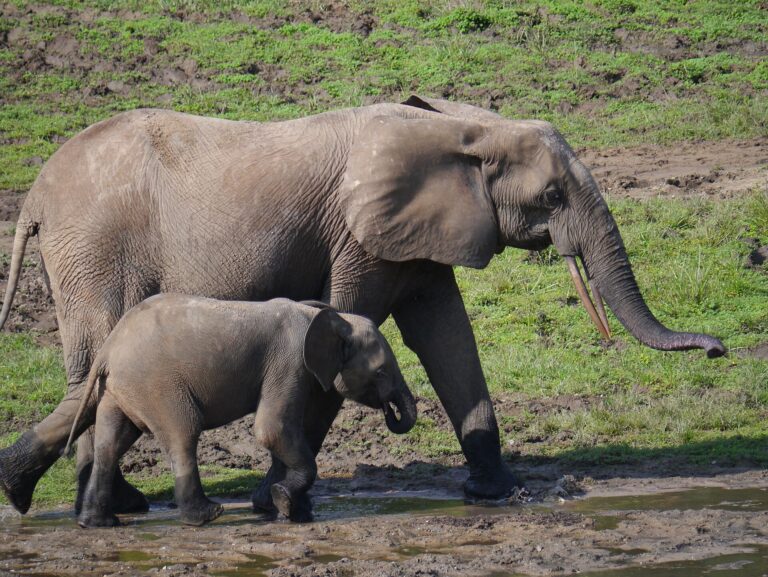
The strongest evidence that the model holds is what happens afterwards. Wild-living former orphans bring their own wild-born calves back to the stockades to show them to the keepers. The trust has recorded 94 such births.
Umani Springs
Umani Springs opened in the Kibwezi Forest in June 2014 for orphans whose injuries make Tsavo’s harder country unsuitable. Its first two residents were Murera, who had a broken hip after treading on poisoned spikes, and Sonje, whose knee was shattered by a poacher’s bullet. Both have permanent damage to one leg. The forest is greener, the browse is easier to reach and the walking is gentler.
The fostering programme
Individual supporters foster a named orphan from 50 USD a year. Fosterers get monthly updates and access to the keepers’ diaries, which are written up daily for every orphan in the nursery and the reintegration units. That level of reporting is unusual for a conservation organisation and it is a large part of why the programme retains donors.
Wider conservation work
The orphans’ project is the visible part of a larger operation. The trust also runs anti-poaching teams, canine and aerial units, water projects and community outreach, and it funds mobile veterinary units in partnership with the Kenya Wildlife Service across several Kenyan ecosystems. Those vets handle snare removal, arrow and spear wounds and darting for treatment, for elephants and for other large wildlife.
Frequently asked questions
When was the trust founded?
1977, by Dame Daphne Sheldrick, in memory of her husband David Sheldrick. It has been called the Sheldrick Wildlife Trust since 2019.
How many orphans has it raised?
327 successfully raised, on the trust’s own count, with 94 calves since born to former orphans living wild.
Where are the units?
The main nursery is in Nairobi National Park, with a neonate nursery at the Kaluku field headquarters near Tsavo East. The three reintegration units are Voi, Ithumba and Umani Springs.
Can I foster an elephant?
Yes. Fostering starts at 50 USD a year and includes monthly updates and the keepers’ diaries.
What was the milk formula breakthrough?
A formula using coconut fats rather than dairy fat, which worked for the first time in 1974 with an orphan called Aisha. Coconut oil is the nearest common substitute for the fat in elephant milk.
Do other orphanages use the same formula?
Not necessarily. Reteti Elephant Sanctuary in northern Kenya switched in 2020 to a formula based on goat milk bought from Samburu women locally, which is cheaper and easier to source than imported powder. Rearing methods have diverged rather than converged.
Do reintegrated orphans really come back?
Yes. Wild-living former orphans bring their wild-born calves to the stockades to introduce them to keepers. The trust records each birth.
Read next
See our elephant conservation pillar and our overview of elephants in Kenya.
Elsewhere on We Love Elephants
- Elephant Conservation 2026: How to Save the Last Giants: Poaching trends, the 1989 ivory ban, the zoo and sanctuary debate, trophy hunting.
- Elephant Calves Fight Over Milk: A Sheldrick Wildlife Trust clip of two sisters squabbling over their mother’s milk, and what it shows about weaning, allomothering, and a former orphan raising wild-born calves.
- 10 Elephant Rescue Stories That Stayed With Us: Ten documented elephant rescues and the people behind them, each one checkable against the organisation that ran it.
- 7 Ways to Help Elephants Without Leaving Your House: Seven things that actually move the needle for elephant conservation, ranked by impact per unit of effort.



Wild-born calves being brought back by ex-orphans to introduce them to keepers is one of the most moving facts in conservation.
Mobile vet units doing snare and arrow removal across multiple landscapes is the trust’s most underrated arm.
The ex-orphans bringing back wild-born calves is the part that gets me too. Best evidence we have for the model’s long-term success.
Umani Springs taking the snare-injury survivors is the under-discussed piece. Tsavo conditions are too harsh for some recoveries.
Mobile vet units are the underrated story. Tens of thousands of cases across multiple landscapes is real impact.