
Should Elephants Have Human Rights?
Last updated: September 14, 2026
2 min read
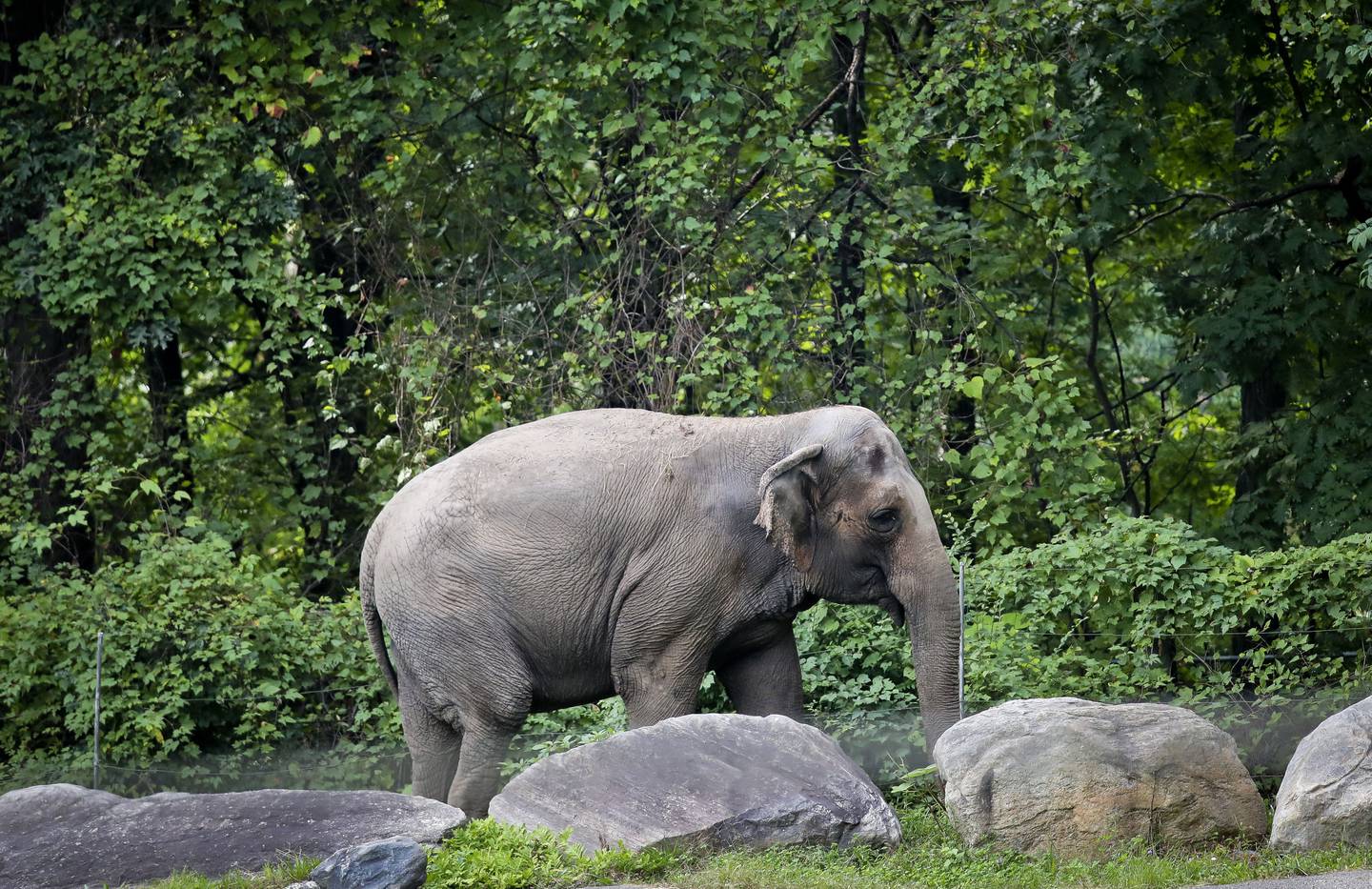
For four years the question of whether an elephant can be a legal person ran through the New York courts. The elephant was Happy, an Asian elephant at the Bronx Zoo. The answer, when it came, was no. Happy died at the zoo in May 2026.
Who Happy was
Happy was born in Thailand around 1971 and taken as a calf. She was sold to Lion Country Safari in California, which had seven young elephants and named them after Snow White’s dwarves. When Sleepy died the group was broken up. Some went to circuses, some to zoos. Happy and Grumpy arrived at the Bronx Zoo in 1977 and were put on the Wild Asia exhibit.
Grumpy died in 2002 after being attacked by two of the other zoo elephants, Patty and Maxine. The zoo then paired Happy with a younger Asian elephant, Sammie, who was euthanised in 2006 after severe liver disease. Maxine died in November 2018. From then on Happy and Patty were each kept alone.
Also in 2005, Happy became the first elephant to pass the mirror self-recognition test, repeatedly touching a mark on her own head that she could only see in a mirror. That result is what made her a test case rather than just a zoo animal.
The case
The Nonhuman Rights Project filed a habeas corpus petition in 2018 arguing that Happy was an autonomous, cognitively complex being who was being unlawfully confined, and asking that she be moved to a sanctuary. Habeas corpus is the ancient mechanism for testing whether a detention is lawful. The whole case turned on whether it can reach a nonhuman animal at all.
The Bronx Zoo argued that Happy was well cared for, that she had another elephant nearby, and that extending personhood would reach far past zoos. In its filing the zoo wrote that changing this most fundamental of legal concepts “has implications not just for zoos, but for pet owners, farmers, academic and hospital-based researchers and, most critically, every human who might seek or need access to the judicial system”.
The New York Court of Appeals heard argument on 18 May 2022 and ruled on 14 June 2022. The vote was 5 to 2 against. Chief Judge Janet DiFiore wrote that habeas corpus is intended to protect the liberty of human beings and has no applicability to a nonhuman animal who is not a person subject to illegal detention. Judges Rowan Wilson and Jenny Rivera dissented, pointing out that habeas corpus has historically been stretched to cover people the law of the day did not treat as full legal persons.
What happened to Happy
Happy stayed at the Bronx Zoo. She was euthanised on 26 May 2026 at the age of 55 after age-related health problems worsened quickly. A necropsy found arthritis and large uterine tumours that were inoperable and, according to the zoo, effectively impossible to detect in a living elephant through examination or imaging.
The legal question she raised did not go with her. The Nonhuman Rights Project is still bringing similar cases, and the underlying argument has not been answered so much as deferred: elephants walk for miles, build long friendships, and grieve. Happy had a little over an acre. Whether that gap is a legal problem or only a moral one is still open.
Our piece on why so many elephants are dying in zoos covers the welfare side of the same question.
Updated 14 September 2026: corrected Sammie’s death date and cause.


where does the legal-personhood case actually stand globally in 2026? the Happy case in Albany was the headline but Argentina granted Sandra the orangutan personhood back in 2014 and Colombia did the spectacled bear ruling around 2017. has any jurisdiction extended habeas corpus to an elephant specifically yet, or is Happy still the test case that did not land?
i am not convinced legal personhood is the right lever for Happy. the Bronx Zoo enclosure being an acre and a sleep cage twice her body length is a welfare problem solvable with stronger USDA APHIS standards that actually get enforced. habeas corpus is a slow, brittle route that ends up turning every welfare case into a constitutional fight.
Khumalo, you are pushing the right direction. The APHIS standards are toothless on paper but they could be sharpened without redefining personhood, and the political path is faster. The Nonhuman Rights Project’s strategy puts a lot on a single test case that the courts keep declining to land on. A draft on this nuance is in the queue, will tag you when it goes up.