
Beehive Fences and Why They Work: Using Bees to Protect Crops from Elephants
Last updated: November 26, 2026
6 min read
Elephants are afraid of African honeybees. They flap, rumble alarm calls, and back off when bees swarm near their faces and trunks. Lucy King and her team turned that observation into a low-cost crop-defence system now used across roughly twenty countries, with measurable reductions in human-elephant conflict.
Key facts at a glance
| Origin of the idea | Lucy King’s doctoral work at Oxford with Save the Elephants, supervised by Fritz Vollrath, with Iain Douglas-Hamilton |
| First community trial | Sagalla community, near Tsavo East National Park, Kenya, from around 2009 |
| Reported deterrence rate | Around 80 percent of attempted elephant raids turned back at beehive fence farms |
| Construction cost | Roughly USD 1.50 to 5.00 per metre of fence, depending on local materials and labour |
| Honey co-benefit | A few kilograms per occupied hive per year, sold locally as elephant-friendly honey |
| Range now | Studied or deployed in around 15 African and 4 Asian countries |
| Best for | Smallholder farms (under 2 hectares) on the edge of protected areas |
Why elephants are afraid of bees
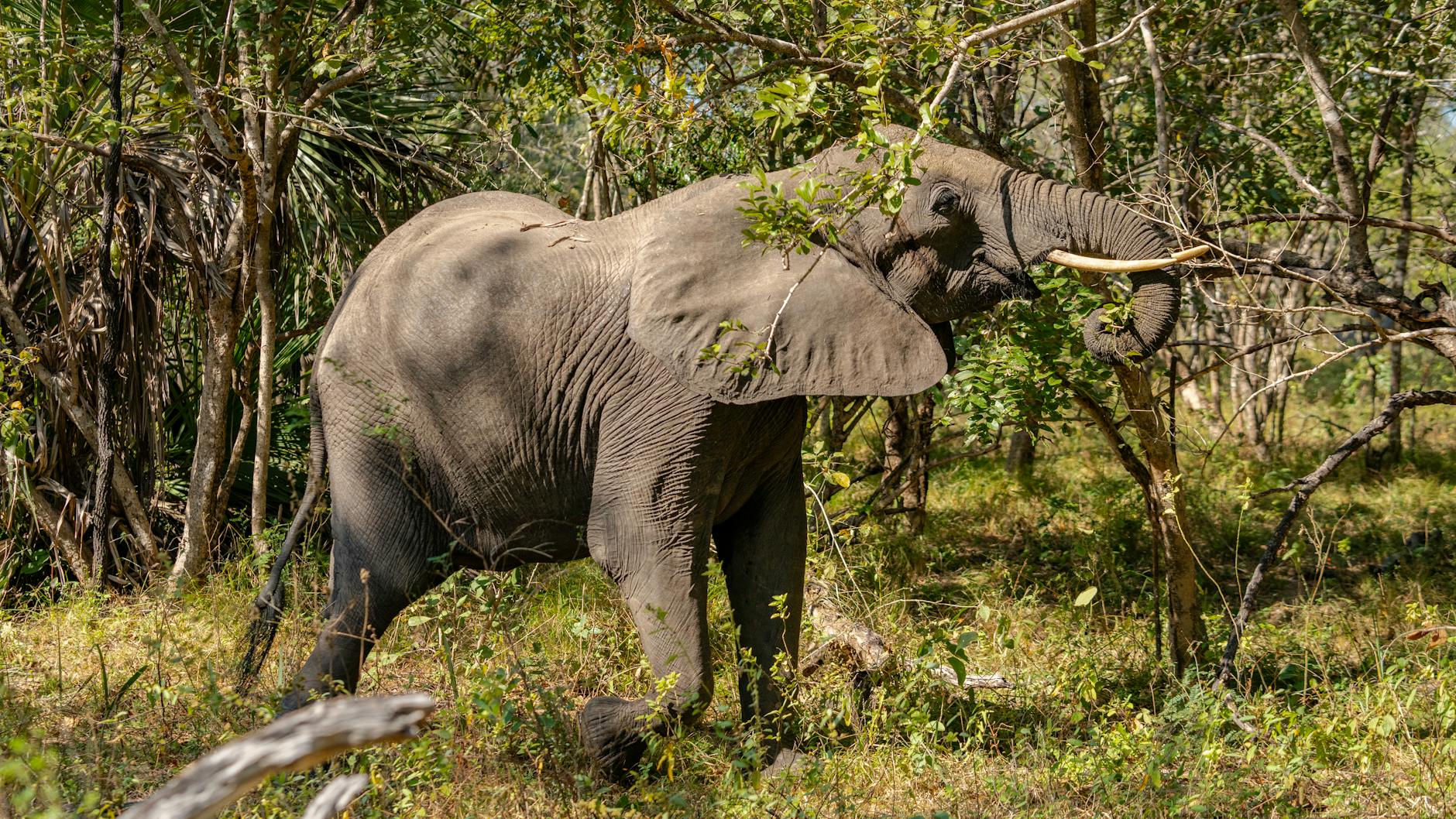
Elephants are not afraid of much. Adult bush elephants can shake off lions, flip cars, and walk through fences. Honeybees are an exception. The African honeybee (Apis mellifera scutellata) defends its colony far more aggressively than European subspecies, attacking in mass. Elephants have thick skin almost everywhere, but the trunk, eyes, ears, and mouth are vulnerable. A swarm getting up the trunk or into the ears genuinely hurts, and elephants know it.
Field observations in Kenya going back decades noted elephants avoiding acacia trees with hives in them, even when the trees themselves were preferred browse. Fritz Vollrath and Iain Douglas-Hamilton followed that up, and King’s playback experiments found that elephants reliably moved away from recorded bee sounds with no real bees present. The retreat included a specific alarm rumble that other elephants responded to. Bees are not just unpleasant for elephants; the response is socially coordinated.
Turning fear into a fence
Lucy King took the next step. She designed a beehive fence: a line of small hives suspended on wires between posts, spaced around ten metres apart, with the wire set at the height an elephant trunk touches first when pushing through. When an elephant brushes the wire, the hives swing, the bees emerge to defend the colony, and the elephant retreats. The hives do not all need to be occupied for the fence to work, and dummy hives with the right swing provide some deterrence, but occupied hives are more reliable and produce honey as a co-benefit.
The first community-scale trial was at Sagalla, on the edge of Tsavo East. Over three years, farms with beehive fences turned back around 80 percent of attempted elephant raids compared with control farms using traditional thorn-bush fences. That result was strong enough to fund a much wider rollout. For wider context on human-elephant conflict, see our piece on elephant conservation.
Why this matters more than it sounds
Human-elephant conflict is one of the most under-discussed threats to elephant populations. As settlement pushes into traditional elephant range, elephants increasingly walk into farms at night and eat or trample standing crops. Farmers retaliate, often lethally. Across Africa and Asia, hundreds of elephants are killed each year not by poachers but by farmers protecting a livelihood. The retaliation also creates anti-conservation sentiment in exactly the communities whose buy-in conservation depends on.
Beehive fences address both sides. They reduce crop loss, which lowers retaliation killings. They produce a saleable honey product, which gives farmers positive income tied to elephants being nearby rather than a pure cost. They are low-tech and locally maintainable, and they scale at the farm level rather than requiring a large donor commitment. None of that is an argument against electric fences or protected-area expansion. It is an argument for adding beehive fences to the toolkit.
Where beehive fences work, and where they do not
- Best fit: smallholder farms under 2 hectares on the edge of elephant range, with a beekeeping tradition or willingness to learn
- Reasonable fit: medium-sized community farms on traditional migration corridors
- Poor fit: very large farms, where the cost adds up and elephants find the unfenced sections
- Poor fit: regions where the local bee subspecies does not defend aggressively enough to deter elephants
- Poor fit: dense forest, where elephants approach from many directions and a linear fence cannot enclose the field
Asian elephants respond to beehive fences too, though the data is younger. Trials in Sri Lanka, India, and parts of Southeast Asia have shown deterrence somewhat below the African baseline, partly because Asian honeybee species defend at different intensities and partly because farm layouts differ.
Honey as a co-product
The honey side is more than a nice-to-have. Kenyan cooperatives sell elephant-friendly honey at premium prices to local and international buyers, with the brand tied explicitly to the conservation story. In dry years when crop yields are poor, honey income can matter more than the crop the fence is protecting. That flips the framing from elephant-as-cost to elephant-as-asset, which is the single most powerful long-term shift for community conservation.
Limits and honest caveats
Beehive fences are not a silver bullet. In severe drought, hungry elephants will push through almost any fence, and determined individual bulls have breached beehive fences. Maintenance is required: occupied hives need managing, wires need re-tensioning, posts rot in wet seasons. Local beekeeping skill varies, and some communities have struggled to keep occupancy rates high. The 80 percent figure from Sagalla has held up across multiple sites but is not universal, and some projects report lower rates. Researchers have also flagged a longer-term risk: climate stress on bee populations could weaken occupancy in exactly the dry regions where the fences are most needed.
None of this is a reason not to deploy them. It is a reason to deploy them as part of a wider package alongside chilli-grease fences, watch towers, mobile-alert systems, and corridor design. For more on the technology side, see our piece on elephant collars.
How to support beehive fence work
Save the Elephants runs the Elephants and Bees Project, which trains farmers, supplies hives, and tracks outcomes across multiple countries. The Sheldrick Wildlife Trust supports complementary work in Tsavo. Several smaller community groups operate in Sri Lanka and India. Honey from project farms reaches international buyers in some markets, and buying it is a form of support that scales with how well the fences are working.
Frequently asked questions
Are elephants really afraid of bees?
Yes, and the response is consistent across a large number of observations. African honeybees sting in mass swarms, and elephant trunks, eyes, ears, and mouths are vulnerable. Researchers have recorded a specific alarm rumble elephants use when bees are encountered, and recorded bee sounds played from speakers are enough to make elephants move away.
How do beehive fences work?
A line of small hives hangs on wires between posts around a farm, at trunk-touching height. When an elephant pushes through, the wire is disturbed, the hives swing, the bees emerge, and the elephant retreats. The hives also produce honey.
Who invented beehive fences?
Lucy King at Save the Elephants, as part of her doctoral work at Oxford supervised by Fritz Vollrath, following earlier observations by Vollrath and Iain Douglas-Hamilton. The first community-scale trial was at Sagalla in Kenya from around 2009. The Elephants and Bees Project now runs the work in multiple countries.
How effective are beehive fences?
The Sagalla trial reported around 80 percent of attempted raids turned back over three years, compared with control farms. Later deployments have generally reported deterrence somewhere in the 60 to 80 percent range, depending on local conditions, hive occupancy, and farm size.
Do beehive fences work for Asian elephants?
Some Asian trials reduced elephant visits, but results vary by site and repeated exposure can reduce the deterrent effect.
How much does a beehive fence cost?
Roughly USD 1.50 to 5.00 per metre, including hives, posts, wires, and initial colony stocking, with the range driven by local material and labour prices. Honey income offsets a meaningful share of that over time, which is the financial argument that has driven the scale-up.
Beehive fences are one of the clearest examples of close observation of elephant behaviour being turned into a practical conservation tool. For more in this vein, read our elephant conservation hub or browse our facts hub.
This article is part of our elephant conservation guide, which links all our reporting on threats, trade, captivity and what helps.
Elsewhere on We Love Elephants
- 100 Elephant Facts: Everything to Know About Earth’s Largest Land Animal: Our master elephant fact sheet: anatomy, cognition, matriarchal society, infrasound, the trunk, tusks and ivory, diet.
- Beehive Fences for Elephants: How They Work and Where They Scale: Lucy King’s beehive fences turn away most crop-raiding elephants and make honey doing it.
- Ants And Bees: Two Little Creatures Elephants Are Afraid Of: Elephants avoid trees full of bees and trees full of ants.
- African Elephants Travel Paths Leading to Favorite Food: Oxford and Save the Elephants walked elephant trails with GPS in Sagalla, Tsavo, and found bulls and family groups choose different routes to different plants.
Updated 14 September 2026: qualified the evidence for beehive fences in Asia.



Beehive fences are one of those interventions that look small until you do the maths on per-farm raid reduction. 80 percent in a rural Kenyan farm budget is enormous.
Has anyone tried this in Sri Lanka in Yala buffer zone communities? Curious whether the local bee subspecies is aggressive enough.
Bought elephant-friendly honey from a Sagalla co-op when I visited in 2019. Good honey too. The branding does the conservation argument better than any leaflet.
Worth flagging that 80 percent deterrence still means 20 percent of raids get through. In bad drought years that share goes up. The fence is part of a wider toolkit, not a standalone fix.
Exactly right. The Sagalla data has held up but no fence is a silver bullet, particularly when a hungry bull is determined. Chilli-grease and watch-tower combinations are the natural complement.
The fact that the alarm rumble is a specific call coordinating retreat is what gets me. The bee fear is encoded in elephant culture, not just in the moment.