Ten Facts About Elephants You Probably Didn’t Know
Last updated: September 14, 2026
4 min read
We can all relate to some of the weird myths that exist about elephants. Here are a few of the facts.
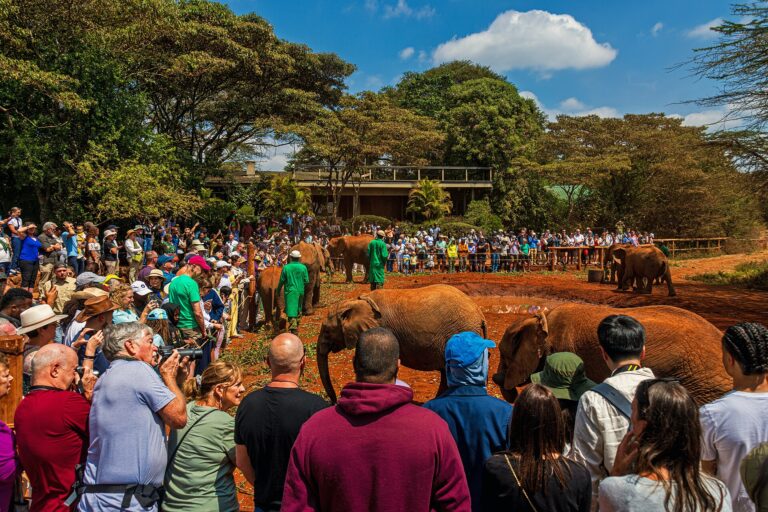
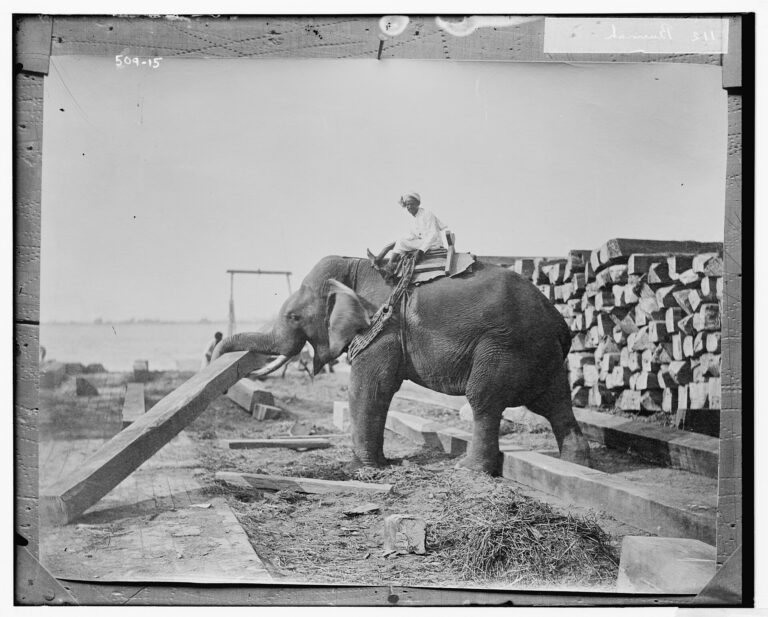
An elephant coating itself with sand. If there is one land animal you cannot ignore, it is the elephant. Some admire it, some hunt it for its tusks, and some work alongside it as an indispensable part of daily life. Elephants also run deep through religion, literature and entertainment, and the Asian elephant in particular is still revered across much of its range.
But we still do not know everything about them, and a lot of what elephants do that looks like play turns out to have a purpose. Here are ten things worth knowing.
1) They have one of the most elaborate vocal repertoires of any land mammal.
Rumbles, roars, cries, barks, snorts and trumpets, plus combinations of the lot. The rumble is the workhorse: a low-frequency call with a fundamental usually between 12 and 20 Hz, below human hearing, which carries a few kilometres in ordinary conditions and up to about ten on a cool still evening when a temperature inversion holds the sound near the ground.
They also communicate through the ground. The seismic component of a rumble travels through soil and is picked up by pressure receptors in the fat pads of the feet. The seismic component travels through the ground at a speed set by the substrate, which can differ from the airborne call.
2) They may self-medicate.
The best known observation is Holly Dublin’s, in Kenya in the 1970s: a pregnant elephant walked far outside her usual range to eat a small tree she otherwise ignored, and gave birth a few days later. Kenyan women used the same plant to induce labour. It is one observation, not a body of evidence, but it is the one everybody cites and it has never been explained away.
3) They sleep standing up, and barely sleep at all.
Two free-ranging female African elephants tracked for 35 days averaged about two hours of sleep a day, mostly standing. Lying down is when REM sleep happens, and it seems to come round only every three or four nights. Captive elephants sleep considerably more, which is worth remembering before generalising from a zoo.
4) Their brains are more folded than ours.
The elephant cortex carries a more convoluted pattern of folds than the human cortex, and the temporal lobe is proportionally large. Folding is not the same thing as intelligence, but it does sit alongside the behaviour: elephants make and modify tools, most familiarly by breaking a branch to the length they want and using it as a fly swatter.
5) They are picky herbivores, and they do not want your peanuts.
Elephants eat an enormous range of plant material and still have clear preferences. Peanuts are not among them. The cartoon association is a Western invention, and keepers do not feed them.
6) They recognise themselves in a mirror.
In a 2006 Bronx Zoo study of three Asian elephants, one elephant, Happy, passed the mark test, putting them in a very short list of species alongside great apes, dolphins and magpies.
7) They make their own sunscreen.
Throwing sand and mud over the back looks like play and is mostly maintenance. Elephant skin is tough-looking but burns, and a dust layer works as sun protection and insect repellent at once. That same skin is sensitive enough that an elephant will notice a fly landing on it.
8) They replace their molars six times.
An elephant has 26 teeth in total: two tusks, twelve premolars and twelve molars. The chewing teeth work in a conveyor: a new set grows in at the back and pushes forward, shedding the worn set out the front. That happens six times in a lifetime. When the last set wears out, in the animal’s sixties, it can no longer process food properly, and old age in an elephant is often a dental problem before it is anything else.
9) They are afraid of bees.
Enough that a recording of disturbed bees will move a herd off. That finding, from Lucy King’s work with Save the Elephants, is now a working conflict-mitigation tool: beehive fences along farm boundaries keep elephants out of crops and produce honey as a side effect.
10) They respond to their dead.
Elephants investigate the bones and tusks of dead elephants with a persistence they do not show for the remains of other species, and they return to the sites. A herd will also stay with and support a sick member. What that means internally is not something anyone can measure, but the behaviour itself is well documented.
Want to test yourself on any of this? Try our elephant quiz trivia game.
Continue exploring at our store
If this article sparked your interest, head over to the We Love Elephants merchandise store for related reads and gear.
Carry on reading
- 100 Elephant Facts: Everything to Know About Earth’s Largest Land Animal: Our master elephant fact sheet: anatomy, cognition, matriarchal society, infrasound, the trunk, tusks and ivory, diet.
- How Elephants Sleep: Why a 6-Ton Animal Rests Just Two Hours: Two matriarchs, 35 days of collar data from Chobe National Park, and the shortest sleep schedule recorded in any mammal.
- How Elephants Communicate: Rumbles, Calls, and Body Language: Infrasonic rumbles, seismic reception through the feet, a 404-behaviour gesture catalogue, and the 2024 study on name-like calls.
- Elephant Teeth: Six Molars Across a Lifetime: Elephants cycle through six sets of molars, replaced horizontally rather than vertically.
Updated 14 September 2026: qualified seismic, mirror-test and sleep claims.