Conservation Spotlight: The Amboseli Elephants Of Kenya
Last updated: September 14, 2026
3 min read
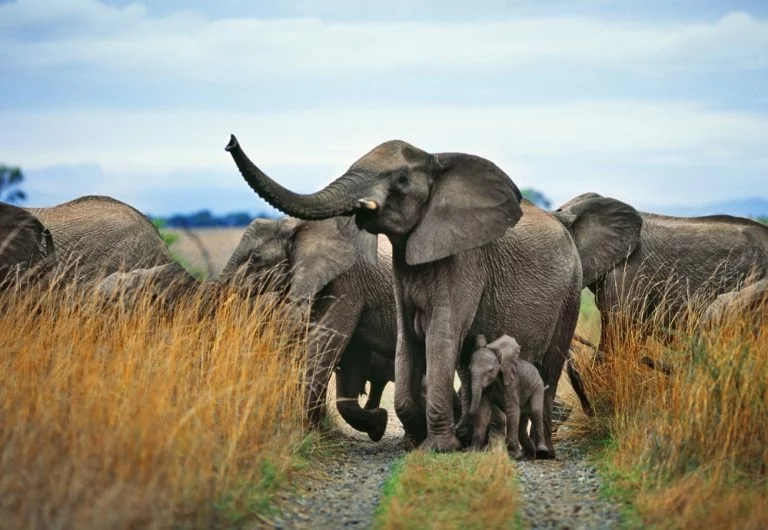
The Amboseli elephants are the best-documented wild elephants on Earth, and the reason we know what we know about elephant families.
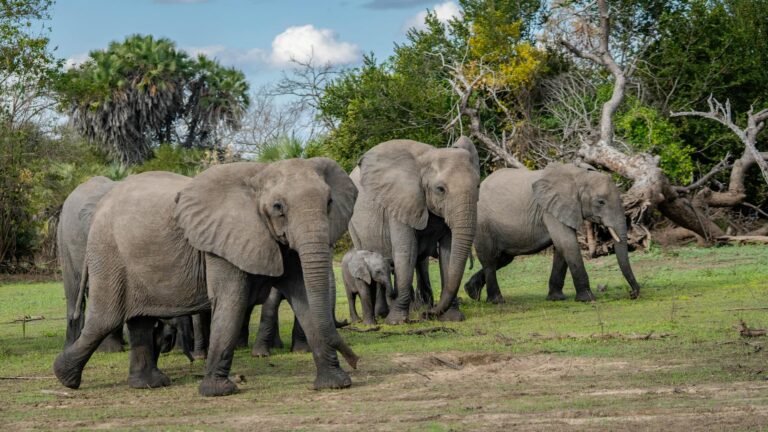
Elephants at Amboseli National Park, with Mount Kilimanjaro behind (Photo: Amoghavarsha JS/Wikimedia Commons, CC BY-SA 3.0)
Amboseli sits in south-eastern Kenya and draws much of its permanent water from springs fed by rainfall infiltrating Kilimanjaro’s aquifers across the border in Tanzania. The park itself covers 392 square kilometres and sits at roughly 1,150 metres. The elephants are what most people come for.
Why Amboseli matters
Cynthia Moss started the Amboseli Elephant Research Project in 1972 and it has run continuously since, making it the longest study of wild elephants anywhere. Individual animals are known by sight, by family, and across generations. Almost everything now taken as standard about elephant matriarchs, family structure, calf development and long-term memory traces back to this dataset. The Amboseli Trust for Elephants was created in 2000 as the legal body supporting that work.
When the project began there were around 800 elephants in the ecosystem. By 2008 there were roughly 1,600. The population has continued to grow since, and Amboseli came through the 1980s poaching era far better than most Kenyan populations, partly because of the constant research presence and partly because of Maasai tolerance on the surrounding group ranches.
Amboseli became a UNESCO Man and the Biosphere reserve in 1991. Two of its elephants are famous well beyond Kenya: Echo, the matriarch followed by the BBC’s Echo of the Elephants films, who died in May 2009, and Tim, one of the last of Kenya’s great tuskers, who died of natural causes in February 2020 at around 50.
The park is the small part
The 392 square kilometres of national park is only a fraction of the land these elephants actually use. The Amboseli ecosystem runs to several thousand square kilometres of Maasai group ranch land around the park, and the herds move across it freely. That is the whole conservation problem in one sentence: the elephants do not live inside the protected area, they live inside a working landscape owned and grazed by people.
Which is why the arrangements with the surrounding communities matter more here than the park boundary does. Land is leased from Maasai landowners to keep corridors open, tourism camps recruit staff locally, and community trusts channel a share of visitor spending into schools, clinics and water. The Cheli and Peacock Community Trust is one of the long-running examples, funded largely by guest donations. None of this is charity. It is the price of an unfenced elephant population.
Who does the protecting
- Kenya Wildlife Service runs law enforcement inside the park and coordinates with community scouts outside it.
- The Amboseli Trust for Elephants monitors the population continuously, which doubles as an early warning system: a missing known individual is noticed within days.
- Big Life Foundation, co-founded in September 2010 by the photographer Nick Brandt, the conservationist Richard Bonham and Tom Hill, employs more than 300 mostly Maasai rangers across the Amboseli, Tsavo and Kilimanjaro landscape and runs a livestock compensation scheme.
- Born Free has built more than 400 predator-proof bomas around Amboseli since 2010. Those are livestock enclosures aimed at lions rather than elephants, but they buy the same thing: a community with less reason to kill wildlife.
What actually threatens them now
Poaching is no longer the main risk in Amboseli. Kenya’s elephant numbers have roughly doubled since the 1989 low, and the 2025 official estimate was 42,072 elephants countrywide. Ivory poaching has fallen sharply since China closed its domestic ivory market at the end of 2017.
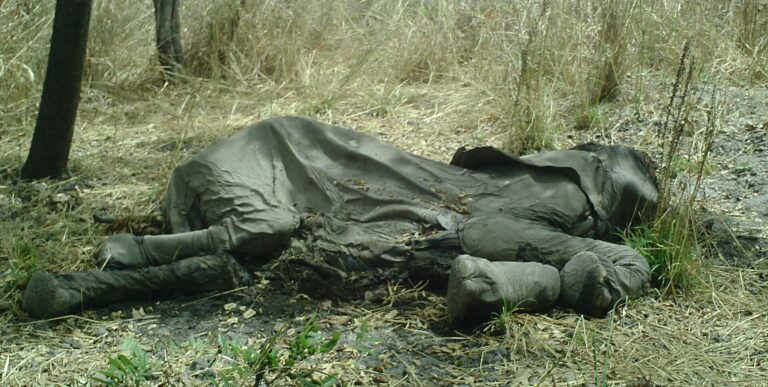
Drought has replaced it. The 2009 drought was the worst on record here and killed close to 400 Amboseli elephants, most of them through a combination of starvation and the disease that follows it. The 2022 drought killed another 76 in Amboseli, out of 205 elephant deaths recorded across Kenya that year. Losing old females to drought does the same structural damage as losing them to poachers: the herd loses the animal that remembers where the water is.
The slower threat is land. Group ranches subdividing into individual plots, fenced smallholdings appearing across old movement routes, and farms pushing up against the swamps all narrow the corridors the herds depend on. That is a harder problem than poaching because there is no enforcement answer to it, only negotiation.
The Amboseli story is still, on balance, a good one. It works because the research never stopped and because the people who own the surrounding land have been treated as part of the arrangement rather than an obstacle to it.
More from the archive
- Elephant Conservation 2026: How to Save the Last Giants: Poaching trends, the 1989 ivory ban, the zoo and sanctuary debate, trophy hunting.
- Elephants in Kenya: From Tsavo to Amboseli: 42,072 elephants in the 2025 estimate, the fifty-year Amboseli study, and why drought now kills more of them than poachers do.
- Elephants in Kenya: Where, When and What You Will See: Amboseli, Tsavo, Samburu and the Mara compared, plus the truth about super tuskers and which elephant experiences are actually ethical.
- Elephant Family Structure: Matriarchs, Bond Groups and Bulls: What fifty years of continuous records at Amboseli show about elephant families: who leads, when bulls leave, and the experiments that proved older matriarchs really do know more.
Updated 14 September 2026: corrected Amboseli hydrology and Kenya’s elephant estimate.