Elephants in China: The Yunnan Herds and a Population That Grew Back
Last updated: November 5, 2026
5 min read
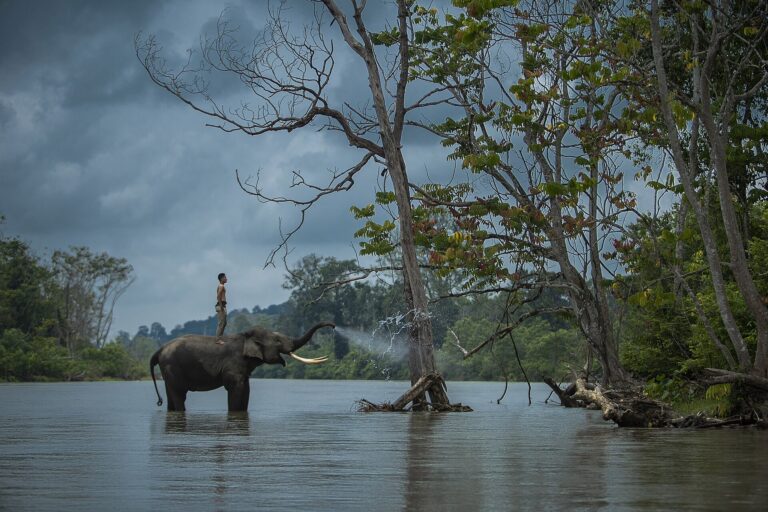
Most lists of Asian elephant range states stop at India, Sri Lanka and Thailand. China belongs on the list too. Every wild elephant in the country lives in one province, Yunnan, in three blocks of forest pressed up against the borders with Laos and Myanmar. The population there has more than doubled since the 1980s, which makes it one of the few Asian elephant populations anywhere that is growing.
Where China’s elephants live
The three habitats are Xishuangbanna Dai Autonomous Prefecture, Pu’er City and Lincang, all in southern Yunnan. Xishuangbanna is the best known, a block of tropical rainforest that continues across the border into northern Laos. IFAW, which works in all three, describes them as facing different problems: the herds differ in size and composition, the habitat is broken up differently in each, and the villages around them have different histories with elephants.
China has built 11 nature reserves covering 5,098 square kilometres across those habitats, according to Xinhua. The Xishuangbanna Asian Elephant Breeding and Rescue Center has taken in more than 30 wild elephants since it opened in 2009.
How many are there
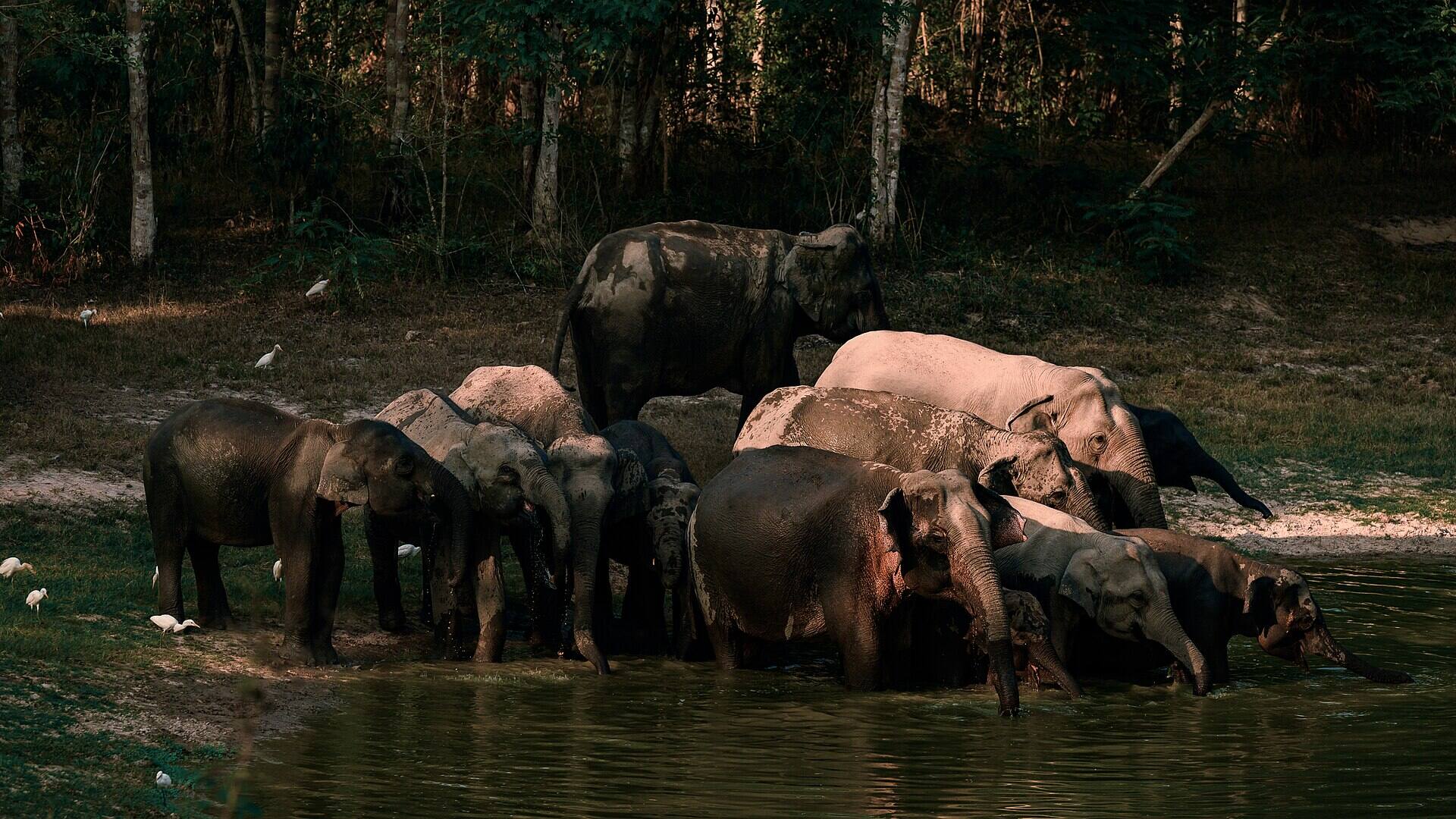
The figure you get depends on who counted and when. Chinese state media reported in July 2026 that the wild population is approaching 400, up from about 150 in the 1980s. IFAW puts it at around 300. Provincial counts in the mid-2020s landed between those two.
The gap is not evidence that someone is wrong. Elephants in dense rainforest are counted by a mixture of camera traps, dung surveys and direct observation, the surveys are years apart, and different counts draw the line differently on rescued and semi-managed animals. What every count agrees on is the direction. The line has gone up for four decades, which is unusual for this species.
The herd that walked to Kunming
In spring 2020 a group of elephants left the Xishuangbanna reserve and started walking north. They kept going. By June 2021 they had reached the outskirts of Kunming, the provincial capital, roughly 500 km from where they started, and by then the world was watching drone footage of them sleeping in a field.
The full journey ran about 17 months and more than 1,300 km before the herd was guided home. Monitoring at Kunming counted six adult females, three adult males, three sub-adults and three calves. One calf was born on the road.
The group is known in China as the Short-Nose Family. Fourteen of them made it back to the reserve. Xinhua reported in August 2026 that the family now numbers 21.
Why they went
Nobody has a settled answer, and the honest researchers said so at the time. The theories that survived scrutiny are all about food and space rather than anything mystical.
- Yunnan’s protected rainforest has grown denser as logging stopped, and closed canopy forest produces less of the ground vegetation elephants actually eat than disturbed forest does.
- Rubber, tea and banana plantations expanded across the valleys around the reserves, which puts high calorie crops within easy reach of a hungry herd.
- A growing population needs more range, and elephants disperse into whatever gaps exist.
- Inexperienced leadership has been suggested, since a matriarch who has never walked a route cannot lead a family back along it.
Chinese coverage treated the walk as a charming news story. As ecology it reads as a recovering population running out of the kind of habitat it needs.
What it costs to live with them
Elephant numbers going up in a farming province means crop raiding going up with them. IFAW built the first village-level early warning system in Pu’er between 2009 and 2014, and since 2021 has run a community ranger network for conflict prevention. By December 2023 that network had delivered 540 awareness trainings across 186 communities and reached 13,571 villagers.
China also runs a state-backed insurance scheme that pays farmers for elephant damage, which is the single measure most often credited with keeping local tolerance high. It is the same problem Sri Lanka is failing to solve, approached with a much larger budget.
The national park that is still being drawn
An Asian Elephant National Park for Yunnan was announced in June 2021, weeks after the wandering herd made global news. China launched Giant Panda National Park that October with a similar aim of reconnecting isolated populations. The stated aim for Yunnan is to connect the fragmented reserves so elephants can move between them without walking through villages. Five years on the boundaries are still being worked out and the park is described in official reporting as under construction rather than established.
What China’s case actually shows
Two things, and they pull in opposite directions. Hard protection works: stop the killing, protect the forest, and Asian elephants will recover even from a base of 150 animals. And recovery is the point at which the difficult work starts, because a few hundred elephants in a landscape full of farms will find the farms.
China holds roughly one percent of the global wild Asian elephant population, so Yunnan is not where the species gets saved. It is where the decline has been shown to be reversible.
Frequently asked questions
Are there wild elephants in China?
Yes. Wild Asian elephants live in three areas of southern Yunnan province: Xishuangbanna, Pu’er and Lincang. There are no wild elephants anywhere else in China.
How many wild elephants does China have?
Between about 300 and 400, depending on the survey. Chinese state media reported a figure approaching 400 in 2026, against about 150 in the 1980s.
What happened to the elephants that walked to Kunming?
They were guided back south. The journey took about 17 months and covered more than 1,300 km. The herd, known as the Short-Nose Family, returned with 14 members and has since grown to 21.
Why did the Yunnan elephants leave their reserve?
There is no confirmed answer. The leading explanations are a shortage of the low-growing food plants elephants prefer in mature closed-canopy forest, the spread of plantation crops around the reserves, and a growing population dispersing into new range.
Is the Chinese elephant population increasing?
Yes. It has roughly doubled since the 1980s and is one of the few Asian elephant populations with a clear upward trend.
Sources
- Xinhua, “China’s wild Asian elephant population nears 400: report”, 16 July 2026
- Xinhua, “Wild Asian elephant population in China rises to nearly 400”, 13 August 2026
- IFAW, protecting the last remaining wild Asian elephants in China
- Global Times, Kunming prepares as 15 wild elephants arrive, June 2021
- CGTN, travel log of the wandering herd, August 2021
- China Daily, national park proposed for wild elephants, June 2021
Read next
- Asian Elephant Species Profile: Four populations across 13 range countries, and the conflict numbers that come with them.
- Elephants in Laos: The forest on the other side of the Xishuangbanna border, and a population going the other way.
- Elephants in Myanmar: The third neighbour, where skin poaching has replaced ivory as the main threat.
- Beehive Fences Explained: The cheapest crop-raiding deterrent that actually works, and where it does not.
This article is part of our elephant species guide, which links every species, subspecies and country guide on the site.