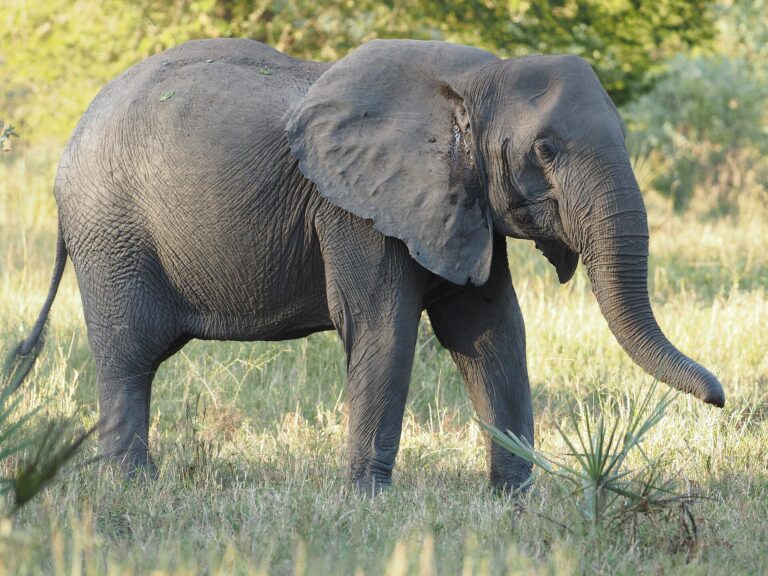
Elephant Ears: Why They Are Built as Heat Radiators
5 min read
An elephant ear looks like a giant leathery sail. It is easy to assume the ears are mostly for hearing, or for looking impressive. I used to think so too. The research I read says the ears do a second job that matters at least as much: they help a very large animal lose heat.
This post walks through what the ear is made of, what scientists measured when they pointed thermal cameras at it, and why ear shape differs between the three living elephants. I am an enthusiast who reads the studies, not a field biologist, so I stick to what the papers and zoo experts actually report.
What an elephant ear is made of
The ear flap is called the pinna. According to the Wikipedia article on elephants, it is only 1 to 2 millimetres thick in the middle, with a thinner tip and a thicker base that supports it. For an animal this big, that is remarkably thin.
The flap is full of blood vessels. The Smithsonian’s National Zoo says the ears contain many blood vessels and describes the skin on the inside of the ear as paper thin, in contrast to skin up to 1 inch (2.54 centimetres) thick on the back. Thin skin close to a lot of blood is exactly what you want in a radiator.
How the cooling works
The basic idea is simple. Warm blood flows into the capillaries in the ear, and the excess heat escapes into the surrounding air. Flapping the ears back and forth increases the effect, and a larger ear surface holds more capillaries, so more heat can be released. Elephants are warm-blooded animals that hold their body temperature at about 36 °C (97 °F), according to the same overview, so any extra heat has to go somewhere.
A good way to picture it is a car radiator with a fan. The blood is the coolant. The thin ear is the radiator. The flapping is the fan.
What the thermal camera measured
The strongest evidence I found is a 1992 study of four female African elephants, published in Comparative Biochemistry and Physiology. The researchers used infrared thermography to record the surface temperature of the pinnae at air temperatures between 14 and 32 °C. From those readings they calculated that the heat lost through the ears ranged from 10.67 to 76.2 watts under the conditions they observed. You can read the abstract on PubMed.
Two more findings from that abstract stand out:
- The authors report that up to 100% of an African elephant’s heat loss needs can be met by movement of its pinnae and by vasodilation, which is the widening of blood vessels.
- The temperature pattern across the ear changes with the air temperature, and the authors say areas of specialised motor control exist. In plain terms, the elephant seems to have some control over how it uses the flap.
The paper’s own figures also show the limits. The authors worked with four animals, and they calculated that heat lost from one side of one ear covers only a small slice of the animal’s standard metabolic rate, between 0.65 and 4.64 percent. The ear is a powerful tool, but it is not the whole cooling system. Elephants also rely on behaviour such as bathing, as I covered in Why Elephants Love Mud Baths.
A newer study on exercise
In 2024, PLoS One published a study that used the same kind of camera on ten female Asian elephants at an eco-tourism lodge in Nepal. Six of them took part in an elephant polo tournament and four did more familiar eco-tourism activities. The team measured skin temperature before and after the activity in several body regions.
The ear pinna was the region that changed the most, and it differed significantly from every other body region. The authors conclude that this highlights the importance of the ear in thermoregulation during physical activity. They found no significant difference in temperature change between the polo group and the other group, so they suggest the elephants’ cooling mechanisms coped with both activities.
I think that result is the most useful one for anyone who cares about captive animals. It shows the ears are not a theory. When an elephant works, the ear is where the heat shows up.
Ear shape differs by species
The three living elephants have noticeably different ears, and the differences line up with what you would expect from the cooling story.
- African savanna elephant: also called the African bush elephant. The Wikipedia species article describes pointed, triangular ears that cover the whole shoulder. The Elephant article adds that African bush elephants live in the hottest climates and have the largest ear flaps of all.
- African forest elephant: the species article describes oval ears with small elliptical tips.
- Asian elephant: the species article says the ears are small, with the top edges folded sideways.
I would be careful about reading too much into this. The sources I found describe the pattern, and I did not find a study that tests it species by species. What I can say is that the largest ears belong to the species living in the hottest climates.
Ear size once caused a taxonomic mix-up. In 1907 Richard Lydekker proposed six African elephant subspecies on the assumption that ear size and shape marked out a race, a point noted in the African bush elephant article. Today the IUCN treats the African savanna and forest elephants as two separate species. For the current picture, see Elephant Species: Complete Guide to All Living Elephants.
Ears also send messages
Ears are not only radiators. The Elephant overview notes that an elephant trying to look threatening will raise its head and spread its ears, and may snap its ears while shaking its head. A submissive elephant lowers its head and trunk and flattens its ears against its neck. One that is ready to fight bends its ears into a V shape.
Bulls in musth are also described as flapping their ears out of step with each other. If you watch a herd and see the ears held wide, the elephant might be cooling off, or it might be telling you to keep your distance. Context matters. For more on how herds talk to each other, read How Elephants Communicate.
What we do not know
The papers I read measure surface temperature on a handful of captive animals. The 1992 study used four African elephants, and the 2024 study used ten Asian elephants in Nepal. I did not find a large field study of wild elephants showing how much ear cooling matters across a whole day, and I will not guess at a number. If one exists, I would like to read it.
The short version
- The ear is thin, packed with blood vessels, and works as a heat radiator.
- Flapping speeds up heat loss.
- Thermal camera studies on both African and Asian elephants point to the ear as a key site of heat exchange.
- African savanna elephants, from the hottest habitats, have the biggest ears.
- Ears also signal mood and intent.
If you have watched elephants flap their ears in the heat, or you know a study I missed, add it in the comments. I read every one.
Sources
- Heat exchange by the pinna of the African elephant (Loxodonta africana), Comparative Biochemistry and Physiology, 1992, via PubMed/NCBI
- Physical activity and temperature changes of Asian elephants participating in eco-tourism activities and elephant polo, PLoS One, 2024, via PubMed/NCBI
- Asian elephant, Smithsonian’s National Zoo
- Elephant, Wikipedia
- African bush elephant, Wikipedia
- African forest elephant, Wikipedia
- Asian elephant, Wikipedia
Photo: Pearl Aketch, CC BY-SA 4.0, via commons.wikimedia.org.
This article is part of our elephant facts guide, which links every post on elephant bodies, minds and family life.