
Elephant Eyesight: What Do Elephants Actually See?
Last updated: September 14, 2026
6 min read
Elephants do not have great eyesight. They are dichromatic, like most non-primate mammals, their visual acuity is moderate, and they rely far more on hearing and smell to work out what is going on. But their vision is not bad either, and it does specific jobs well: spotting movement at distance, reading body posture in other elephants, and operating in low light.
Key facts at a glance
| Colour vision | Dichromatic: two cone types, yellow-green and blue-violet |
| Acuity | Calculated anatomical maximum of 13.16 to 14.37 cycles per degree, based on three African elephant retinas |
| Eye size | Around 3.8 cm across, small for the animal |
| Field of view | Wide, with a narrow binocular overlap in front |
| Low light | Strong: rod-heavy retina, wide pupil, reflective tapetum lucidum |
| Day versus night | Better at dusk and dawn than in midday glare |
| Eyelashes | Long and dense, for sun and dust protection |
The sensory hierarchy: hearing, smell, sight
In any list of how an elephant reads the world, sight comes third. Hearing is first: infrasonic rumbles across kilometres, plus seismic reception through the feet. Smell is second: elephants have the largest known set of olfactory receptor genes of any mammal, and can locate water and identify individuals at long range. Sight is third. That is the opposite of how human senses are ranked, and it shapes a great deal of elephant behaviour.
It is also why so many small adjustments in wild encounters look odd to a human watcher. An elephant facing into the wind is reading scent, not staring. An elephant lifting its trunk in your direction is sampling air, not focusing on you. A herd that has picked up a stranger by call may not visibly turn toward the source at all, having already responded. The visual system is in play. It is not leading.
What dichromatic vision means
Like most non-primate mammals, elephants have two cone types, one sensitive to yellow-green and one to blue-violet. Humans and other Old World primates are trichromatic, with three types and full red-green discrimination. So elephants see less distinction in the red-orange-green range, comparable to a human with red-green colour blindness, and probably cannot separate a ripe red fruit from green leaves the way a primate can.
This is not a defect. Most mammals are dichromatic and the trichromatic primate eye is the unusual case, probably evolved for exactly that fruit-spotting job. Elephants eat almost anything plant-based and use the trunk as a chemical analyser, so they never needed the same machinery. Their colour vision is well matched to sky, water, and the yellow-brown-green range that dominates their habitat.
Visual acuity and what they actually see
A 2010 study calculated an anatomical maximum of 13.16 to 14.37 cycles per degree from the ganglion-cell density of three African elephant retinas. It did not measure behavioural acuity. Human acuity is around 30. So an elephant sees a blurrier world than we do, by roughly a factor of two, which is still perfectly adequate for the work. They can pick out a moving human-sized figure at several hundred metres in open country. They can read body posture across a herd. They cannot read a face at 200 m the way a primate can, and they do not need to: ear position, trunk gesture and head height carry the same social information at much longer range.
Eye size is part of it. An elephant’s eye is only about 3.8 cm across, which is small for an animal that size, and a smaller eye limits resolving power for the same reason a smaller camera sensor does. Combine that with eyes set on the sides of the head and you get an animal built to notice things rather than to examine them.
Low-light vision
Elephants do most of their travelling, drinking and feeding in the cool hours, and their eyes are tuned for it. The retina is weighted toward rod cells, which work in dim light, over cones, which need daylight and carry colour. The pupil opens wide. Behind the retina a tapetum lucidum, the same reflective layer that makes cat eyes shine at night, bounces incoming light back through the rods for a second pass.
In practice an elephant moving through dim forest at dusk is reading the scene perfectly well while a human would want a torch. It also means midday glare on open savanna is harder for them than dawn light, which is part of why so much elephant activity clusters at either end of the day.
Field of view and binocular overlap
Elephant eyes sit on the sides of the head, more like a horse than a primate. That buys a very wide field of view, close to all the way round, at the cost of a narrow zone of binocular overlap in front and therefore limited depth perception. Head movement and the trunk, used as a forward-extending sensor, make up much of the difference.
It also explains a behaviour you see in the field. An elephant assessing something at distance will turn side-on and watch with one eye. Some work suggests a preference for the right eye when inspecting novel objects, consistent with right-hemisphere processing of unfamiliar stimuli in many mammals, but the simpler point is that side-on inspection is just better given where the eyes are.
Eyelashes, eyelids, and tears
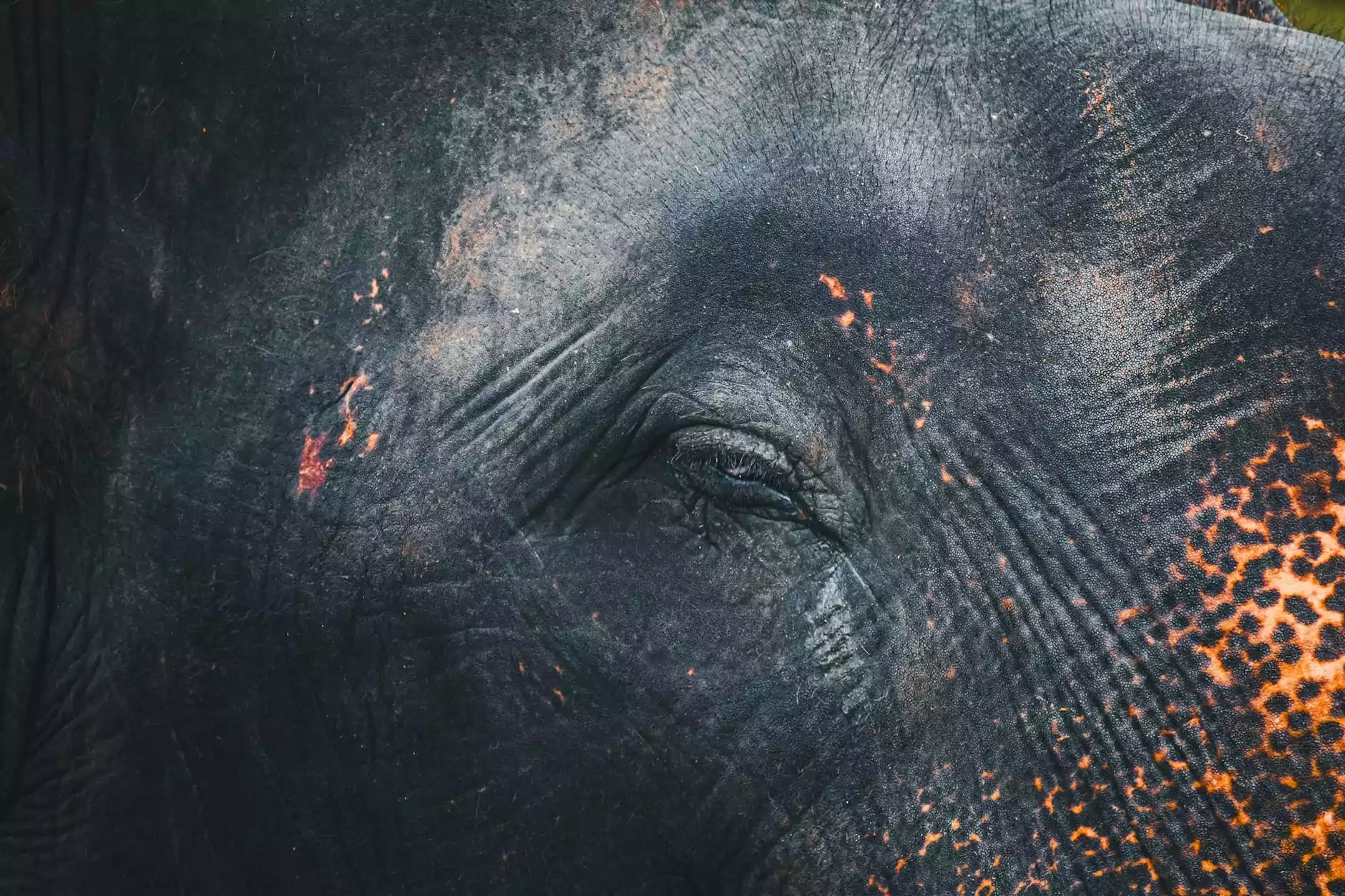
Elephant eyelashes are striking up close: long, thick, bent slightly outward. They are not decorative. They block direct glare on the cornea, intercept windborne dust and grit, and cut evaporation from the eye in dry air. Elephants also have a functional nictitating membrane, a third eyelid that sweeps across to clear debris. Streaks running down the face from the eye are normal lubrication overflow, not distress.
Eye health is a real welfare issue in captivity. Poor nutrition, lack of shade and over-bright artificial lighting all contribute to corneal damage and chronic eye disease, and routine ophthalmic checks are now standard practice in well-run facilities.
What elephants are looking at
- Movement at distance: a slow-moving human silhouette registers where a still one does not
- Other elephants’ body language: ear position, trunk posture, head height
- Predator outlines at dusk, silhouetted against open ground
- Water surfaces: glare and ripple at a waterhole
- Vegetation texture and gross shape rather than fine detail
Asian elephants have passed the mirror mark test, which means their visual processing is good enough to register a mark on their own face, so the limits here are about resolution rather than about what the animal can make of what it sees.
Practical implications
For guides this matters immediately. An elephant downwind of a vehicle has read you on scent before its eyes have done any work at all. An elephant upwind that has not seen you may turn the moment the wind shifts. Approaching from the front quarter into a moderate breeze gives the best combination of being visible and being smelled. Approaching from behind in still air produces surprise encounters, which are dangerous for both sides.
Frequently asked questions
Can elephants see colour?
Yes, but less of it than we do. Elephants are dichromatic, with cones for yellow-green and blue-violet, so they cannot separate red from green cleanly. Most non-primate mammals are the same. Our three-cone eye is the unusual case.
How well do elephants see?
Moderately. Retinal work calculated an anatomical maximum of 13.16 to 14.37 cycles per degree from three African elephant retinas, against roughly 30 for a human. Blurry by our standards, and entirely adequate for detecting movement, reading posture at distance and navigating in low light.
Can elephants see in the dark?
Reasonably well. Rod-dominant retinas, wide pupils and a reflective tapetum lucidum that gives incoming light a second pass. They do most of their moving, drinking and feeding in the cool hours and their eyes are built for it.
Do elephants have a dominant eye?
Possibly, though the evidence is weaker than for trunk handedness. Some work has found a right-eye preference when inspecting novel objects, which fits right-hemisphere processing of unfamiliar stimuli in other mammals.
Why do elephants have such long eyelashes?
Sun, dust and evaporation. The outward bend extends the protective fringe. Functional, not decorative.
Is sight an elephant’s most important sense?
No, it is third, behind hearing and smell. That ordering is the opposite of ours and explains a great deal of behaviour that looks subtle or counter-intuitive to a visual species like us.
Elephants see the world differently from us, and understanding the sensory order changes how you read almost everything they do. For more on the senses, behaviour and biology of elephants, browse our elephant facts hub.
Read next
- 100 Elephant Facts: Everything to Know About Earth’s Largest Land Animal: Our master elephant fact sheet: anatomy, cognition, matriarchal society, infrasound, the trunk, tusks and ivory, diet.
- How Elephants Communicate: Rumbles, Calls, and Body Language: Infrasonic rumbles, seismic reception through the feet, a 404-behaviour gesture catalogue, and the 2024 study on name-like calls.
- Elephant Infrasound: Communicating Below Human Hearing: Katy Payne worked out in 1984 that elephants rumble below human hearing.
- Elephants and Water: Drinking, Swimming, Digging and Bathing: How elephants drink at 540 km per hour, dig wells other animals then use, swim with the trunk as a snorkel, and why water access decides where a herd spends its year.
Updated 14 September 2026: clarified the visual-acuity measurement.



Elephants seeing in dichromatic colour like dogs is the kind of thing you forget when you anthropomorphise them. The yellow-green and blue-violet axis must shape what their world looks like in ways we can only loosely picture.
The 20/40 acuity figure puts the sight question in perspective. They are not blind, they are just operating with eyes optimised for movement detection rather than fine detail.
Right, and the eye size is part of it. Tennis-ball eyes resolve less than primate eyes do, by basic optical limits. The trade-off is wide field of view, which serves them well for spotting things rather than analysing them.
The hierarchy hearing-smell-sight is the most useful framing for understanding why elephants behave the way they do. So much of what looks weird makes sense once you flip the human ranking.
The temporal-gland tear drain on the side of the face is one of those anatomical details that confuses tourists every safari. The wet streaks are normal lubrication, not distress.
Yes, this comes up on almost every visitor briefing. The streaks are functional, not emotional. Though musth-related temporal-gland activity is different and does carry information.
Curious about the right-eye-for-novel-objects pattern. Has this been tested experimentally or is it observational only?
20/40 to 20/60 acuity is much better than I expected, given the ‘elephants have terrible eyesight’ meme. The dichromatic vision is the more relevant constraint, and they compensate with seismic and infrasonic channels.