Elephant Skin Jewelry: Another Obstacle For Elephants in Myanmar
Last updated: September 14, 2026
2 min read
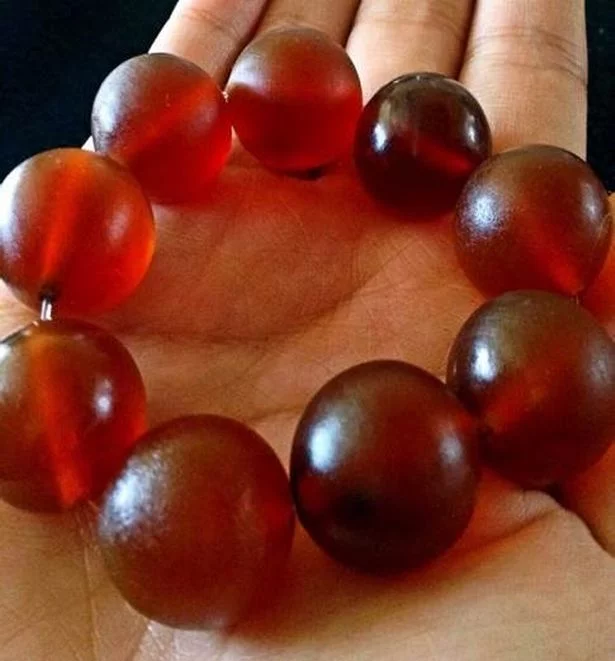
Blood Red Beads: A Sample Of Elephant Skin Jewelry (Photo: WWF)
Elephants in Myanmar are being killed for their skin. Not their tusks. The hide is dried, cut into small blocks, run through bead-cutting machines and sold as blood-red beads for bracelets and necklaces, or ground into powder and marketed as a folk remedy. The trade emerged in the mid-2010s. Unlike tusk-focused poaching, it can target elephants of either sex and any age because every elephant has skin.
Why this is different from ivory
Ivory poaching selects. Only some male Asian elephants carry significant tusks, so females and calves have historically been comparatively safe, which is part of why Myanmar’s wild population skews female.
Skin poaching does not select at all. Cows and calves are taken alongside bulls. For a wild population that WWF has put as low as around 1,500 animals, indiscriminate killing is an entirely different order of threat.
How serious the trade got
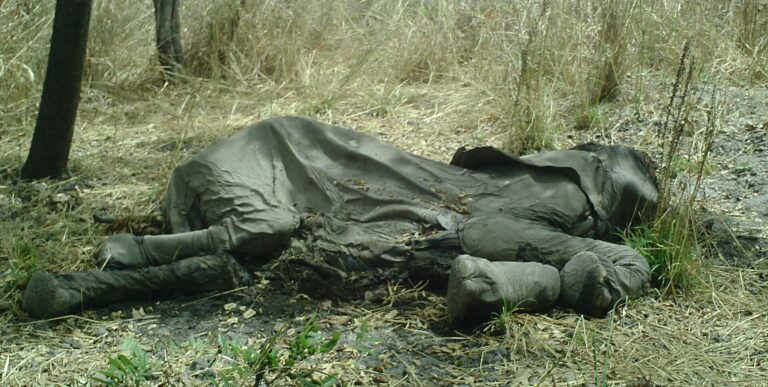
WWF reported that more than 100 elephants were killed between 2013 and 2017, including at least 20 in the first months of 2017. Research co-authored by Christy Williams, WWF’s country director in Myanmar, confirmed the death or disappearance of at least 19 elephants inside a 35 square kilometre area in under two years, with dozens more carcasses found across south-central Myanmar.
Williams made the point that a skinned elephant used to be a rarity. It stopped being one very quickly.
The undercover investigation
The UK charity Elephant Family began investigating the market in 2014 and published its findings in 2018 in a report called Skinned: The Growing Appetite for Asian Elephants. Its investigators traced skin moving across the China-Myanmar border, much of it through Mong La, a border town notorious as a hub for the wildlife trade, where ivory and pangolin scales sell openly alongside it.
The report documented elephant skin beads selling in Mong La at around 108 US dollars per kilogram, and pieces of skin in Guangzhou markets at roughly 285 US dollars per kilogram. It also documented the method: poachers use poisoned darts, and the elephant takes days to die while they follow it.
What is being done
WWF launched an emergency response in Myanmar in July 2017, training and equipping rangers with anti-poaching technology and working with communities to reduce local involvement, alongside a public campaign under the tag Save Their Skins. Elephant Family published graphic photographs deliberately, on the grounds that the trade had been invisible to the people who could act on it.
Enforcement in Myanmar has been hard since 2021 for reasons that have nothing to do with elephants. For the wider picture of Myanmar’s wild and captive elephants, see our country guide.
Keep reading
- Elephant Conservation 2026: How to Save the Last Giants: Poaching trends, the 1989 ivory ban, the zoo and sanctuary debate, trophy hunting.
- Elephants in Myanmar: Wild Range and the Working Tradition: Around 5,000 captive elephants, the largest such population on Earth, set against a wild population of under 2,000 being killed for its skin.
- Asian Elephants and the Timber Industry in Myanmar: A Working Heritage at Risk: Five thousand captive elephants, a logging ban that put most of them out of work, and a skin trade that kills females and calves as readily as bulls.
- Why Elephants Love Mud Baths: Cooling, Sunscreen, and Skin Care: Mud cools, blocks UV and smothers parasites, and the cracks in elephant skin hold five to ten times more water than a flat surface.
Updated 14 September 2026: corrected claims about Myanmar’s elephant-skin trade.