
Elephants in Cameroon: Forest and Savannah, Both Endangered
Last updated: October 26, 2026
4 min read
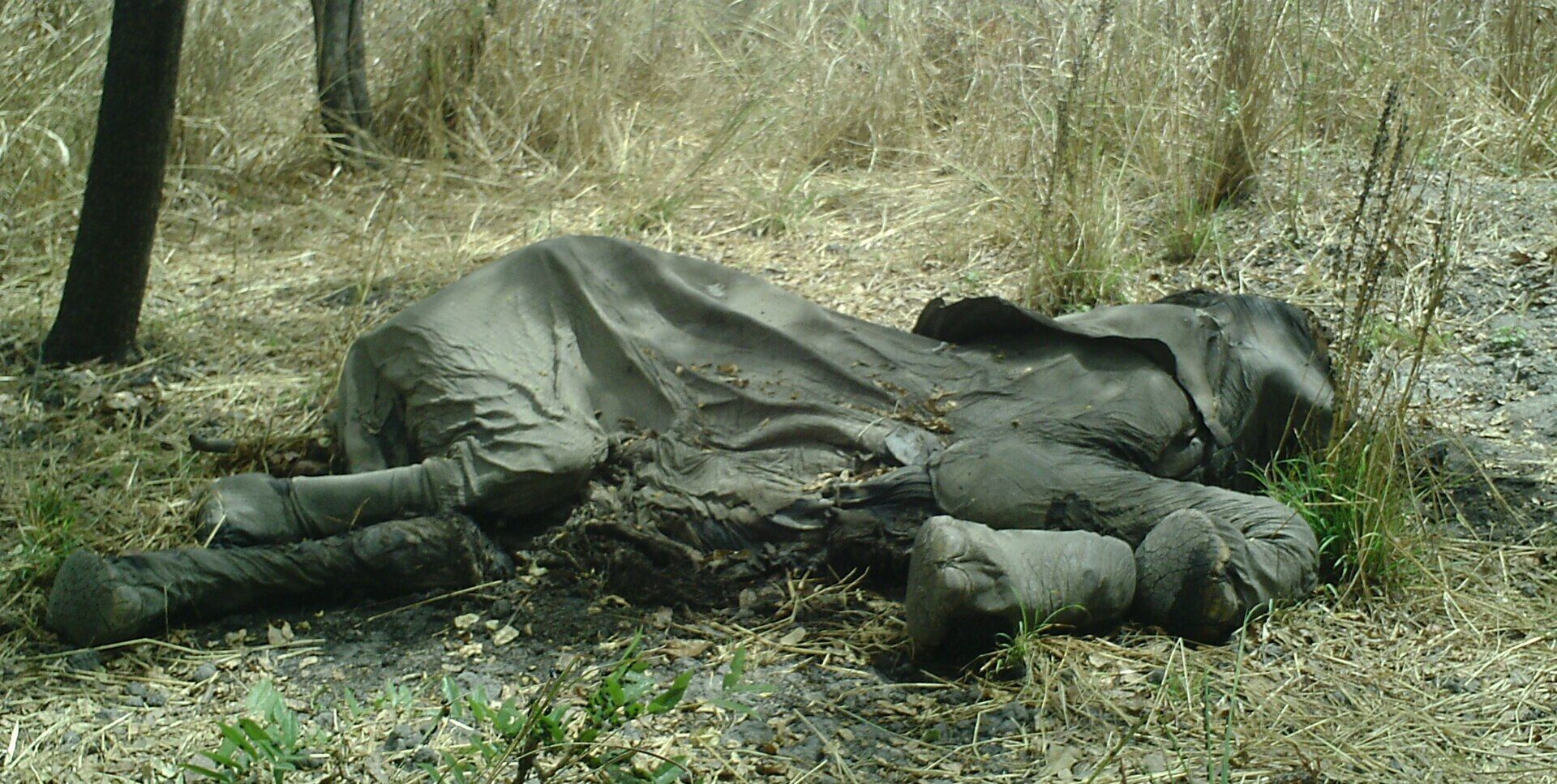
Bouba Njida, by U.S. Fish and Wildlife Service Headquarters, Public domain, via Wikimedia Commons.
Cameroon holds both African elephant species: forest elephants in the southern rainforests and savannah elephants in the north. Both are in trouble, and the country is where one of the worst single poaching events of the modern era took place.
What the surveys actually show
There is no reliable published national total for Cameroon’s elephants, and numbers that circulate online are usually presented with more confidence than the underlying data supports. What does exist is a set of landscape surveys.
The largest recent one covered Boumba Bek and Nki national parks plus adjacent logging concessions and community forests in the southeast, about 1.08 million hectares in total. Comparing data from 2016 to 2023, it put the landscape at roughly 1,004 forest elephants, broadly stable since 2016 after a catastrophic earlier decline. An earlier survey covering 2015 and 2016 had found the elephant population of Nki and Boumba Bek down by more than 75 percent, attributed to poaching. Density inside the parks now runs about 68 percent higher than in neighbouring logging concessions, which tells you the protection is doing something.
Further west, line transect work across the roughly 11,000 square kilometre Dja-Ngoyla complex in 2021 estimated 509 forest elephants, with a confidence interval running from 352 to 736. The surviving animals were concentrated in the core, furthest from the boundary and from areas being opened up for development.
For the north, the hardest number available is old. The Great Elephant Census aerial counts of 2014 and 2015 found no more than 148 elephants across northern Cameroon, with a carcass ratio of 83 percent, meaning most of what the survey teams saw from the air was dead.
These sit inside the wider Congo Basin picture. Maisels and colleagues showed in 2013 that forest elephants across the basin had fallen by 62 percent between 2002 and 2011. The African forest elephant is listed as Critically Endangered by the IUCN; the African savanna elephant is Endangered.
The Bouba Ndjida massacre
In the first weeks of 2012, an armed group of Sudanese poachers on horseback crossed into Bouba Ndjida National Park in the northeast and killed elephants in numbers that shocked even people used to reading poaching statistics. Reported totals vary between around 300 and considerably higher, and the killing was described at the time as taking out roughly 80 percent of the park’s elephants.
Cameroon deployed soldiers to the park, and the poachers appear to have withdrawn by mid-April. The event pushed anti-poaching up the national agenda and prompted closer coordination with neighbouring states, but the northern savannah population has never recovered its former size.
What the elephants face now
In the far north, Waza National Park sits inside the Lake Chad zone where Boko Haram has operated since the mid-2010s, and conservation work there has been severely constrained ever since. The Bouba Ndjida raid was a one-off incursion, but the route it used, mounted poachers crossing from the northeast, has not gone anywhere.
In the south the pressures are the standard Congo Basin set: ivory poaching, bushmeat hunting, logging roads that open up previously inaccessible forest, and agricultural expansion at the forest edge. Human-elephant conflict around the boundaries of the southern parks is a continuing problem.
Seeing elephants in Cameroon
Cameroon is not an easy elephant destination. The southern forest parks are remote and hard to reach, and Lobeke National Park is the usual reference point, where observation platforms overlook the mineral-rich forest clearings that elephants visit. Northern Cameroon, including Waza and Bouba Ndjida, is not currently suitable for independent tourism because of the security situation. Check current advice before planning anything.
Help us fill the gaps
We do not have a lot of solid, current information on Cameroon’s elephant numbers, particularly for the northern savannah population. If you work in Cameroonian conservation or know of survey results we have missed, leave a comment and we will update this page.
Read next
The African forest elephant profile, our elephant conservation pillar, and the ivory trade explainer.
Frequently asked questions
How many elephants are in Cameroon?
No reliable national total is published. The best available survey figures are around 1,004 forest elephants across the Boumba Bek and Nki landscape as of 2023, and 509 in the Dja-Ngoyla complex from a 2021 count. Aerial surveys in the north found no more than 148 elephants in 2014 and 2015.
What happened at Bouba Ndjida in 2012?
Sudanese poachers on horseback raided the park in the first weeks of the year and killed elephants on a huge scale, reported at around 300 and by some accounts far more, described at the time as roughly 80 percent of the park’s population.
Are there both forest and savannah elephants in Cameroon?
Yes. The southern rainforests hold forest elephants (Loxodonta cyclotis) and the northern savannahs hold savanna elephants (Loxodonta africana).
Are Cameroon’s elephants threatened?
Yes. Forest elephants are Critically Endangered globally and savanna elephants Endangered, and the northern Cameroonian population is small, isolated and operating in a difficult security environment.
This article is part of our elephant species guide, which links every species, subspecies and country guide on the site.
Keep reading
- Elephant Conservation 2026: How to Save the Last Giants: Poaching trends, the 1989 ivory ban, the zoo and sanctuary debate, trophy hunting.
- Elephants in the DRC: Forest Elephants of the Congo Basin: The DRC holds most of Central Africa’s forest and almost none of its forest elephants.
- African Forest Elephant: Facts, Trivia & 8-Question Quest: The African forest elephant was recognised as its own species in 2021 and remains Critically Endangered.
- How Many Elephant Species Exist Today?: Three living elephant species: the African bush elephant, the African forest elephant and the Asian elephant, plus the four Asian subspecies and their current IUCN status.



The 2012 Bouba Njida massacre (350+ elephants in a few weeks) is the one specific event that should be cited every time Cameroon’s elephant numbers are discussed. The current 6,000 is downstream of that and similar Sudanese-poacher incursions.