

African Elephant Species Profile: Facts, Range, Conservation
Last updated: November 26, 2026
11 min read
The African elephant is not one species but two: the African bush elephant (Loxodonta africana), the largest land animal on Earth, and the smaller, forest-dwelling African forest elephant (Loxodonta cyclotis). The IUCN assessed them separately for the first time in 2021 and listed the bush elephant as Endangered and the forest elephant as Critically Endangered.
Key facts at a glance
| Common names | African bush elephant (savanna elephant) and African forest elephant |
| Scientific names | Loxodonta africana (bush) and Loxodonta cyclotis (forest) |
| Family | Elephantidae |
| Max shoulder height | Up to 4 m (13 ft) for bush elephants, 2.5 m (8 ft) for forest elephants |
| Max weight | Up to 7,000 kg (15,400 lb) for bush bulls |
| Lifespan | 60 to 70 years in the wild |
| Diet | Strict herbivores: grasses, leaves, bark, fruit, roots |
| Habitat | Savanna, woodland, desert, forest, wetlands across 37 African countries |
| IUCN status | Endangered (bush) and Critically Endangered (forest) |
| Population | Around 415,000 for both species combined in the 2016 IUCN African Elephant Status Report. The 2024 forest elephant status report counted 135,690 forest elephants. |
| Gestation | 22 months, the longest of any land mammal |
Two species, not one: the 2021 split
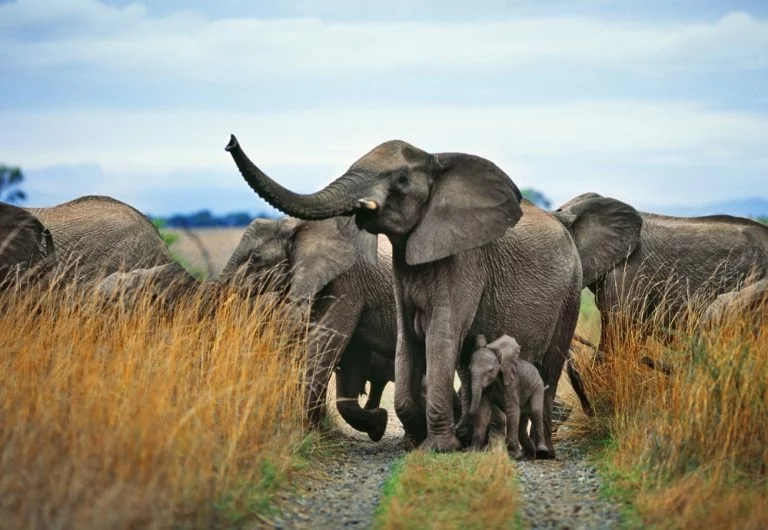
Photo by Harvey Sapir on Pexels
For decades, taxonomists treated all African elephants as a single species. In March 2021 the IUCN Red List assessed the two separately for the first time: the African bush elephant of the savannas, and the smaller African forest elephant of the central and west African rainforest. Genetic work showed the two had been on separate evolutionary tracks for millions of years. The decision matters because the two species face very different threats, and lumping them together had masked the far steeper decline of the forest elephant.
If you are reading older articles, books, or even some safari operator websites, you will still see “African elephant” used as a single label. The split is recent and the language is still catching up. On this site we follow the IUCN convention. For the closest relative on the other continent, see our Asian elephant species profile.
Identification: how to tell bush from forest from Asian
The three living elephant species look more different than most people realise. The bush elephant is the giant: tall, lean, with massive flared ears that map roughly to the shape of the African continent. The forest elephant is smaller and stockier, with smaller, more rounded ears, and ivory tusks that grow almost straight down instead of curving forward. The Asian elephant has a humped or twin-domed forehead, much smaller ears, and only the males carry significant tusks.
Quick field marks for the African bush elephant
- Shoulder height typically 3 to 4 m (10 to 13 ft), males larger than females
- Large, triangular ears shaped like the map of Africa
- Tusks curving forward and upward, usually present in both sexes
- Two finger-like projections at the tip of the trunk (Asian elephants have one)
- Concave back profile when seen from the side
- Skin coarse and deeply wrinkled, holding water and dust for cooling
Quick field marks for the African forest elephant
- Shoulder height typically 2 to 2.5 m (6.5 to 8 ft), distinctly smaller than the bush elephant
- Smaller, more oval ears
- Tusks straight, downward-pointing, harder, and pink-tinted
- Five toenails on the front foot and four on the back (bush elephants have four and three)
- Found in the dense rainforests of Central and West Africa, not seen on savanna safaris
Range and habitat
African elephants live across 37 sub-Saharan countries, but their range has shrunk dramatically. Two hundred years ago they roamed almost the entire continent including North Africa and the Cape. Today, bush elephants are concentrated in southern and eastern Africa: Botswana holds the largest single population, around 130,000 in the Okavango and Chobe systems, followed by Zimbabwe, Tanzania, and Kenya. Forest elephants survive in fragmented pockets across the Congo Basin. The 2024 forest elephant status report put Gabon alone at roughly 95,000 animals, about two thirds of the counted total, in places like Loango National Park and Lope.
Both species need vast territories. A bush elephant family of around 10 individuals will use a home range of 50 to 3,000 square kilometers depending on rainfall. In Mali, desert-adapted bush elephants make the longest known elephant migration, a circuit of roughly 600 km through the Gourma region between the Niger river and the Burkina Faso border. Forest elephants follow seasonal fruit cycles through the rainforest, dispersing seeds for over 100 tree species, many of which would struggle to regenerate without them.
Diet and the gardener of Africa
An adult bush elephant eats 150 to 300 kg of vegetation a day and drinks 100 to 200 litres of water. They are bulk feeders: grass during the rains, then branches, bark, and leaves through the dry season. They use the tip of the trunk to grip individual blades of grass, and they will push down whole trees to reach the most nutritious top leaves. This is destructive in the short term but ecologically critical in the long term, because it keeps savannas open and maintains the patchwork of habitats that other species rely on.
Forest elephants are even more important as ecosystem engineers. Studies in the Congo Basin show that forests with healthy elephant populations store significantly more carbon, because elephants preferentially eat fast-growing small trees and leave large hardwoods. Their dung disperses the seeds of trees that have larger, denser wood and higher carbon storage. Lose the forest elephant, and you measurably reduce the carbon-fixing capacity of African rainforest, a finding that has reframed elephant conservation as climate-change mitigation.
Social life and intelligence
Elephant society is matriarchal. A herd is built around an older female (the matriarch) and her adult daughters, with their juvenile calves of both sexes. Adolescent males leave the herd in their early teens and either roam solo or join loose bachelor groups. Matriarchs are the herd’s library: they remember water holes from droughts decades ago, recognize the calls of hundreds of individuals, and lead the family along migration routes their grandmothers walked.
African elephants have demonstrated tool use and what researchers describe as grief behaviour around the bones of dead relatives. They communicate over kilometers using infrasonic rumbles below the threshold of human hearing, picked up partly through bones in the feet. The combination of long memory, complex social bonds, and high intelligence is why so much of the conservation conversation now treats poaching as a question of trauma to surviving populations, not just numbers lost.
Reproduction and slow recovery
Photo by Diego F. Parra on Pexels
Female African elephants reach sexual maturity between 10 and 12 years old and typically give birth every 4 to 5 years after that. Gestation is 22 months. A single calf weighs around 100 kg at birth and depends on its mother’s milk for at least two years, often longer. This slow reproductive rate, combined with high calf mortality in drought years, means a population devastated by poaching takes generations to recover. A region that loses half its elephants to ivory poaching cannot simply bounce back when the poaching stops.
Threats and conservation status
The bush elephant is listed as Endangered by the IUCN, and the forest elephant as Critically Endangered. The IUCN puts the forest elephant decline at more than 86 percent over 31 years, and the bush elephant decline at at least 60 percent over the last 50 years. The single most-cited study behind the forest elephant figure is Maisels and colleagues in PLOS ONE in 2013, which measured a 62 percent drop in Central African forest elephants between 2002 and 2011 and a 30 percent loss of range.
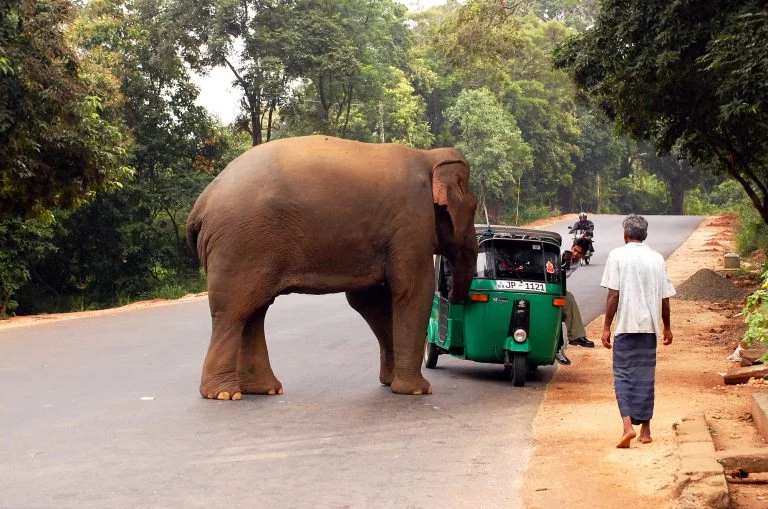
The two big drivers of decline are poaching for ivory (still active despite the 1989 CITES ban) and habitat loss to agriculture, infrastructure, and conflict zones. Human-elephant conflict is a growing third driver: as human settlements push into traditional elephant range, elephants raid crops, and farmers retaliate. For the deeper history on the ivory trade and what has and has not worked since the international ban, read our long piece on the ivory trade.
What is working
- Strict CITES enforcement and the 2017 closure of the Chinese ivory market reduced demand and prices
- Community conservancies in Kenya and Namibia give local people direct income from elephant tourism, flipping the incentive structure
- GPS collaring programs by Save the Elephants and ElephantVoices track herds in near real time, helping rangers intercept poachers and guide elephants away from farms
- Trans-frontier conservation areas (Kavango-Zambezi, KAZA) connect five-country corridors so populations can move and breed across modern political borders
- Better survey methods are changing the picture too. The 2024 forest elephant status report used DNA extracted from dung to count animals, which raised the reliable share of the total from 53 percent to 94 percent
Smart collars are one of the most promising recent additions to the toolkit. For a deeper look at how this technology works in practice, see our piece on elephant collars.
African elephants in culture and history
African elephants have shaped human culture across the continent for thousands of years. The Carthaginians used North African elephants (now extinct) in war as far as Italy. The kingdoms of Mali and Songhay traded ivory across the Sahara. The elephant is the national emblem of Cote d’Ivoire, and the Big Five concept that drives so much of the safari economy puts the elephant at its heart.
The relationship has always been ambivalent. Elephants are revered, hunted, feared, and farmed-around in roughly equal measure depending on the era and the community. For a wider historical lens, see a brief history of the human-elephant relationship.
Where to see African elephants in the wild
If you want to see African bush elephants in serious numbers, Botswana’s Chobe National Park is the gold standard: dry-season elephant densities are among the highest in Africa, and you can watch herds cross the Chobe River at dusk. Kenya’s Amboseli has the most studied bush elephant population on Earth, with researchers from Cynthia Moss’s Amboseli Trust for Elephants having tracked individual families since 1972. South Africa’s Addo Elephant National Park, near Gqeberha, holds around 600 bush elephants.
Forest elephants are far harder to see. The single best destination is Gabon’s Loango National Park, where elephants emerge from the rainforest onto the beach and feed on the Atlantic shoreline. Dzanga Bai in the Central African Republic, a natural forest clearing, is the other classic spot and used to attract 100-plus elephants at a time before conflict and poaching pressure reduced the numbers. For a curated list of conservation-friendly destinations, see our list of elephant sanctuaries.
How to help African elephants
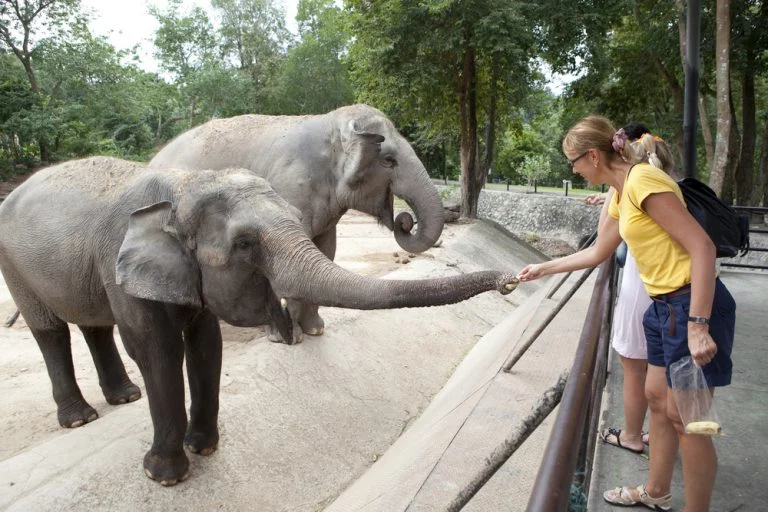
If you are not in Africa, the most effective things you can do are: support organizations doing serious anti-poaching, community-conservancy, or range-protection work (Save the Elephants, the African Wildlife Foundation, Big Life Foundation, the Sheldrick Wildlife Trust); never buy ivory or ivory-like products even if they are described as antique; and avoid attractions that involve elephant riding, performance, or close human contact, which almost always trace back to wild capture or coercive training.
If you visit Africa, choose lodges that contribute a meaningful per-bed-night fee to local conservancies, and ask the operator point-blank what percentage of your fee reaches the community living next to the elephants. The answer should be specific. If it is not, you are funding tourism, not conservation.
Further reading
For the closest related species, read our Asian elephant species profile. For wider context on conservation, see our hub pages on elephant species, elephant conservation, and elephant facts. For activism around trophy hunting, see our piece on elephant trophy hunting.
Frequently asked questions
How many species of African elephant are there?
Two. The African bush elephant (Loxodonta africana) and the African forest elephant (Loxodonta cyclotis) were assessed as separate species by the IUCN Red List in March 2021, after genetic work confirmed they had been on separate evolutionary tracks for millions of years. The bush elephant lives across savanna and woodland habitats in southern and eastern Africa. The forest elephant lives in the rainforests of the Congo Basin and west Africa, is smaller, and has straighter, harder, pink-tinged tusks.
How big do African elephants get?
African bush elephants are the largest land animals on Earth. Adult males average around 3 to 3.5 metres (10 to 11.5 ft) at the shoulder and weigh 4,500 to 6,000 kg, with exceptional bulls reaching 4 metres and 7,000 kg. Females are smaller, averaging 2.6 metres at the shoulder and 2,500 to 3,500 kg. Forest elephants are distinctly smaller, with adult males averaging 2.4 to 2.5 metres and 2,700 to 3,000 kg.
How long do African elephants live?
60 to 70 years in the wild, with rare individuals living longer. Lifespan is closely linked to the wearing-down of their molars: elephants get six sets of molars over their life, and once the last set is worn down they can no longer chew enough food to survive. Foot and joint disease remains a captive-welfare concern. A 2026 analysis found modern zoo survival comparable with or higher than the studied wild or semi-wild populations.
How many African elephants are left in the wild?
The 2016 IUCN African Elephant Status Report put the continental total for both species combined at around 415,000. The Great Elephant Census, published the same year, counted 352,271 savanna elephants across 18 countries using aerial survey. Forest elephants are far harder to count because they live in dense rainforest, and the 2024 forest elephant status report used DNA from dung to reach a figure of 135,690, with a further estimate of roughly 8,000 to 11,000 in areas that were not surveyed. That increase over the 2016 figure reflects better counting, not population growth.
Why are African elephants endangered?
Two main reasons. First, ivory poaching: despite the 1989 CITES ban, illegal killing surged from around 2007, peaking at roughly 40,000 elephants in 2011 and running above 20,000 a year through the worst of it. It had fallen to around 11,000 a year by 2019 but has not stopped. Second, habitat loss: African human populations are growing rapidly, agriculture is expanding into elephant range, and the corridors that connected protected areas are being fragmented by roads, fences, and farms. Climate change and human-elephant conflict are compounding both problems.
What is the difference between African and Asian elephants?
Three big differences. Ears: African elephants have huge, flared ears shaped roughly like the African continent; Asian elephants have smaller, more rounded ears. Forehead: African elephants have a smoothly rounded head; Asian elephants have a twin-domed or humped forehead. Tusks: most African elephants of both sexes carry tusks; only male Asian elephants carry significant tusks, with females usually having short tushes or none. The two lineages split roughly 7 million years ago.
Do African elephants migrate?
Yes, though not in the predictable seasonal way that wildebeest do. African elephants are nomadic across enormous home ranges. Botswana’s Okavango elephants move long distances between wet- and dry-season feeding grounds. Mali’s Gourma elephants walk the longest known elephant migration, a circuit of roughly 600 km, using a range of more than 32,000 square kilometres. Forest elephants follow fruiting cycles through the rainforest. Migration routes are passed down matrilineally: the matriarch leads the family along the same paths her grandmothers walked, which is why fragmenting these corridors with fences and roads is so harmful.
How can I help African elephants?
Three actions matter most. Never buy ivory or ivory-like products (including antique ivory, which laundering networks use to obscure recent kills). Support reputable organizations: Save the Elephants, Big Life Foundation, the Sheldrick Wildlife Trust, the African Wildlife Foundation, and community conservancies in northern Kenya and Namibia. If you visit Africa, pick lodges with documented conservancy contributions, and avoid all attractions that involve elephant riding, performance, or close human contact, which depend on cruel training and often on wild capture.
More from the archive
- Elephant Species: Complete Guide to All Living Elephants 2026: The three living elephant species and their subspecies: taxonomy, range, diet.
- African Forest Elephant: Facts, Trivia & 8-Question Quest: The African forest elephant was recognised as its own species in 2021 and remains Critically Endangered.
- African Bush Elephant Quiz: Facts, Trivia & 8 Questions: Everything worth knowing about the largest land animal on Earth, plus an eight-question quiz with sourced answers on population, musth, trunk fingers and the Mali migration.
- Asian Elephant Species Profile: Facts, Range, Conservation: The Asian elephant in depth: four populations across 13 range countries, size, diet, musth, working elephants, the conflict numbers from India, and what conservation is actually working.
Updated 14 September 2026: updated captive elephant survival evidence.



Useful to see the bush vs forest split spelled out as two species. The IUCN 2021 reassessment that finally separated them is something most general audiences still miss. The 86% forest elephant decline figure is the one people find hardest to believe.
Quick add: the 4 m shoulder height record is for a single Angolan bull shot in 1955 (held at the Smithsonian). Most modern bush bulls top out at 3.2 to 3.4 m. The big animals from a century ago are essentially gone.
I always thought Loxodonta africana was a single species until I saw the genetic work cited here. What is the conservation funding split between bush and forest right now? Is it remotely proportional to the decline numbers?