7 Ways to Help Elephants Without Leaving Your House
Last updated: November 26, 2026
3 min read
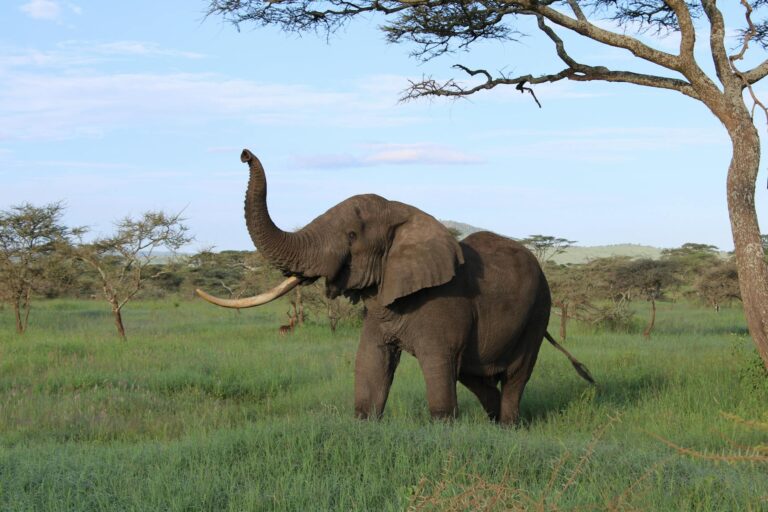
Savanna Elephants (Loxodonta africana) family (52844381572), by Bernard DUPONT from FRANCE, CC BY-SA 2.0, via Wikimedia Commons.
Most of the meaningful support for elephant conservation happens a long way from elephant range. Here are seven things you can do from home, ranked roughly by impact per unit of effort.
1. Do not buy ivory in any form
The single most important one. Carved ivory, ivory jewellery, ivory chess sets, anything sold as antique ivory without verifiable provenance. Every purchase keeps a supply chain alive. The same goes for elephant-hair bracelets and elephant-skin leather.
2. Donate to a credible field organisation
Worth looking at: Save the Elephants, Iain Douglas-Hamilton’s organisation based in Samburu, Kenya; African Parks, which manages 24 protected areas across 13 African countries on behalf of governments; the Wildlife Conservation Society, which works the Congo Basin forest elephant strongholds; the Sheldrick Wildlife Trust, which runs orphan rehabilitation in Kenya; and the Mali Elephant Project, which works with the Sahel desert elephants. All of them file public accounts and report measurable outcomes.
Recurring monthly giving is worth more to an organisation than the same money in a single lump, because predictable income is what lets them hire and plan.
3. Adopt an elephant
Most of the major field organisations run symbolic adoption schemes, and the Sheldrick Wildlife Trust’s orphan adoption is the best known. The Sheldrick Wildlife Trust uses symbolic adoption fees across its orphan care and wider conservation work. Adopters receive updates on a named animal. The point is not the money in isolation. It is that following one animal keeps people engaged for years rather than weeks.
4. Push for domestic ivory bans where you live
Japan still has a legal domestic ivory market. Controls vary across the EU. In the United States some states go further than the federal floor and others do not. Writing to your elected representatives in support of stricter domestic ivory law is one of the few things an individual can do that changes policy rather than budgets, and conservation NGOs run periodic campaigns, so joining their mailing lists keeps you informed on timing.
5. Be deliberate about palm oil
Sumatran and Bornean elephants are being squeezed by plantation expansion. Look for sustainable, deforestation-free palm oil. A blanket boycott can shift demand to other oil crops that need more land. It is an imperfect lever and it is better than nothing.
6. Travel well if you travel
If you do visit a range state, back credible operators. Stay at lodges run by or paying into community conservancies, such as Lewa and the wider Northern Rangelands Trust network in Kenya. Avoid riding, bathing and close-contact elephant tourism entirely. Choose parks where the entrance fee funds protection directly, as with Kenya Wildlife Service and African Parks sites. Tourist money is the strongest political argument there is for keeping elephants alive on land that could be farmed instead.
7. Read and share well-researched journalism
Conservation funding follows attention. Long-form reporting on elephants from National Geographic, Mongabay, the Guardian environment desk and The Conversation is worth reading and worth passing on. Sharing it costs nothing and keeps the subject in the cycle.
Read next
Elephant conservation pillar, elephant facts pillar, Asian elephant versus African elephant, elephant matriarchs.
Frequently asked questions
What is the single most effective way to help elephants?
Do not buy ivory, in any form, ever. The supply chain exists because demand exists.
Which elephant charities are credible?
Save the Elephants, African Parks, the Wildlife Conservation Society, the Sheldrick Wildlife Trust and the Mali Elephant Project all have long track records, public accounts and reported outcomes.
Does adopting an elephant actually do anything?
Yes, through a credible organisation. The Sheldrick Wildlife Trust’s orphan adoption funds the care of a specific orphan. Individually the fees are small. Across thousands of adopters they are not.
Should I avoid palm oil to help elephants?
Choose sustainable, deforestation-free palm oil where possible. The IUCN advises against a blanket boycott because replacement oil crops can require more land.
Is volunteering at a sanctuary helpful?
It depends on the sanctuary. Most short-term tourist volunteering is built around the visitor’s experience rather than the elephants. Long-term placements with credible organisations can be genuinely useful and are competitive and demanding. For most people, a donation does more.
Keep reading
- Elephant Conservation 2026: How to Save the Last Giants: Poaching trends, the 1989 ivory ban, the zoo and sanctuary debate, trophy hunting.
- How the David Sheldrick Wildlife Trust Raises Orphan Elephants: 327 orphans raised, 94 wild-born calves since, and a milk formula that first worked in 1974.
- 10 Elephant Rescue Stories That Stayed With Us: Ten documented elephant rescues and the people behind them, each one checkable against the organisation that ran it.
- World Elephant Day Explained: How August 12 Became a Global Event: Who founded World Elephant Day, what it was built to highlight, and how to mark 12 August without amplifying a ride camp.
Updated 14 September 2026: corrected adoption funding and palm-oil advice.