
Elephant Hit By a Bus in Voi, Africa
Last updated: September 14, 2026
5 min read
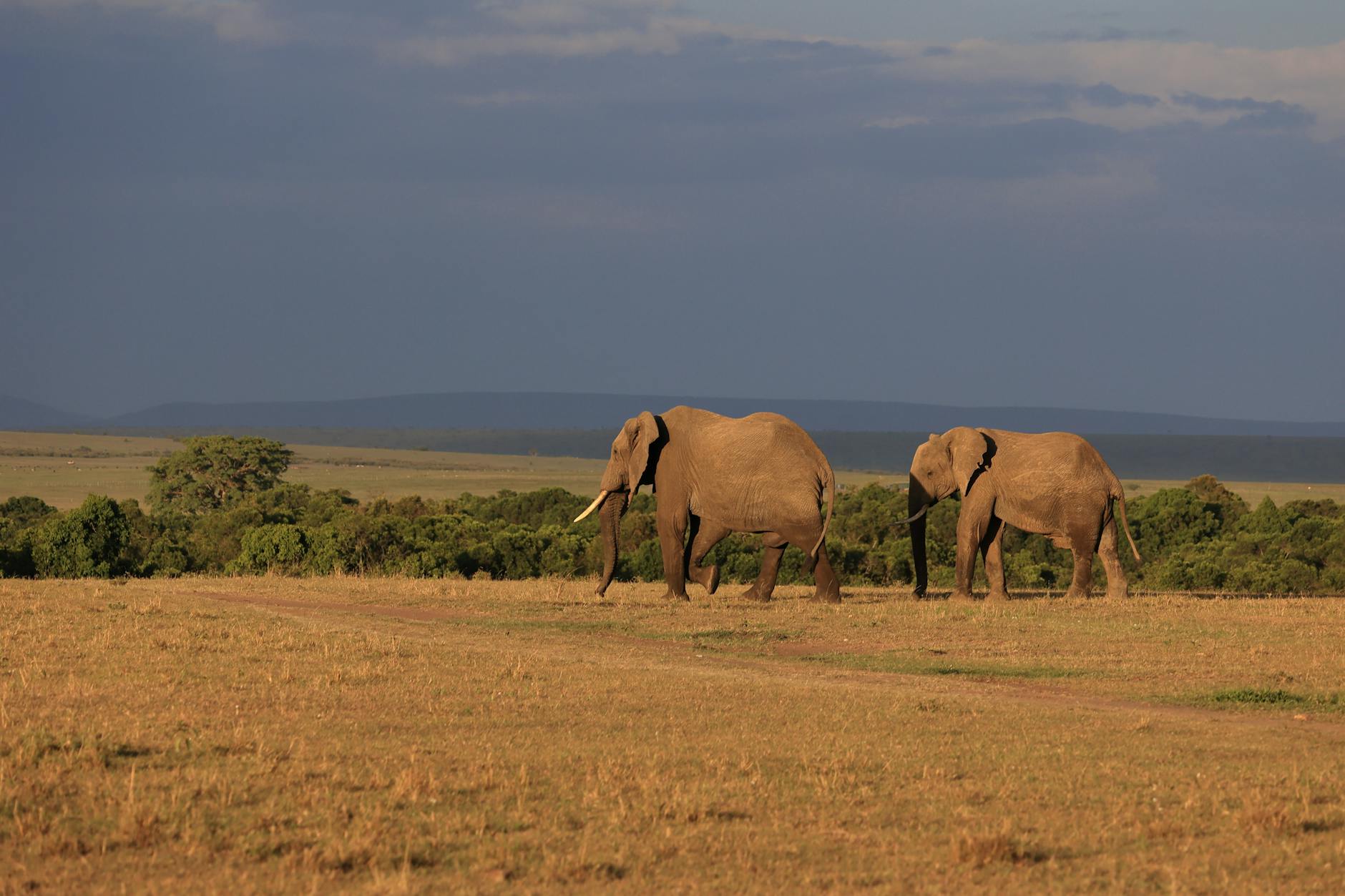
On Saturday night, 7 October 2023, a Nairobi-bound Tahmeed bus struck and killed an elephant on the A109 Nairobi-Mombasa highway at Maungu, near Voi in Taita-Taveta County, Kenya. The elephant was crossing near Tsavo East National Park. Police reported one serious injury and several other injuries. It is a grim story, and it is also a window into one of the most persistent conservation problems in East Africa: what happens when a major road cuts straight through elephant country.
A road through the middle of Tsavo
The Tsavo region is one of the largest protected wildernesses in Africa. Tsavo East and Tsavo West together cover roughly 22,000 square kilometres, and Tsavo East is the largest national park in Kenya. The wider Tsavo Conservation Area held an estimated 14,964 elephants in the 2021 aerial count, famous as the “red elephants” of Tsavo because they coat themselves in the area’s iron-rich red dust.
Tsavo East and Tsavo West were once a single continuous wilderness. Tsavo was gazetted as one park in 1948 and split into two units for administration later the same year. They are now physically separated by the A109 highway and a parallel railway, both built to connect Kenya’s interior with the coast. The two parks remain one ecosystem in every biological sense: elephants, lions and other wildlife move between them, and between the parks and the community ranches to the south, as they always have. To do so they must cross a busy road carrying buses, trucks and cars day and night.
What happened on the bus
Passengers described the impact and the damage to the vehicle. The injured were taken to Moi County Referral Hospital in Voi. A collision with an adult elephant, an animal that can weigh several tonnes, is closer to hitting a brick wall than hitting another vehicle, which is why even a bus comes off badly. These accidents endanger people as much as wildlife.
The aftermath: meat, tusks and the law
Word of the dead elephant spread quickly and residents of the Maungu area gathered at the carcass to take portions of the meat. That is worth being clear about rather than romanticising. Under Kenya’s Wildlife Conservation and Management Act 2013, possessing wildlife meat without a permit is an offence, and how the animal died does not change that. Taking bushmeat from a road-killed elephant is not the same crime as poaching it, but it is not lawful either.
The tusks are a separate matter. Officers from the Kenya Wildlife Service, along with rangers from Wildlife Works, which runs the Kasigau Corridor project on the ranches south of the highway, secured the ivory. Ivory from any dead elephant, however it died, is state property and must be recovered and accounted for. Leaving tusks at a roadside accident hands free ivory to traffickers, which is why recovering them is standard procedure.
Why vehicle strikes keep happening
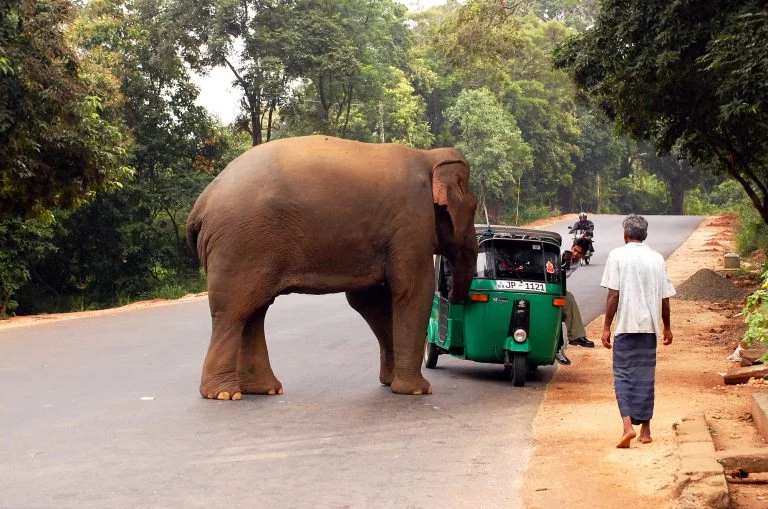
An elephant hit by a vehicle is not a freak event in Africa. It is a predictable result of roads crossing wildlife corridors. In April 2022 a bus travelling towards Victoria Falls in Zimbabwe hit and killed three elephants: the driver had already swerved past one herd when a second group turned into the road in front of him. Several factors stack the odds:
- Elephants move a great deal at night, exactly when drivers can see least.
- A dark-skinned, dust-covered elephant is very hard to spot on an unlit highway until it is close.
- Drivers travel fast on long inter-city routes, and a multi-tonne animal cannot be braked away from in a few seconds.
- The road sits directly on routes elephants have used for generations, so they will keep crossing it.
How the problem can be reduced
This is a solvable engineering problem, and the railway alongside the road shows what solving it looks like. When the standard gauge railway was built through Tsavo, its designers analysed every elephant collision recorded on the old metre-gauge line between 2007 and 2012 and used that data to place six dedicated wildlife underpasses, each roughly 70 metres long and 6 metres high, at Maungu, Bachuma, Ndara, Kenani, Manyani and Kanga. One of them sits at the very place this bus hit the elephant. Parts of the line are also carried on viaducts so animals can pass beneath. Underpasses, lower speed limits on the busiest stretches, clear signage, and fencing that funnels animals towards safe crossings all cut collisions. The lesson is not that the road should not exist, but that roads through wilderness need to be designed for the animals that will cross them anyway.
The town of Voi and life beside the parks
Voi is a busy town in Taita-Taveta County at the junction of the highway and the main gateway to Tsavo East. Towns like it live in a constant balancing act. They depend on the highway and the railway for trade and on the parks for tourism jobs, and they also share a boundary with thousands of wild elephants. Crop raiding, the occasional dangerous encounter, and accidents on the road are part of daily reality here. That is why community involvement matters in conservation: measures local residents help design, from safe crossing points to compensation for damage, tend to last, while solutions imposed from far away rarely stick. One elephant dead on the A109 is a headline for a day. For the people of Voi it is a recurring fact of life that any real fix has to address.
The bigger picture
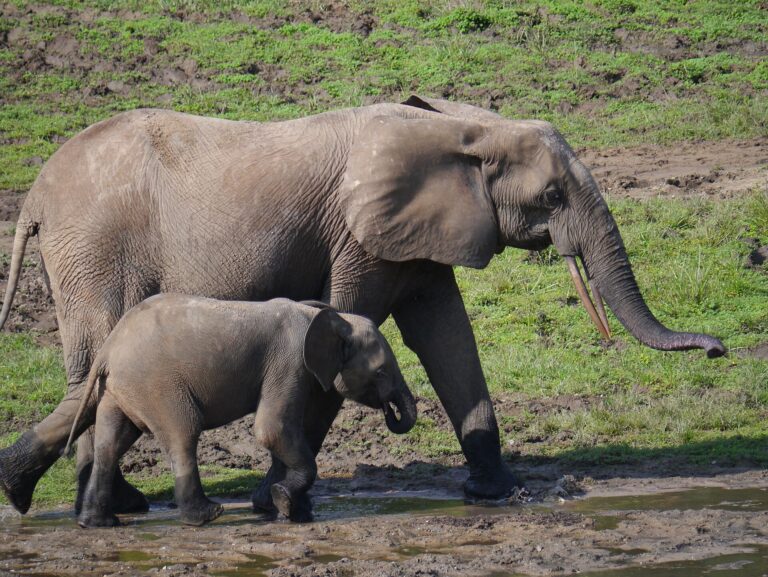
Road deaths are one pressure among many. The elephants of Tsavo are African savanna elephants, listed as Endangered by the IUCN, The Great Elephant Census estimated 352,271 across 18 countries from surveys in 2014 and 2015. The African forest elephant of the Congo Basin is a separate species, assessed separately, and was estimated at about 135,690 in 2024. Poaching for ivory peaked around 2011, when roughly one in ten elephants at monitored sites was killed illegally in a single year; the rate has fallen since, though UNODC modelled about 10,000 illegal killings a year for 2016 to 2018. Current CITES reporting gives monitored-site trends, not a new continent-wide annual total. Habitat loss and fragmentation, the slow carving-up of elephant range by farms, fences and highways, runs alongside it. A bus strike is fragmentation made visible in a single night. Protecting elephants means protecting the corridors they move through, not just the parks they live in. To learn more about the species, see our species profile of the African elephant.
Also worth reading
- Elephant Conservation 2026: How to Save the Last Giants: Poaching trends, the 1989 ivory ban, the zoo and sanctuary debate, trophy hunting.
- Elephants in Kenya: From Tsavo to Amboseli: 42,072 elephants in the 2025 national census, the fifty-year Amboseli study, and why drought now kills more of them than poachers do.
- Elephants in Kenya: Where, When and What You Will See: Amboseli, Tsavo, Samburu and the Mara compared, plus the truth about super tuskers and which elephant experiences are actually ethical.
- African Elephants Travel Paths Leading to Favorite Food: Oxford and Save the Elephants walked elephant trails with GPS in Sagalla, Tsavo, and found bulls and family groups choose different routes to different plants.
Updated 14 September 2026: corrected the incident date and population claims.

drove the Nairobi-Mombasa road three years ago and the wildlife crossings are inadequate, you can see it from the car. the Tsavo West to Tsavo East crossing point near Voi is exactly the corridor that needs an underpass not a fence. the bus driver doing his best to avoid the collision is plausible at night but the road geometry is what kills the elephants.
Mr Trunkwell, the Voi crossing has needed a proper underpass for over a decade, the road geometry through that section of the Tsavo corridor is genuinely indefensible. If you ever want to write up your drive and what you saw from the car as a guest piece I would happily host it, eyewitness accounts of road infrastructure are surprisingly thin on the ground.
Voi is a hotspot for road-strike incidents, the Tsavo East-West corridor crossing the Nairobi-Mombasa highway right there is one of the worst in Kenya. cannot believe there is still no proper underpass on that stretch given how long the Kenya Wildlife Service has been on record about it. the community taking the meat afterwards is the only humane part of the whole story.