Elephants in Nepal: Chitwan, Bardia, and the Working Tradition
Last updated: October 26, 2026
4 min read
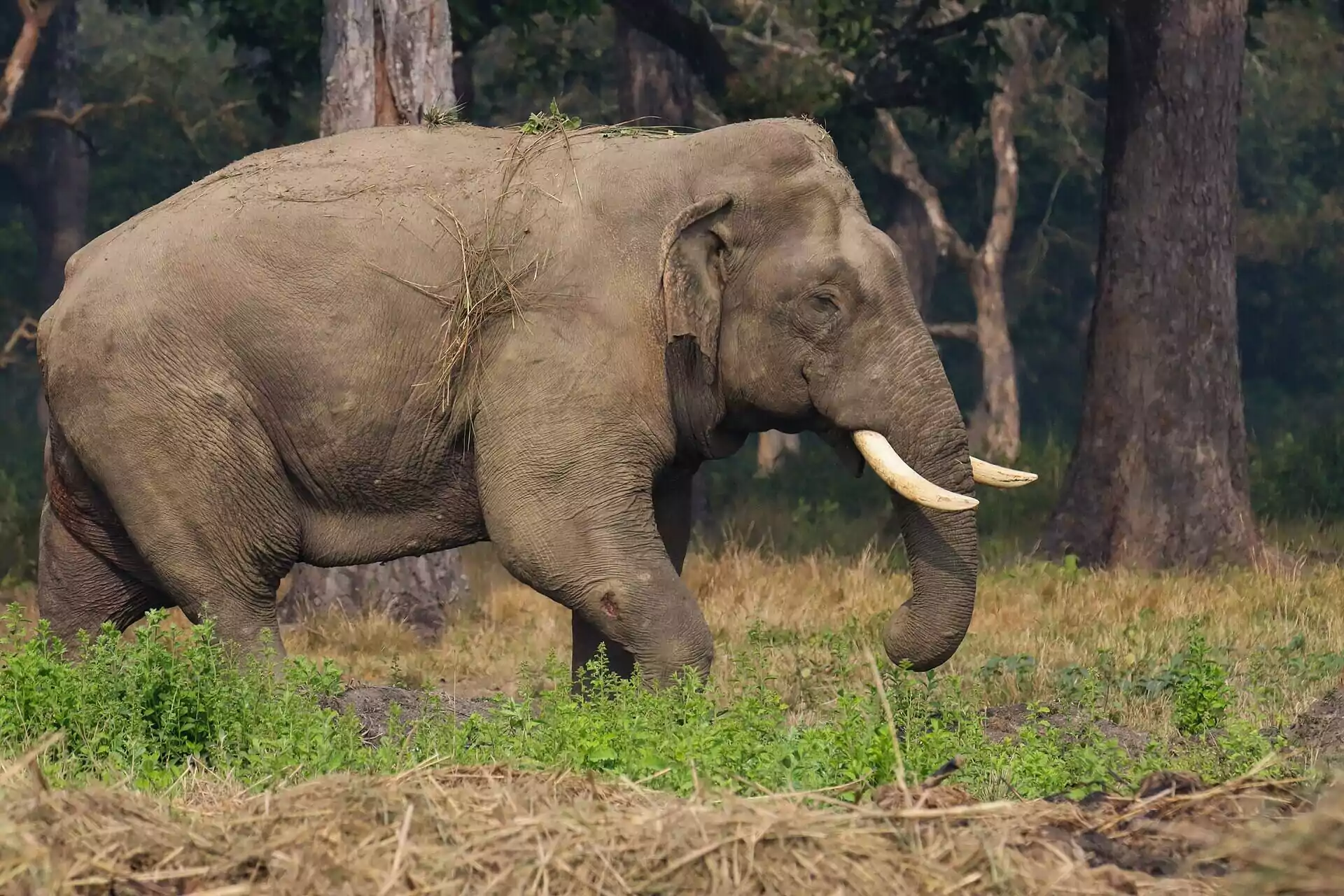
A male elephant named Ronaldo at the Elephant Breeding Centre in Chitwan National Park, by Shadow Ayush, CC BY-SA 4.0, via Wikimedia Commons.
Nepal has only around 200 to 250 wild Asian elephants and a similar number in captivity, almost all of them along the southern lowland belt. But it punches far above that, because it has become one of the world’s quiet success stories in anti-poaching, recording full calendar years with zero rhino and elephant poaching. The numbers are small. The lesson is large.
The Terai: a thin strip of lowland
Nepal is famous for the high Himalaya, and its elephants live nowhere near it. They are in the Terai, the flat, hot, subtropical belt running along the southern border with India: tall grassland, sal forest and braided rivers, and where Nepal’s best-known national parks sit.
Wild elephants are concentrated in three areas: Chitwan National Park in the central Terai, Bardia National Park to the west, and the smaller eastern reserves such as Koshi Tappu and Suklaphanta. An important point is that the border with India means nothing to them. Many are seasonal migrants crossing back and forth, particularly along the corridor linking Bardia with Dudhwa and Pilibhit on the Indian side. Nepal’s population cannot be understood as a sealed national herd.
How Nepal stopped the poachers
The achievement is genuinely rare. From 2011 onward Nepal logged repeated full years with no rhino, tiger or elephant poaching, a record very few countries can match. It did not happen by accident, and the recipe is worth spelling out.
- Community engagement. People living around the parks were given a real stake in protecting wildlife, so they became the eyes and ears of conservation rather than its opponents.
- Intelligence-led patrolling. Rangers act on information about where poachers are likely to strike rather than walking random routes.
- A trained and disciplined protection force. Nepal pairs a militarised presence, including army involvement, with proper training.
The combination is the point. Enforcement without community support breeds resentment, and goodwill without enforcement leaves a gap for organised poachers. Nepal did both at once, and that is the part other countries are trying to copy.
Working elephants on patrol
Nepal’s captive elephants have an unusual job. Most of the herd is run by the Department of National Parks and Wildlife Conservation, and a large share work as anti-poaching patrol mounts in Chitwan and Bardia. An elephant carries a ranger quietly through tall grass and flooded ground where no vehicle can go, which makes captive elephants part of the system that protects the wild ones.
The tourism side has changed too. Tiger Tops stopped offering elephant-back safaris across its Nepal properties in 2016, working with the welfare specialist Carol Buckley of Elephant Aid International, and now runs walking encounters instead, with no chains and no sharp sticks. Other operators in Chitwan have followed, and the number of tourists riding elephants there has fallen since.
Where to visit
Two parks anchor any elephant-focused trip. Chitwan National Park is the standard reference for Nepali wildlife, with jeep safaris, walking safaris and canoe trips. If elephant-back safaris are offered, skip them and take one of the alternatives. Bardia National Park in the west is wilder and much quieter, with increasingly likely tiger sightings and more intermittent elephant ones.
Human-elephant conflict
For all the anti-poaching success, Nepal still has a serious conflict problem, concentrated in the eastern Terai. Seasonal migrants crossing from India move through farmland, raiding crops and sometimes killing people, and people kill elephants in return. With a resident population this small, every retaliatory death matters.
Nepal published an Elephant Conservation Action Plan covering 2025 to 2035, which sets out the national approach to corridors, conflict mitigation and captive elephant welfare. It is the same principle behind the anti-poaching record applied to a harder problem: give people living alongside elephants a reason and a means to keep doing it.
Read next
Elephant species guide, elephant conservation, elephant facts.
Frequently asked questions
How many elephants are in Nepal?
Roughly 200 to 250 wild elephants and around 200 in captivity, almost all in the southern Terai lowlands.
Where can I see elephants in Nepal?
Chitwan National Park is the standard destination. Bardia is the wilder, quieter alternative.
Should I ride an elephant in Chitwan?
No. The training methods behind ride tourism are abusive and the welfare standards are poor. Several leading lodges now offer no-ride alternatives instead.
Why has Nepal had such success with anti-poaching?
Deep community engagement, intelligence-led patrols and a well-trained ranger force, all three at once. Nepal has logged multiple full years of zero poaching since 2011.
Are Nepalese elephants the same as Indian elephants?
Yes, Elephas maximus indicus, the same subspecies found across mainland Asia.
Keep reading
- Elephant Conservation 2026: How to Save the Last Giants: Poaching trends, the 1989 ivory ban, the zoo and sanctuary debate, trophy hunting.
- Elephants in Bhutan: The Royal Manas Population: Bhutan’s national survey put its wild elephants at 678, up from 513 in 2011.
- Elephants in India: Population, Parks, and Culture: India’s first DNA-based elephant count put the wild population at 22,446.
- Elephants in Thailand: Wild Numbers, Sanctuaries, and Ethics: Where Thailand’s 4,000-plus wild elephants live, what the captive tourism industry really looks like, and how to tell a working sanctuary from a rebranded ride camp.
This article is part of our elephant species guide, which links every species, subspecies and country guide on the site.