Sumatran Elephant: Critically Endangered Forest Subspecies
Last updated: October 27, 2026
3 min read
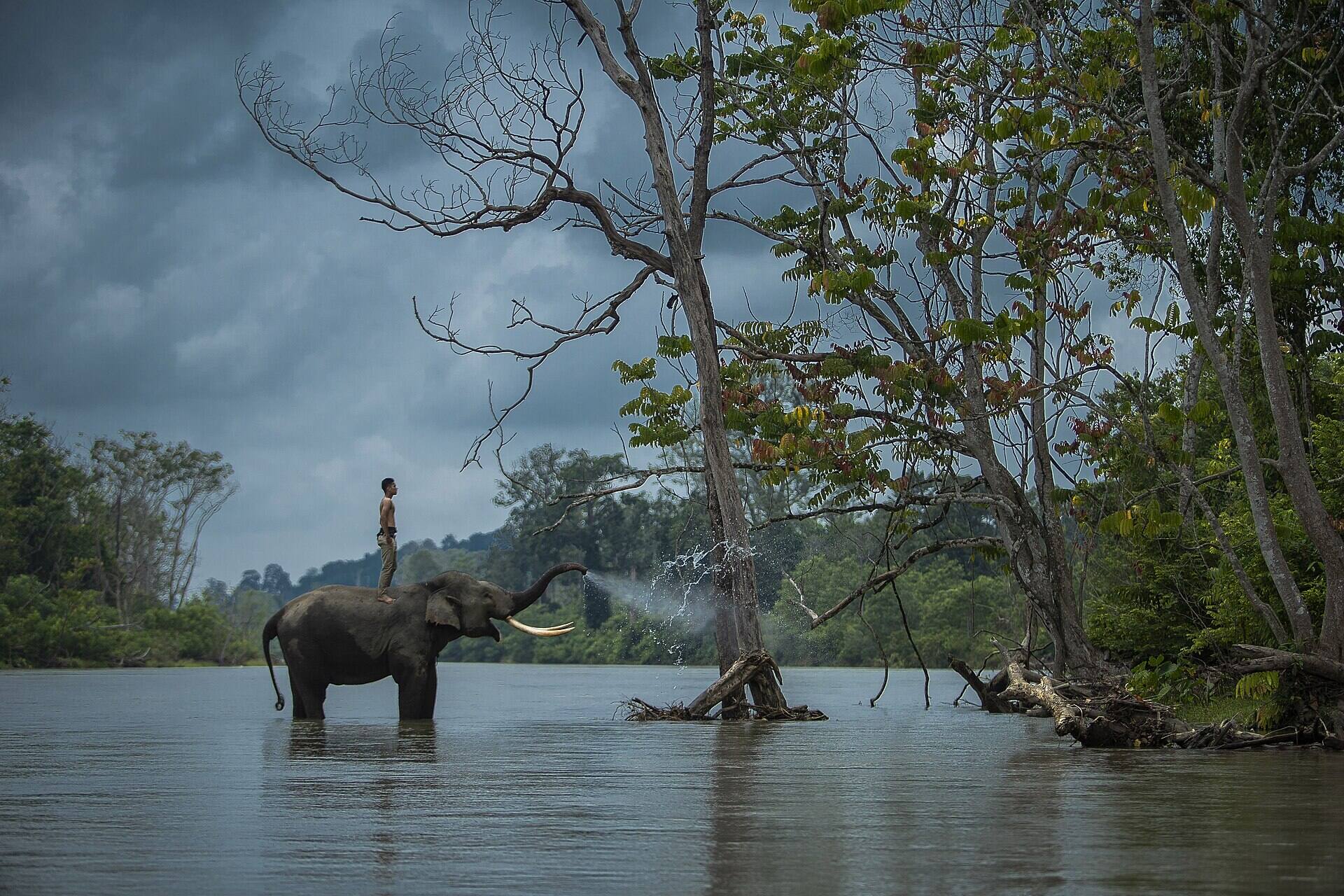
Mahout dan gajah menyemburkan air dari belalainya ke arah pohon, CRU Samponiet, by Hendrapictures, CC BY-SA 4.0, via Wikimedia Commons.
The Sumatran elephant (Elephas maximus sumatranus) is one of the most threatened large mammals on Earth. Indonesia’s draft 2026 to 2036 elephant action plan estimates 1,320 to 1,635 in the wild, scattered across fragments of forest on the Indonesian island of Sumatra.
What makes the Sumatran elephant distinct
Sumatran elephants are lighter skinned than mainland Asian elephants, with proportionally larger ears. Adults stand roughly 2 to 3.2 m at the shoulder and weigh 2,000 to 4,000 kg, at the smaller end of the Asian elephant range.
They carry 20 pairs of ribs where other Asian elephants have 19, a small but consistent anatomical marker, and genomic work places them as a distinct evolutionary lineage within the Asian elephant rather than a recent offshoot.
Range and habitat
Sumatran elephants historically occupied eight of the island’s provinces, including Aceh, Riau, Lampung, Bengkulu, North Sumatra and South Sumatra. They live in lowland tropical rainforest, peat swamp and the foothills of the Barisan range. Strongholds today include Way Kambas, Bukit Tigapuluh and the Leuser ecosystem.
The range has collapsed rather than shrunk evenly. Around 69 percent of potential elephant habitat was lost inside a single elephant generation between 1980 and 2005, mainly to oil palm and pulpwood plantation, and by 2008 elephants had gone locally extinct in 23 of the 43 ranges identified across the island in 1985. What remains is a patchwork, with several subpopulations already too small to be viable on their own.
Critically Endangered status
The IUCN moved the Sumatran elephant from Endangered to Critically Endangered in 2011, the highest category before extinction in the wild, after finding the population had fallen by at least 80 percent over three generations, roughly 75 years.
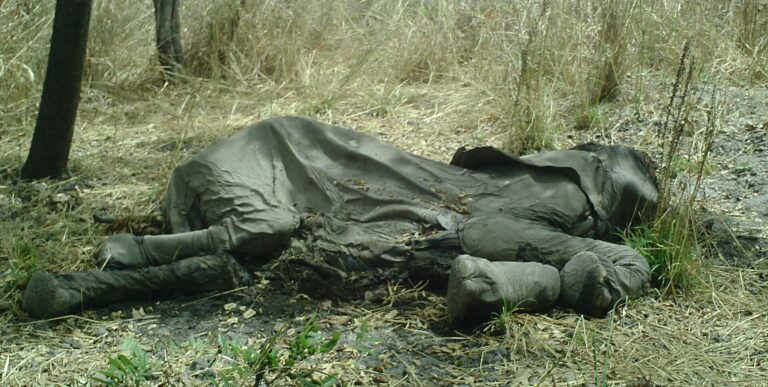
Habitat loss to industrial plantations is the dominant pressure. Poaching for ivory adds to it, which affects only tusked males and skews the sex ratio in small populations. So do retaliatory killings during crop conflict, and snares set for deer and wild boar that maim or kill elephants incidentally.
Conservation efforts
Indonesia runs a network of elephant conservation centres and conservation response units across Sumatra, where confiscated and rescued elephants are held in semi-captive conditions. The centre at Way Kambas is the largest, and its elephants work as patrol animals, escorting visitors and pushing wild herds back from village land.
WWF, Forum Konservasi Gajah Indonesia and the Leuser International Foundation run anti-poaching patrols, GPS collar studies and community work. The collared animals produce the movement data behind both the population estimates and the corridor planning meant to reconnect the fragments.
Why this elephant matters
Sumatran elephants disperse seeds across one of the most biodiverse rainforests on the planet, including hardwoods whose seeds germinate better, or only, after passing through an elephant. Losing them means losing the mechanism that keeps those tree species recruiting.
Read next
Elephant species guide, elephant conservation pillar, Sri Lankan elephant guide, Bornean pygmy elephant guide.
Frequently asked questions
How many Sumatran elephants are left?
Indonesia’s draft 2026 to 2036 elephant action plan estimates 1,320 to 1,635, across fragmented populations.
Why is the Sumatran elephant Critically Endangered?
Habitat loss to oil palm and pulpwood plantation is the dominant pressure, with roughly 69 percent of potential habitat lost between 1980 and 2005. Ivory poaching, retaliatory killing in conflict zones and snares add to the toll.
How big is a Sumatran elephant?
Roughly 2 to 3.2 m at the shoulder and 2,000 to 4,000 kg, at the smaller end of the Asian elephant range. They are sometimes confused with the Bornean elephant, which is smaller again and genetically distinct.
Where can I see Sumatran elephants?
Way Kambas National Park in Lampung is the most accessible site, with a long-running conservation centre that allows controlled visits. Wild herds are rarely seen by visitors, given dense forest and small remaining populations.
What is being done to save them?
A network of conservation centres and response units, anti-poaching patrols across the main range areas, and corridor planning aimed at reconnecting fragmented forest. WWF and the Leuser International Foundation support local NGOs and government rangers.
More from the archive
- Elephant Species: Complete Guide to All Living Elephants 2026: The three living elephant species and their subspecies: taxonomy, range, diet.
- Elephants in Sumatra: The Critically Endangered Subspecies: Indonesia’s draft 2026 to 2036 elephant action plan estimates 1,320 to 1,635 Sumatran elephants in fragmented populations.
- Asian Elephant Species Profile: Facts, Range, Conservation: The Asian elephant in depth: four populations across 13 range countries, size, diet, musth, working elephants, the conflict numbers from India, and what conservation is actually working.
- Pygmy Elephants of Borneo: The Smallest Asian Elephant: Around a thousand left, Endangered since 2024, and native to Borneo despite a century of claims that they were feral.
Updated 14 September 2026: updated the Sumatran elephant estimate.
Updated 26 October 2026: updated the Sumatran elephant estimate to Indonesia’s 2026 draft action plan.