Sri Lankan Elephant: The Island Subspecies Guide
Last updated: November 5, 2026
4 min read
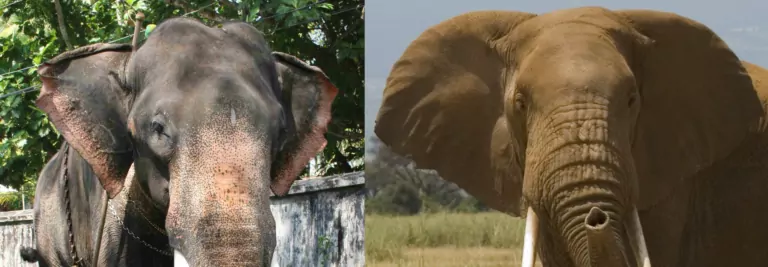
Elephas maximus maximus, by Carlos Delgado, CC BY-SA 4.0, via Wikimedia Commons.
The Sri Lankan elephant (Elephas maximus maximus) is the largest of the three recognised Asian elephant subspecies and is found only on the island. Somewhere between 6,000 and 7,500 remain, which makes Sri Lanka one of the densest concentrations of wild Asian elephants anywhere.
How the Sri Lankan elephant differs
It is larger and darker than its mainland cousins, with more depigmented patches on the ears, face, trunk and belly. Bulls can reach 3.5 m at the shoulder and 5,500 kg, at the top of the range for the species.
Only around 7 percent of males carry tusks. The rest, called makhnas, get by on bulk and on tushes, short incisors that barely show. The low tusker rate is one of the legacies of centuries of selective ivory hunting on the island.
Genetic work has repeatedly placed the Sri Lankan population as a distinct lineage that separated from mainland Asian elephants when lower sea levels last joined the island to the subcontinent.
Where they live
Sri Lankan elephants occupy the dry zone: a horseshoe of lowland scrub, dry-evergreen forest and tank reservoirs wrapping around the central highlands. Strongholds include Udawalawe, Yala, Wilpattu, Minneriya, Kaudulla and Wasgamuwa.
The dry-season gathering at Minneriya tank, known as The Gathering, is still one of the largest seasonal concentrations of Asian elephants anywhere, but it is a diminished version of what it was. The draw is the grass that grows on the lake bed as the water recedes. Since the Moragahakanda reservoir came online in 2018, Minneriya has been held near full for much of the year, which drowns that grass. Peak counts that used to run past 400 in August and September have more recently been under 200, and the herds now shift between Minneriya, Kaudulla and Hurulu depending on where the feeding is.
Conservation status and threats
The Asian elephant is listed as Endangered by the IUCN and the Sri Lankan subspecies sits inside that listing. Numbers have held more stably than on the mainland, but the conflict toll is severe and getting worse. Sri Lanka recorded 488 elephant deaths in 2023, the highest figure on record, alongside around 170 human deaths. In 2024 roughly 400 elephants and about 150 people died. Between 2015 and 2024 the country lost close to 3,500 wild elephants to conflict.
The pressures are habitat fragmentation from irrigation projects, retaliatory killings around crop fields, gunshot injuries and hakka patas, the explosive devices hidden in bait that detonate in an elephant’s mouth, plus electric fences pushed into core range and collisions on roads and railways. Sri Lanka also relocates problem elephants, a policy that research increasingly suggests does not resolve the conflict it is meant to address.
Where to see Sri Lankan elephants
Udawalawe has the highest reliability for daily sightings, with year-round herds. Yala, in the southeast, mixes elephants with leopards and sloth bears. Wilpattu, in the northwest, is quieter and feels closer to genuine wilderness.
For the Gathering, aim for late July to early October and be prepared to follow the elephants rather than the name: Kaudulla and Hurulu often hold more animals than Minneriya now. Operators run small open jeeps from Habarana and Sigiriya. Ask where the herds actually are that week, and pick a company that keeps a respectful distance and does not rev the engine to push animals into a photo.
Daily life and social structure
Sri Lankan elephants live in matriarchal family groups. The oldest female leads, deciding routes, water stops and how to respond to threats. Bulls leave at around 12 to 15 and live alone or in loose bachelor groups, joining cows only to breed.
Adults eat around 150 kg of vegetation a day and drink 100 to 200 litres of water, spending most of their waking hours feeding. Calves nurse for up to four years and stay with the family well into their teens.
Read next
Our elephant species guide, elephant conservation pillar, Sumatran elephant guide and Bornean pygmy elephant guide.
Frequently asked questions
How many Sri Lankan elephants are left?
Between 6,000 and 7,500, depending which count you trust. The 2011 census counted 5,879. The 2024 waterhole survey, the first in thirteen years, reported at least 7,451, though researchers have pointed out that a waterhole count returns roughly what the number of observation points allows it to, and that unseasonal rain before the count gave the elephants other places to drink. Either way, Sri Lanka holds well over a tenth of all wild Asian elephants on a very small fraction of the species’ historic range.
Are Sri Lankan elephants different from Indian elephants?
Yes. The Sri Lankan elephant is a recognised subspecies, larger and darker than the Indian and Sumatran forms, with more depigmented skin and a very low rate of tusked males.
Where is the best place to see elephants in Sri Lanka?
Udawalawe for reliable year-round sightings. For sheer numbers, the Gathering in August and September, though check whether the herds are at Minneriya, Kaudulla or Hurulu before you book, because that has become unpredictable since the Moragahakanda reservoir changed Minneriya’s water levels.
Are Sri Lankan elephants dangerous?
They are wild animals capable of killing a person, and around 150 people a year die in conflict incidents on the island. Most of those happen when villagers try to protect crops at night. On safari with a responsible operator the risk is very low.
Do Sri Lankan elephants have tusks?
Only around 7 percent of males. Females and most males have short tushes that rarely protrude. The low rate reflects centuries of selective hunting.
Carry on reading
- Elephant Species: Complete Guide to All Living Elephants 2026: The three living elephant species and their subspecies: taxonomy, range, diet.
- Elephants in Sri Lanka: A Complete Country Guide: Around 6,000 wild elephants on an island the size of Ireland: where to see them, what the Gathering is, and the real numbers behind the human-elephant conflict.
- Sri Lankan Elephant: Facts, Trivia & 8-Question Quiz: The Sri Lankan elephant in full: size, the island’s near-total tusklessness, the Gathering at Minneriya, the 2024 survey that put the wild population at 7,451.
- Asian Elephant Species Profile: Facts, Range, Conservation: The Asian elephant in depth: four populations across 13 range countries, size, diet, musth, working elephants, the conflict numbers from India, and what conservation is actually working.