

Do Elephant Wildlife Crossings Work? What the Record Shows
Last updated: October 26, 2026
4 min read
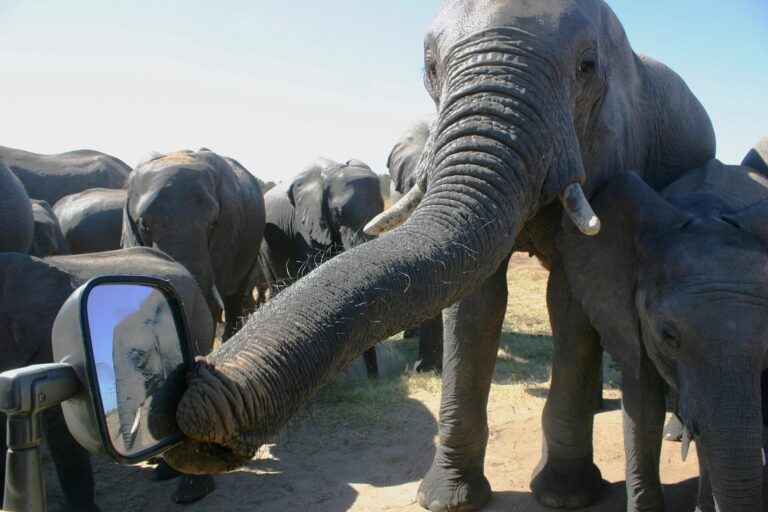
Photo by Jimmy Liao on Pexels.
Roads and railways cut elephant range into pieces. Purpose-built crossings are the obvious fix, and one of them has a decade of monitoring behind it. Beyond that single example the published record is thin, so this page sticks to what can actually be sourced.
The Mount Kenya underpass
The best-documented elephant crossing anywhere is the underpass on the northern slopes of Mount Kenya. It was built by the Mount Kenya Trust with Save the Elephants and the Lewa Wildlife Conservancy, at a total cost of around one million US dollars. Richard Branson gave 250,000 dollars towards it and the Dutch government contributed as well.
The tunnel is about 15 feet high and sits within a fenced corridor roughly nine miles long. It reconnects the forest on the mountain with the Ngare Ndare forest and the lower plains, two areas that human settlement had separated for years. Save the Elephants put the numbers at roughly 2,000 elephants on the mountain and around 5,000 in the country below.
It opened around Christmas 2010. The first elephant through was a bull called Tony, on 1 January 2011. About 250 individual elephants used it in the first six months, which settled the question of whether elephants would accept a tunnel at all.
India took a different route
India has plenty of elephant range crossed by roads and rail, but the mitigation there has mostly not been dedicated crossings. On the highways through Bandipur and Nagarhole in Karnataka the main measure is a night-time traffic ban on the roads that run through the protected areas.
The other structure in that landscape is railway-barricade fencing, installed from 2015 along forest boundaries to keep elephants out of villages. It is a barrier rather than a crossing, and it has caused its own problems: elephants have been trapped in it near Nagarhole and in Mysuru and Chamarajanagar, and at least one died trying to get through.
That has started to change. The Delhi-Dehradun expressway, opened in April 2026, carries a 12 km elevated section through elephant range near Rajaji, with animal underpasses along it including two dedicated elephant underpasses 200 metres long. Camera monitoring near Haridwar recorded 40,444 wildlife images from 18 species and 60 elephant-use instances during the monitoring period. It is early, but it is the first Indian project with a monitoring record attached.
Rail: sensors rather than concrete
The most convincing recent result on Indian railways came from detection rather than construction. The Northeast Frontier Railway runs an AI-based intrusion detection system built on distributed acoustic sensors attached to fibre optic cable laid beside the track. The sensors are pre-loaded with the acoustic signature of elephant movement, and when they pick it up the system alerts loco pilots, station masters and control rooms so trains can slow or stop.
NFR reported that the system protected more than 160 elephants during 2025, and that the corridors it covers have recorded no train strikes since it went live. Coverage started at around 62.7 km of elephant corridor and is being extended across the rest of NFR’s corridors, with Indian Railways expanding the approach to over 1,100 route kilometres nationally. Alongside it runs Plan Bee, which plays amplified bee sounds near tracks to move elephants off.
What is not established
Two things are worth saying plainly, because they get asserted confidently elsewhere. There is no published minimum width standard for elephant crossings that we can point to. And there is no open cost benchmark for building one: the Mount Kenya figure of roughly a million dollars is the only project total we found stated on the record.
What Mount Kenya does suggest is that continuity matters. The underpass works as part of a fenced corridor joining two blocks of habitat, not as an isolated structure dropped next to a road.
Help us fill the gaps
We do not have a lot of solid information on elephant crossings outside Mount Kenya and the Indian railway work. Monitoring data for other structures either has not been published or we could not find it. If you have worked on one, or know of survey results we have missed, leave a comment and we will update the page.
Frequently asked questions
Do elephant crossings actually work?
The Mount Kenya underpass does. Around 250 elephants used it in its first six months and it has stayed in use since. It is the strongest case on the record.
How wide does a crossing need to be?
We could not find a published standard. Claims of a specific minimum width circulate online without a source behind them.
What do crossings cost?
The Mount Kenya underpass came to about one million US dollars including the corridor work. We have not found comparable published totals for other projects.
Does India have elephant crossings?
Mostly it uses other measures: night traffic bans on highways through Bandipur and Nagarhole, railway-barricade fencing, and AI acoustic detection on north-eastern rail corridors.
Can technology replace a physical crossing?
On railways it has produced results quickly and cheaply. It does not restore connectivity, though. Detection stops collisions; it does not rejoin two halves of a home range.
See our conservation pillar and our elephants in Kenya overview.
This article is part of our elephant conservation guide, which links all our reporting on threats, trade, captivity and what helps.
- Elephant Species: Complete Guide to All Living Elephants 2026: The three living elephant species and their subspecies: taxonomy, range, diet.
- Indian Elephant Census 2025: What the Numbers Show: India’s first DNA-based national elephant estimate, published in October 2025, puts the wild population at 22,446.
- Dramatic Elephant Rescue in Thailand: A calf stuck in a roadside drainage hole in Nakhon Nayok, a sedated mother who fell in after it, and vets doing chest compressions on an unconscious elephant.
- Elephant Hit By a Bus in Voi, Africa: A bus killed an elephant on the Nairobi-Mombasa highway at Maungu in October 2023.
Updated 14 September 2026: corrected the wildlife crossing evidence.




The 50 metre minimum is striking. I had assumed wider was just nicer, not load-bearing.
The 1 to 3 million USD per crossing number is sobering. That is a lot of donor coordination per kilometre of connectivity.
The Mount Kenya underpass example is the part I keep coming back to. Hundreds of distinct elephants and no road fatalities on the protected stretch is a hell of a result.
Bare concrete crossings struggling to attract any use is depressing but logical. The retrofits with shade and water points are the smart bit.
Agreed on Tadoba. The combination of AI alerts plus speed limits plus the overpass is the model worth replicating.