African Forest Elephant: The Critically Endangered Rainforest Species
Last updated: September 6, 2026
4 min read
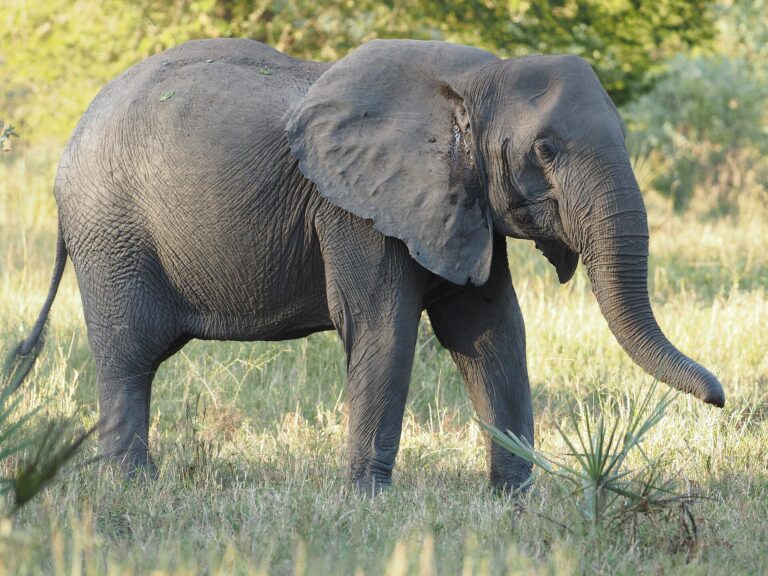
L’éléphant de forêt d’Afrique (Loxodonta cyclotis), by VIGNA christian, CC BY-SA 4.0, via Wikimedia Commons.
The African forest elephant (Loxodonta cyclotis) is the smaller, darker, rainforest-dwelling relative of the African bush elephant. It was treated as a subspecies for most of the twentieth century, was confirmed as a full species by genetic work, and in 2021 was assessed separately by the IUCN for the first time. It came out Critically Endangered.
How forest elephants differ from bush elephants
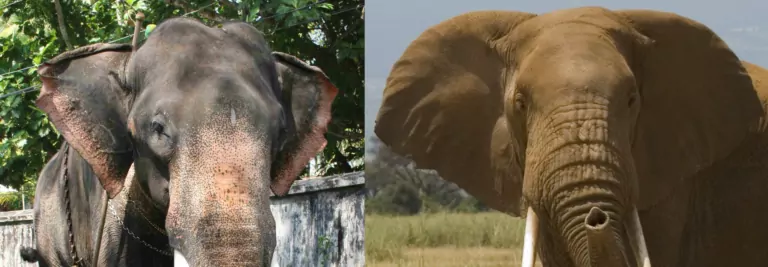
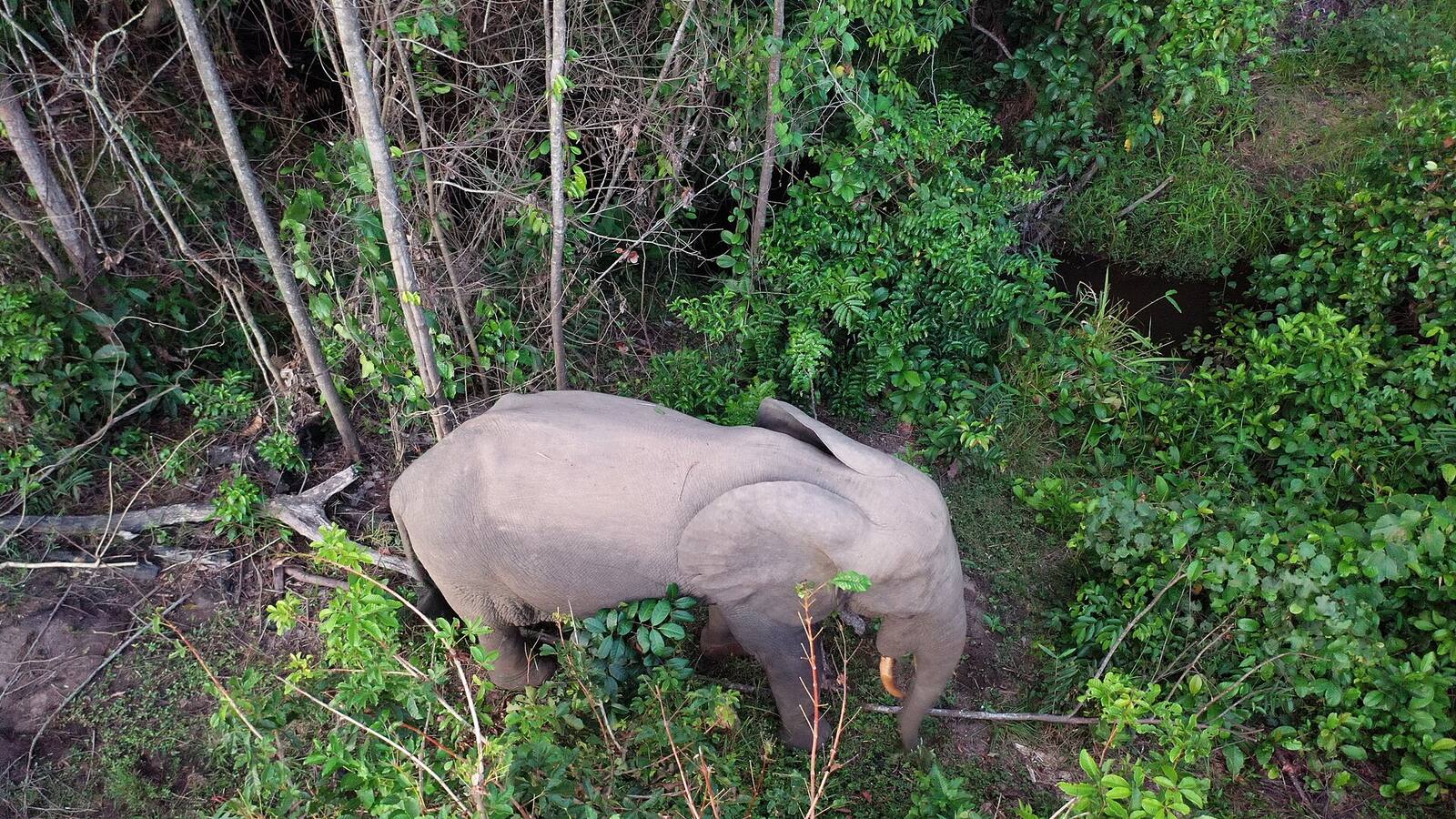
Forest elephants stand 2 to 2.5 m at the shoulder, roughly a metre shorter than a bush elephant. They are darker skinned, with rounder ears, and their tusks are straighter, harder and angled more steeply downward, which helps when the animal spends its life pushing through dense undergrowth. That harder, pinker ivory has always been prized by carvers, which is part of why the species was hit so hard.
The toenail count is the field guide giveaway: forest elephants have five on each front foot and four on each hind foot, where bush elephants have four in front and three behind. The two African species have been on separate evolutionary paths for something in the order of 2 to 7 million years.
Where they live
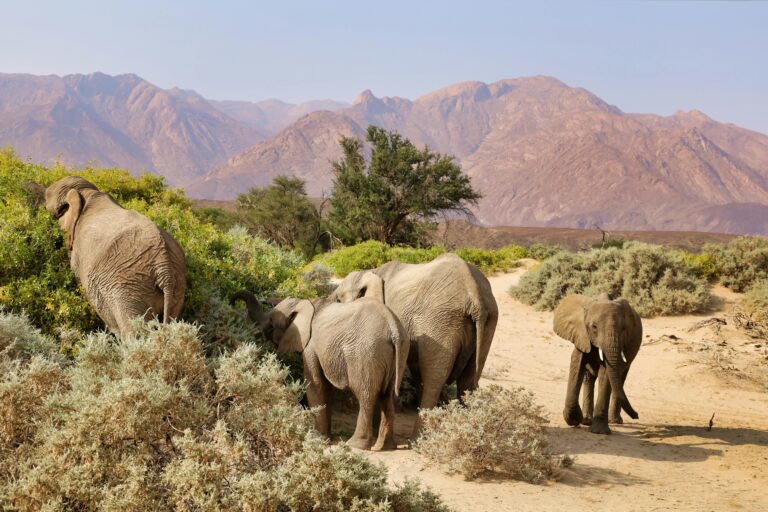
Forest elephants are restricted to the Congo Basin and a thin remnant of West African rainforest. Central Africa holds just under 95 percent of them. Gabon alone accounts for around two thirds of the world population, with the Republic of Congo holding roughly a fifth. Cameroon, the Central African Republic and the Democratic Republic of Congo make up most of the rest, and West Africa has about 5 percent.
They favour primary and old secondary rainforest, swamp forest and seasonally flooded ground. They gather at forest clearings, known as bais, to drink mineral-rich water and to socialise, which is the only reliable way to see or count them. The Dzanga clearing in the Central African Republic can hold well over a hundred elephants in a single day.
Critically Endangered status
The IUCN assessment recorded a decline of more than 86 percent over the 31 years to 2015. The worst of it fell in the 2010s ivory crisis, when organised poaching pushed deep into forests that had previously been protected mostly by being hard to reach. Minkébé National Park in Gabon is the extreme case: John Poulsen’s team calculated that more than 25,000 forest elephants were killed there between 2004 and 2014, a fall of 78 to 81 percent in a single park.
A 2025 reassessment using DNA-based survey methods put the number found at around 135,690 animals, higher than the previous working figure of under 100,000. That is better counting rather than recovery, and the species remains Critically Endangered.
Why forest elephants matter to the rainforest
Forest elephants are the main long-distance seed disperser for the big-fruited trees of the Congo Basin. Of eighteen tree species with megafaunal-syndrome fruit studied in Congo forest, fourteen were found to be elephant-dependent and not recruiting enough seedlings to replace themselves without them. Take out the elephant and those trees go into slow decline.
That has a measurable carbon cost. A 2019 study in Nature Geoscience estimated that losing forest elephants from central African forest would cut its aboveground carbon biomass by around 7 percent, because the trees the elephants disperse are the dense, slow-growing, carbon-heavy ones.
Conservation
Gabon is the conservation story of the last decade. The government militarised park protection, tightened ivory law, and held the line against clearing critical elephant range, and the result is that Gabon now holds most of the world’s remaining forest elephants. Elsewhere in the Congo Basin the picture is worse: selective logging opens access roads, bushmeat hunting removes everything reachable from them, and ivory poaching continues. WWF, the Wildlife Conservation Society, African Parks and Sabine Plattner African Charities run patrols and research across the main strongholds.
Read next
Elephant species guide, elephant conservation pillar, Sri Lankan elephant guide, Sumatran elephant guide.
Frequently asked questions
Is the African forest elephant a separate species?
Yes. Loxodonta cyclotis is recognised as a distinct species from Loxodonta africana, the African bush elephant, and the IUCN assessed the two separately for the first time in 2021. Genetic divergence between them is on the order of 2 to 7 million years.
How many African forest elephants are left?
The 2025 DNA-based assessment found around 135,690, with several thousand more in areas that were not systematically surveyed. The earlier working figure was under 100,000. The revision reflects better survey methods, not a recovering population.
What is the difference between a forest and a bush elephant?
Forest elephants are smaller (2 to 2.5 m at the shoulder against 3 to 4 m), darker, rounder-eared, with straighter and harder tusks, and five front toenails to the bush elephant’s four. They live in Central and West African rainforest rather than savanna.
Where can I see African forest elephants?
Dzanga-Sangha in the Central African Republic, Odzala-Kokoua in the Republic of Congo, and Loango in Gabon are the three most accessible sites. All of them are a commitment: forest elephant tourism is small-scale and logistically demanding.
Why is the African forest elephant Critically Endangered?
The 2010s ivory crisis hit the Congo Basin hard, and forest elephants cannot replace losses quickly. Females do not start breeding until around 23 and then calve every five to six years, which is slow even by elephant standards. Logging and plantation clearance add to it.
Test your knowledge
Think you have the species nailed down? Take the African Forest Elephant trivia quest: eight quick questions, instant answers, and a few facts even seasoned safari guides get wrong.
Elsewhere on We Love Elephants
- Elephant Species: Complete Guide to All Living Elephants 2026: The three living elephant species and their subspecies: taxonomy, range, diet.
- African Forest Elephant: Facts, Trivia & 8-Question Quest: The African forest elephant was recognised as its own species in 2021 and remains Critically Endangered.
- African Elephant Species Profile: Facts, Range, Conservation: Two species, not one.
- Elephants in the DRC: Forest Elephants of the Congo Basin: The DRC holds most of Central Africa’s forest and almost none of its forest elephants.