EEHV: The Herpesvirus That Kills Young Elephants
7 min read
A healthy elephant calf can go from playful to critically ill in a day or two. The usual cause is not an injury or a predator. It is a herpesvirus that most adult elephants appear to carry without trouble. The virus is called elephant endotheliotropic herpesvirus, or EEHV, and it is one of the most significant causes of death in young Asian elephants in human care.
Here is what researchers know about it, what they do not, and why the first vaccine results in 2026 caught so much attention.
What EEHV is
EEHV is a family of related herpesviruses that infect elephants. A 2016 review in the ILAR Journal describes a rapid-onset acute hemorrhagic disease, caused mainly by two closely related variants called EEHV1A and EEHV1B, that has killed more than 100 young captive and wild Asian elephants. The authors call the viruses “evidently ancient” and “likely nearly ubiquitous” in adult Asian elephants, where they cause no obvious illness and are occasionally shed in trunk wash secretions.
The name describes the damage. “Endotheliotropic” means the virus targets endothelial cells, the lining of blood vessels. When the disease takes hold, vessels leak and bleed. A 2019 study of Thai cases lists the signs vets watched for: lethargy, loss of appetite, fever (rectal temperature over 38°C), swelling of the face, neck and trunk, a blue or bleeding tongue, and diarrhea that can turn bloody (PLOS ONE, 2019).
There are at least seven genotypes. The 2019 paper reports that EEHV1A and EEHV1B are the ones most often found in calves with the acute disease. African elephants carry their own viruses, labelled EEHV2, 3, 6 and 7, found in lung and skin nodules or saliva. The ILAR review notes that only a handful of similar fatal cases have been seen in African elephants.
How the science got here
The history is short. According to the Thai survival study, the first herpesvirus report in an elephant dates to 1971, in an African elephant in Kruger National Park. A fatal haemorrhagic case in an Asian elephant was described in 1990 without a known cause. In 1999 researchers found EEHV1 DNA in a 16-month-old female calf, which identified an elephant-specific herpesvirus. By 2019 the same paper counted at least 90 lethal cases in calves worldwide over two decades.
Later work widened the picture. A 2011 study in Veterinary Microbiology described two more probosciviruses, EEHV5 and EEHV6, and noted that other elephant herpesviruses had turned up in eye and genital swabs of animals that showed no symptoms. Herpesviruses in elephants are common. Only some of them cause this disease.
Who it hits, and how fast
The risk sits with young animals. The 2026 vaccine paper says calves aged 1 to 8 years are most vulnerable, particularly after the antibodies they received from their mothers decline. The Thai study found a median age at first signs of 29 months.
The speed is the cruel part. That Thai study covered 58 confirmed cases between 2006 and 2018. In the 21 cases with complete timing data, the median survival time after clinical signs appeared was 36 hours. That leaves little room to diagnose and treat.
The death rates quoted for EEHV range from about 65 to over 85 percent. The table sets them side by side, with what each one counted. Last updated 9 November 2026. Download it as a CSV file.
| Source | Place and period | What was counted | Cases | Deaths | Fatality or share |
|---|---|---|---|---|---|
| Veterinary Microbiology (2011) | Worldwide, period not stated | Confirmed EEHV disease cases, mostly juvenile Asian elephants | More than 60 | Not given | 85% (abstract); “over 85%” (text) |
| ILAR Journal (2016) | Worldwide, published 2016 | Deaths only. 29 lethal cases in North American calves and some 28 in Europe are also listed | Not given | More than 100 | Not given |
| PLOS ONE (2019) | Thailand, January 2006 to August 2018 | All confirmed cases | 58 | 40 | 68.97% |
| Veterinary Quarterly (2021) | Thailand, January 2006 to December 2019 | 103 PCR-confirmed cases, of which 91 had clinical signs and were counted | 91 | 60 | 66% (EEHV1&4 co-infection 100%, EEHV1B 83%, EEHV1A 75%, EEHV4 40%) |
| Journal of Zoo and Aquarium Research (2021) | Europe, elephants born 1985 to 2017, followed for up to eight years | Share of deaths caused by EEHV. This is not a fatality rate | Not applicable | 44 deaths from all causes | 57% of those deaths were EEHV |
| Journal of Virology (2026) | Juvenile Asian elephants; European and North American institutions in the introduction | Reported fatality rate of infected juveniles | Not given | Not given | 65% |
The rates differ because they count different things. The 2011 figure is an early worldwide tally of confirmed cases. The two Thai series count confirmed cases, and the 2021 paper counts only those with clinical signs, 60 deaths in 91 cases. The European figure is a different measure entirely: EEHV caused 57 percent of deaths among elephants up to eight years old, which says how much of calf mortality it accounts for and nothing about how many sick calves die. The 2026 paper gives a single rate of about 65 percent, for infected juvenile Asian elephants, and does not give a case count. Rates also vary by subtype in the 2021 Thai series, from 83 percent for EEHV1B and 75 percent for EEHV1A to 40 percent for EEHV4. They agree on the main point: once a calf is sick, the disease is often fatal.
The ILAR review adds a second number from a different angle. It estimates that about 20 percent of Asian elephant calves appear to be susceptible when their first infection is not controlled by a normal immune response. Nobody yet knows why some calves are.
Sporadic, not an epidemic
EEHV sounds like something that should sweep through a herd. The evidence says otherwise. The ILAR review reports that gene typing gave “unambiguous evidence” of a sporadic rather than epidemic disease, and that it is not being spread between zoos or other facilities. Each case looks like a calf meeting a virus that was already around, rather than one animal infecting the next.
Where calves are kept matters for how this plays out. In Thailand, most cases were in the north, where most of the country’s captive elephants live. For background on that country’s herds, see our guide to elephants in Thailand, and for the wider picture of managed animals, captive Asian elephants and welfare.
Testing and treatment
Because the window is so short, the key tool is early detection. The ILAR review says sensitive PCR blood tests exist and routine monitoring has been set up. A study of five elephants that survived the virus found it in blood before the animals looked ill: in the three that became unwell, peak viral loads came 3 to 8 days after the first clinical signs (Journal of Zoo and Wildlife Medicine, 2013). Two other elephants had virus in the blood for 7 to 21 days and never showed signs. Virus in trunk washes peaked about 21 days after the blood infection.
That is why the Thai authors advise starting treatment before clinical signs appear. Their analysis found that elephants given medical procedures, and those given the antiviral drug acyclovir, had a lower risk of death than those that were not. That rests on only about 20 cases with complete data, and some elephants given intensive care still died. The 2026 paper is blunt about the state of care: supportive treatment with fluids, plasma and human anti-herpesvirus drugs is “not consistently effective.”
The first mRNA vaccine trial
The 2026 study in the Journal of Virology is the reason EEHV is back in the news. Researchers built an mRNA vaccine aimed at four proteins the virus uses to attach to and enter cells (gB, gH, gL and gO). They tested it in mice first, then in nine Asian elephants: three that already carried antibodies and six that did not.
Each elephant received up to four 400 microgram injections three weeks apart, and blood samples were taken through day 192. Elephants with prior exposure showed a boosted antibody response to all four proteins. The unexposed animals responded well to gH and gL, with more variable results for gB and gO. Antibody levels stayed raised up to 192 days in the animals that had prior exposure. In some unexposed elephants, antibodies against the combined gH/gL/gO complex reached up to half the level seen in adult elephants that had lived with the virus.
The paper also points to a companion case report in which two vaccinated elephants from the same group survived a later natural EEHV1A infection without developing hemorrhagic disease.
Be careful with that last point. Two animals are a case report, not proof. The trial measured immune responses, and it was small. The authors describe it as a step toward an effective vaccine, not a finished one, and the vaccine targets EEHV1A specifically.
What is still unknown
- Why roughly one calf in five appears susceptible while others clear the infection.
- Whether a vaccine will protect against other EEHV types. The authors call mRNA a platform that could be adapted for other subtypes, which remains to be shown.
- How many wild calves are affected. The 2026 paper says over 100 cases have been documented in semi-captive and wild populations across Asia. The ILAR review says more than 100 young captive and wild Asian elephants have died. These counts cover different groups, overlap in ways the papers do not spell out, and cannot be added together.
The ILAR review also notes that researchers had not yet managed to grow EEHV in cell culture, which has slowed basic research. Keep that in mind when reading confident claims about the disease.
Related: our look at how elephant calves are raised after losing their mothers is in how the David Sheldrick Wildlife Trust raises orphan elephants.
If you work with elephants, or have followed an EEHV case, add what you know in the comments.
Sources
- Review of Elephant Endotheliotropic Herpesviruses and Acute Hemorrhagic Disease (ILAR Journal, Oxford University Press, 2016)
- Survival analysis of confirmed elephant endotheliotropic herpes virus cases in Thailand from 2006 to 2018 (PLOS ONE, 2019)
- Detection and evaluation of novel herpesviruses in routine and pathological samples from Asian and African elephants (Veterinary Microbiology, Elsevier, 2011)
- Kinetics of viral loads and genotypic analysis of EEHV1 infection in captive Asian elephants (Journal of Zoo and Wildlife Medicine, 2013)
- Evaluation of a multiantigen mRNA vaccine against EEHV1A in Asian elephants (Journal of Virology, American Society for Microbiology, 2026)
- Clinical characteristics of EEHV cases in Asian elephants in Thailand during 2006 to 2019 (Veterinary Quarterly, 2021)
- Quantification and risk factor analysis of EEHV haemorrhagic disease fatalities in Asian elephants in Europe, 1985 to 2017 (Journal of Zoo and Aquarium Research, 2021)
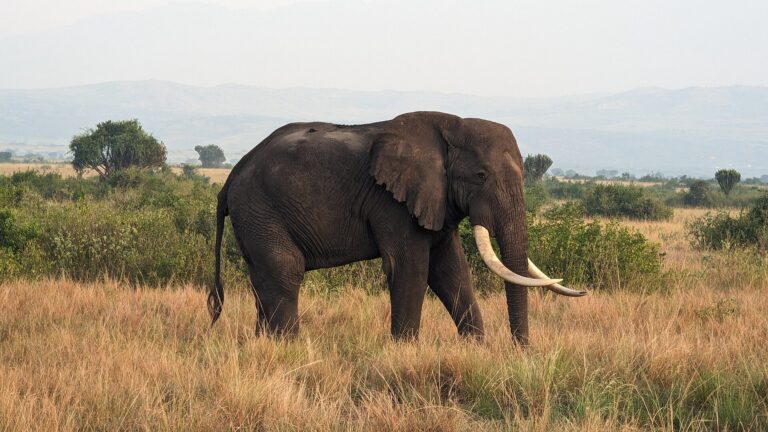
Photo: Panchalmaulik01, CC BY 4.0, via commons.wikimedia.org.
Updated 9 November 2026: added a side by side table of the published EEHV fatality figures with sources and a CSV download, and clarified the 36 hour survival figure.