Elephants as Seed Dispersers: How They Plant Forests
6 min read
Elephants eat fruit, walk for days, and drop the seeds in a pile of dung far from the tree that grew them. Biologists call that seed dispersal, and elephants do it on a scale no other living animal matches. In the forests of central Africa, some trees appear to depend on them for it almost entirely.
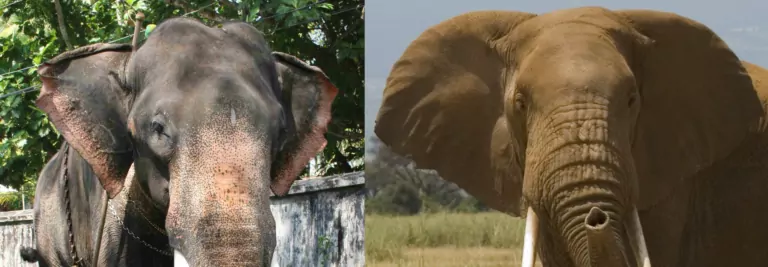
Of the three living species, the African forest elephant eats the most fruit, followed by the Asian elephant and then the African savanna elephant, also called the African bush elephant. That ranking comes from a 2011 review by Ahimsa Campos-Arceiz and Stephen Blake in Acta Oecologica, titled Megagardeners of the forest. It is the best single summary of the subject, and most of what follows leans on it.
How a seed travels inside an elephant
The clearest field study comes from the Ndoki Forest in northern Congo. Blake and colleagues picked through 855 elephant dung piles and tracked collared elephants by GPS. Their paper, Forest Elephants: Tree Planters of the Congo, was published in Biotropica in 2009. It found that forest elephants disperse more intact seeds than any other large vertebrate in African forests.
Timing matters as much as appetite. According to Mongabay’s report on the study, small seeds passed through an elephant in about 24 hours, while the largest took up to 72 hours. In that time the tracked elephants moved as far as 24 kilometres in a day and 57 kilometres in 72 hours. The review gives the figures. An estimated 88 percent of seeds were carried more than 1 kilometre from the parent tree, 14 percent of large seeds went more than 10 kilometres, and the longest recorded trip was 57 kilometres.
For comparison, the same reporting says that 57 kilometres was eight times the distance large hornbills spread seeds. All the primate species in the forest combined carried seeds of 125 plant species, only 29 more than the 96 species found in elephant dung. The researchers left out seeds under one centimetre, so the true count of seeds moved is far higher.
The movement is not random. In Nouabalé-Ndoki National Park, elephants walk in straight lines between large fruiting trees on permanent trails, and trail density rises with the density of trees whose fruit they eat. In Kibale, every adult Balanites wilsoniana tree was found to be linked by a network of elephant trails. Savanna elephants follow regular routes to their favourite food too.
Which plants rely on elephants
Campos-Arceiz and Blake compiled every record they could find of plants whose fruit elephants eat or whose seeds they disperse. The total came to 451 species. African elephants disperse at least 335 of them and Asian elephants 122, and the authors expected the Asian list to grow as more studies are done. Figs are the most common genus on the list, with 15 species.
A smaller group of plants seems to have few or no other partners. The review lists these obligate cases, all of them in Africa:
- Balanites wilsoniana, studied in Kibale National Park, Uganda, where savanna elephants eat the fruit. There, 57 percent of seeds that passed through an elephant germinated, against 3 percent of seeds collected under the parent tree.
- Sacoglottis gabonensis, recorded as elephant dependent at Lopé in Gabon.
- Panda oleosa, Irvingia gabonensis, Omphalocarpum elatum and Detarium macrocarpum, among the species Blake’s team found dispersed only or mainly by elephants in Ndoki.
- About 30 species in Taï National Park, Ivory Coast, named in a 1978 study as known to be dispersed only by elephants. The review doubts elephants are the sole disperser for all of them.
Blake’s Ndoki list ran to 13 species, but he later told Mongabay that the estimate was probably too high. It is a useful reminder that “only elephants eat this” is hard to prove. Absence of another disperser in one study does not mean none exists.
Dung as a seedbed
A seed that leaves an elephant lands inside a moist, fertilised mass that can shield it from predators and feed the seedling. The evidence on whether this helps germination is mixed. One study of marula (Sclerocarya caffra) in Zambia found that seeds placed in elephant dung germinated at three times the rate of seeds planted straight into soil. Another, testing 14 plants, found no difference in overall germination, though seeds in dung tended to sprout sooner.
The review sums it up carefully: dung seems to have a neutral or positive effect, and gut passage through African elephants generally raised the chance of germination. In Asian elephant studies the effect was milder, sometimes positive, sometimes negative and often neutral. The authors suggest this reflects which plants were studied, since the African work often looked at elephant specialists.
There is a cost too. Elephants can drop thousands of seeds in a single pile, so seedlings may compete with each other. In forest clearings in the Republic of Congo, sitatungas and red river hogs were seen foraging in elephant dung, and researchers assumed they were eating the seeds.
Asian elephants: shorter trips, fewer trees
The Asian elephant is a less studied seed disperser. Its dung contains seeds less often, and it disperses almost five times fewer tree species than the African forest elephant, according to the review. In the moist forests of Khao Yai, Thailand, only 21 percent of dung piles held any seeds.
Distances are shorter as well. Movement data from three elephants in south-eastern Sri Lanka and three in central Myanmar gave mean dispersal distances of 1 to 2 kilometres and a maximum of 6 kilometres. That is still farther than most other animals in those forests move seeds. Campos-Arceiz told Mongabay that 57 percent of seeds in that study travelled more than a kilometre from the mother plant.
He also said there is no well documented case in Asia of a plant that only elephants disperse. He links the lower fruit intake to the forests themselves: many Asian forests are dominated by dipterocarp trees that fruit in irregular mass events, so fruit is scarce for much of the time. The review names Palmyra palm (Borassus flabellifer), wood apple (Feronia limonia) and several wild mangoes as Asian plants that might rely on elephants as their main animal disperser.
What happens when elephants disappear
The Ndoki study mapped 5,667 trees and found that how a species is dispersed predicts how its trees are spread out. Elephant dispersed species were less clustered at short range than other trees. The authors warned that losing forest elephants could lead to recruitment failure in animal dispersed trees and shift forests toward species dispersed by wind or water. They describe this as a likely outcome, not one already measured.
A later study tested the idea where elephants were almost gone. At the LuiKotale research site in the Democratic Republic of the Congo, forest elephants are close to extinction. David Beaune and colleagues followed 18 tree species with fruit suited to large animals from 2009 to 2011. Their paper, Doom of the elephant-dependent trees in a Congo tropical forest, found that 14 of the 18 were elephant dependent and were not recruiting enough young trees to replace themselves. For 12 of them, the youngest age class was missing from the study plots, and for most there was no alternative disperser.
Other large fruit eaters, such as primates, would keep moving the seeds of many elephant dispersed plants. The review is clear that the specialists would not be dispersed well, and that hunting tends to remove the other large animals at the same time. In savannas, giraffe, black rhino and ostriches might partly fill the gap.
Why this matters for conservation
These are not secure animals. In 2021 the IUCN listed the African forest elephant as Critically Endangered and the African savanna elephant as Endangered. Forest elephant numbers fell by more than 86 percent over 31 years, and savanna elephants by at least 60 percent over 50 years.
A count of elephants tells you how many animals are left. The seed dispersal work adds a second question: which trees are still being planted. Where forest elephants vanish, the forest does not fall the next year. It changes slowly, as the trees that need elephants stop producing a new generation. Keeping elephants in these forests keeps that process running, which is a strong argument for the habitat protection covered in our elephant conservation guide.
Have you seen elephant dung sprouting seedlings on a trip, or read a study on a plant I missed? Add it in the comments.
Sources
- Blake, S. et al. (2009). Forest Elephants: Tree Planters of the Congo. Biotropica 41(4), University of Stirling repository
- Mongabay (2009). Vanishing forest elephants are the Congo’s greatest cultivators
- Campos-Arceiz, A. and Blake, S. (2011). Megagardeners of the forest: the role of elephants in seed dispersal. Acta Oecologica 37
- Mongabay (2011). Elephants: the gardeners of Asia’s and Africa’s forests
- Beaune, D. et al. (2013). Doom of the elephant-dependent trees in a Congo tropical forest. Forest Ecology and Management 295, University of Konstanz repository
- IUCN (2021). African elephant species now Endangered and Critically Endangered