

Facial Nucleus Neurons in Elephants
Last updated: October 27, 2026
4 min read
Elephants have more facial nucleus neurons than any other land mammal, and African elephants have roughly 17 percent more of them than their Asian relatives. That finding comes from a 2022 study published in Science Advances, and it gives a precise, physical explanation for something elephant watchers have long noticed: African and Asian elephants do not just look different, their faces and trunks are wired differently in the brain.
What is the facial nucleus?
The facial nucleus is a cluster of neurons in the brainstem that controls the muscles of the face. In an elephant, those muscles run the ears, the lips and, above all, the trunk. The trunk is a boneless organ built from about 90,000 small muscle bundles (a 2023 microCT study published in Current Biology), and every coordinated movement of it, from delicately picking a single leaf to spraying water, is signalled through the facial nucleus. Counting the neurons there is therefore a fairly direct measure of how much fine motor control an animal devotes to its face.
How the study was done
The work was done by a Berlin-based team from Humboldt University and the Leibniz Institute for Zoo and Wildlife Research. They examined the brains of elephants that had died naturally or been euthanised in zoos, so no animal was harmed for the research. The sample was small, as it inevitably is with elephant brains, and it compared African savanna elephants against Asian elephants. The smaller African forest elephant was left out, keeping the comparison between two well-defined groups.
The headline numbers were clear. African savanna elephants carried around 63,000 facial nucleus neurons, Asian elephants around 54,000. Both figures are far above other measured land mammals and about six to nine times published human counts of 7,000 to 9,000.
Reason one: those enormous ears
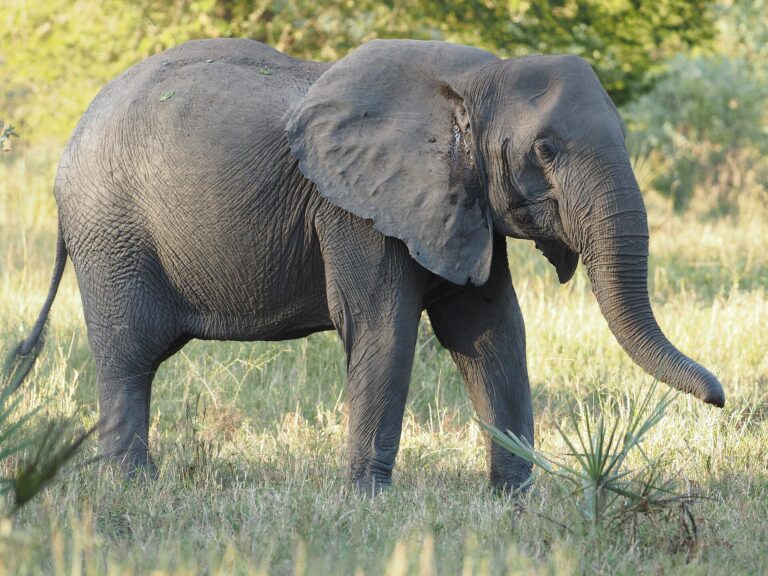
The first explanation for the gap is the ear. African elephants have famously large ears and they use them constantly. They flap them to shed heat, because the thin skin and dense network of blood vessels turns each ear into a radiator. They also raise and spread them wide to look larger when threatened or charging. All of that movement needs motor neurons. The study found that African elephants had more neurons in the medial part of the facial nucleus, the part that controls the ears. Asian elephants, with smaller ears that do not flare during a charge, need fewer.
Reason two: two trunk tips versus one
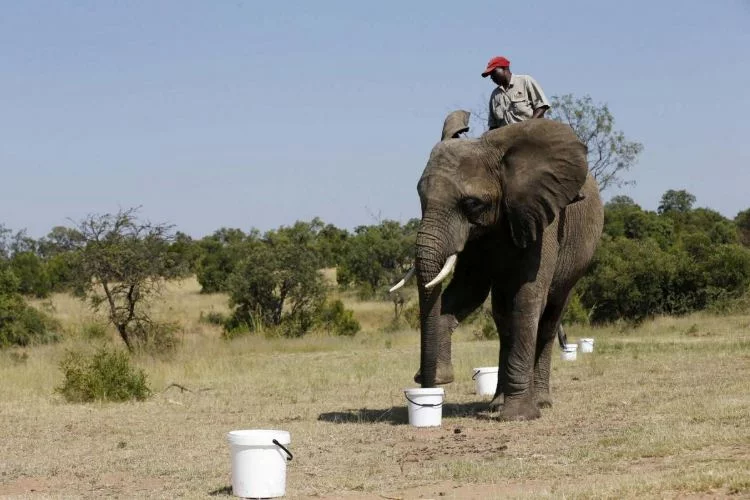
The second explanation is the more interesting, and it comes down to a single anatomical detail at the tip of the trunk. African elephants have two finger-like projections, a dorsal and a ventral finger, at the end of the trunk. They use these to pinch objects, picking up something small the way a person might use thumb and forefinger. Asian elephants have one, so they rely on a different strategy: wrapping or curling a greater length of trunk around an object to grasp it.
Pinching is a more precise action than wrapping, and precision is expensive in neural terms. The study found the parts of the facial nucleus representing the trunk were unusually elongated and packed with neurons, and that neuron size increased along the nucleus from the proximal to the distal end. The largest cells sat at the far end, sending very long axons out to the muscles at the trunk tip.
The trunk: muscle without bone
To appreciate why the facial nucleus is so large, it helps to picture what the trunk actually is. It is a muscular hydrostat: a structure made almost entirely of muscle with no skeleton inside it, the same engineering principle as an octopus arm or the human tongue. Because there are no joints, the trunk can bend, twist, stretch and stiffen at any point along its length. That freedom is powerful and it is also hard to control, since there is no bone to constrain or stabilise the movement. Every position has to be held by muscle alone. The tens of thousands of facial nucleus neurons are the price of steering an organ with that many degrees of freedom, and it explains why the trunk tip, the part doing the most delicate work, claims such a large share of the wiring.
Where elephants sit among brainy animals
Both elephant species are remarkable here. With 54,000 to 63,000 facial nucleus neurons, they outclass every other land mammal by a wide margin. The one group known to beat them is the dolphins, at around 85,000 in the same nucleus, devoted largely to producing sound for echolocation and communication.
This is a useful reminder that intelligence in the animal world is not one single thing. An elephant is not investing those tens of thousands of neurons in abstract reasoning: it is investing them in exquisite physical control of a trunk that serves as nose, hand, hose, snorkel and tool all at once. The brain is shaped by what the body needs to do.
Why this small study matters
The sample is small and the authors are upfront about that. But the result is consistent, biologically logical, and sits on top of decades of earlier neuron-count work. It turns a vague observation, that African elephants seem more handy with their trunks, into a measured difference of roughly 9,000 neurons. That is the kind of fact that changes how you watch an elephant. Next time you see one delicately pluck a single blade of grass, you are watching one of the most heavily wired faces in the animal kingdom at work. For a fuller picture of the species, see our species profile of the African elephant.
Also worth reading
- 100 Elephant Facts: Everything to Know About Earth’s Largest Land Animal: Our master elephant fact sheet: anatomy, cognition, matriarchal society, infrasound, the trunk, tusks and ivory, diet.
- Inside the Elephant Trunk: 90,000 Muscle Bundles and What They Do: No bones, about 90,000 muscle bundles, and the best nose on land.
- Asian Elephant vs African Elephant: Side-by-Side Comparison: Ears, tusks, trunk tips, back profile, size and conservation status compared across the Asian elephant and the two African species.
- Elephants and Water: Swimming, Drinking, and Trunks as Snorkels: How elephants drink, why they float, what the trunk-as-snorkel actually requires of the chest, and what the record really says about how far an elephant can swim.
Updated 14 September 2026: corrected the human facial-neuron comparison.
Updated 27 October 2026: corrected the trunk muscle count to the 2023 microCT figure of about 90,000 fascicles.



any chance of a follow-up on the methodology? four-and-four sample size with no forest elephants in the comparison is a thin study. counting neurons via post-mortem brain analysis is notoriously variable across labs too, the 63,000 vs 54,000 figure is specific enough to imply more precision than this kind of work usually allows. would love to know how they handled blinding.
the trunk anatomy figures are wild, about 90,000 muscle bundles is the kind of number that does not feel real until you stand next to a bull at close range. African using the trunk like a hand with dorsal and ventral fingers vs Asian wrapping the whole trunk is a behavioural difference I had noticed but never connected to neuron count. nice piece.
going to read this with my partner this weekend, we usually do a documentary plus a long article and this fits the format. the 15 percent more facial nucleus in african elephants explains the ear behaviour i kept noticing on safari, the erect-when-charging move is so specific.