

Elephants in Chad: Zakouma’s Recovery Story
Last updated: October 14, 2026
4 min read
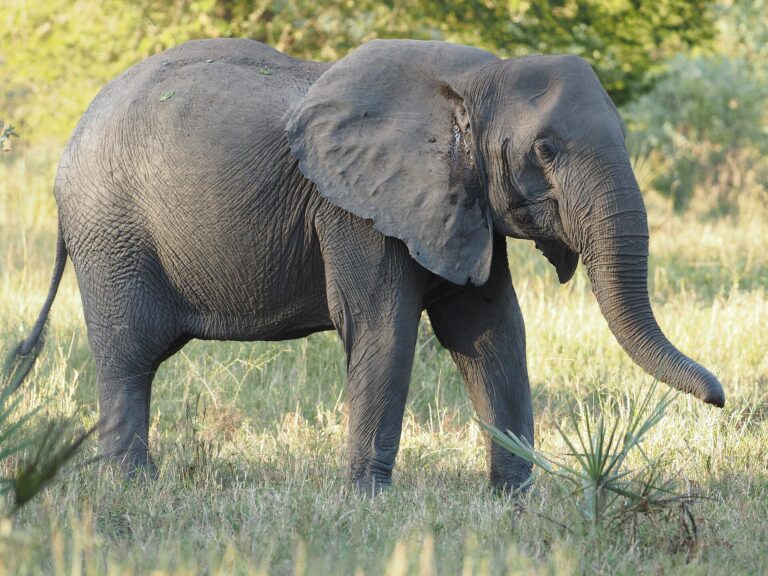
Elephant du parc national de Zakouma, by YACOUB DOUNGOUS, CC BY-SA 4.0, via Wikimedia Commons.
Chad’s elephants are concentrated in Zakouma National Park in the south, and Zakouma is the site of one of the best-documented elephant recoveries anywhere on the African continent. It is also the reason Chad is worth a page at all: the country is not a major range state by numbers, but it is a major one by what it proved.
Where they live
Zakouma National Park, in the southern savannah-woodland zone, holds the overwhelming majority. The park has been managed by African Parks under an agreement with the Chadian government since 2010.
Greater Mayo Kebbi, in the south-west along the Cameroon border, holds a smaller population.
The Ennedi and Tibesti massifs in the northern desert are reported to hold a few remnant animals. We have not found a recent formal survey for either, and anyone quoting a firm number for them is guessing.
The Zakouma crisis
Zakouma held around 4,000 elephants in the early 2000s. By 2010 poaching, much of it carried out by armed groups crossing from Sudan, had cut that to roughly 450. That is close to a 90 percent loss in under a decade. The killings were organised on a scale that had nothing in common with subsistence poaching, and the 2006 massacre inside the park became one of the defining incidents of the period.
Chad handed management to African Parks in 2010. The first job was simply to stop the bleeding: anti-poaching patrols, an intelligence network in surrounding communities, and management of the surviving animals, which by then had aggregated into a single large herd that was easier to guard than a scattered population.
The recovery
Poaching inside Zakouma fell to near zero and stayed there. African Parks reports the park now holds around 800 elephants, up from that low of roughly 450, with a high proportion of juveniles and calves in the population. That age structure is the part that matters. A population can be stable on paper and still be dying out if nothing is being born; a herd with a lot of calves in it is one that has resumed breeding normally after years of stress.
A second signal is behavioural. After a decade without poaching, Zakouma’s elephants have started moving outside the park boundary again during the wet season, which is what an unpersecuted population does and what a hunted one stops doing.
The same management model has been applied by African Parks at other reserves, including Akagera in Rwanda and Liwonde in Malawi.
Threats specific to Chad
Cross-border poaching from Sudan was the defining threat through the 2000s and early 2010s, and it has been largely contained inside Zakouma since the management transfer. The current pressures are quieter ones.
The first is human-elephant conflict at the park boundary. The dry-season aggregation that makes the elephants easy to protect also makes them highly visible to the farming communities around the park, and seasonal crop-raid friction follows.
The second is regional instability. The civil war that broke out in Sudan in 2023 has produced renewed armed-group activity along the Chad-Sudan border, which is the same direction the original poaching came from. The northern desert herds face the wider Sahel insecurity affecting neighbouring countries, plus desertification.
Best time to visit
The dry season, roughly February to April, is the only practical window. That is also when the elephants aggregate into one large herd of several hundred animals, which produces some of the most concentrated elephant viewing in Africa.
Visiting Zakouma
Chad’s tourism is small and specialised, which is itself a kind of protection. Zakouma is realistically the only destination.
- Camp Nomade, the dry-season seasonal camp run directly by African Parks and limited to small groups, is the premier option, with revenue going into park operations and community programmes.
- Tinga Camp is the cheaper option inside the park.
- A handful of specialist operators run small-group Chad itineraries that combine Zakouma with the Ennedi rock-art sites. Check what proportion of your fee reaches the park before booking.
Frequently asked questions
How many elephants are in Zakouma?
Around 800, according to African Parks, up from a low of roughly 450 in 2010.
What happened to Zakouma’s elephants in the 2000s?
Organised poaching, much of it from armed groups crossing from Sudan, killed close to 90 percent of the herd between the early 2000s and 2010. The population fell from around 4,000 to around 450.
Has the population recovered?
Partly. It has roughly doubled from the low point and is breeding normally again, but it is nowhere near the pre-crisis figure. Elephants recover slowly: a cow produces one calf every four to five years after a 22-month pregnancy.
Who manages Zakouma?
African Parks, under a management agreement with the government of Chad signed in 2010.
Can I visit?
Yes, during the February to April dry season, when the elephants aggregate into a single large herd.
We have kept the numbers on this page to what African Parks publishes. Chad’s elephants outside Zakouma are poorly documented and we would rather say so than invent a national total. If you have survey data for Mayo Kebbi, Ennedi or Tibesti, leave a comment and we will update the page.
Read next
More about elephants
- Elephant Conservation 2026: How to Save the Last Giants: Poaching trends, the 1989 ivory ban, the zoo and sanctuary debate, trophy hunting.
- Elephants in Rwanda: Akagera’s Reintroduced Herd: Every elephant in Rwanda descends from 26 young animals moved to Akagera in 1975.
- Elephants in Cameroon: Forest and Savannah, Both Endangered: What the surveys actually show for Cameroon’s forest and savannah elephants, and what happened at Bouba Ndjida in 2012.
- Elephants in Tanzania: Selous, Ruaha, and the 2010s Crisis: Tanzania lost 65,721 elephants in five years and has since stabilised at around 60,000.


Zakouma’s recovery under African Parks is genuinely one of the best conservation stories of the last 20 years. From 4,000 down to under 500 by 2010, now 700+ and stable. The model is now being replicated in CAR and Rwanda.