What Elephants Eat: Daily Intake and Why Only 44% Counts
4 min read
An elephant spends most of its waking life eating. The Smithsonian’s National Zoo says Asian elephants spend about three-quarters of each day eating or moving toward food or water. Animal Diversity Web puts the time spent searching for and eating food at 12 to 18 hours a day.
The reason is simple arithmetic. A very large animal needs a lot of fuel, and elephants get less out of each mouthful than you might expect. This post follows the plant matter from trunk to dung: what goes in, how much, and why the menu changes with the seasons.
What elephants eat
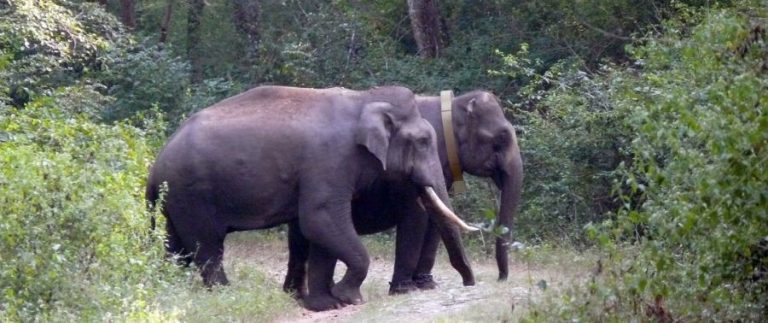
Elephants are herbivores with a wide menu. According to Animal Diversity Web, African elephants eat tree foliage, fruits, herbs and grasses, plus wood in the form of roots, twigs and bark. The National Zoo describes Asian elephants as feeding mainly on grasses, but taking large amounts of browse as well: leaves, roots, vines, twigs, shoots and bark, along with fruit.
Browse means the leaves and woody parts of trees and shrubs. Grass is the other half of the plate. An elephant is both a browser and a grazer, and which one it leans on depends on where it lives and what time of year it is.
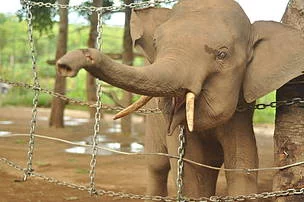
The tusks help with the menu. The National Zoo lists their jobs as digging for water, salt, minerals and roots, and debarking trees. Animal Diversity Web adds that African elephants will overturn a tree to reach bark or roots. If you want the anatomy of the tool that does the picking, the elephant trunk guide covers it in detail.
How much an elephant eats in a day
Sources give different figures, and the gap is worth stating plainly. They are not measuring the same animals, and the amount shifts with body size, season and food quality.
- The National Zoo gives about 165 to 330 pounds (74 to 150 kilograms) of food per day for wild elephants.
- The African Wildlife Foundation says an elephant can eat up to 136 kilograms (300 pounds) in one day.
- Animal Diversity Web says Asian elephants eat 10 percent of their body mass daily.
A fair summary is roughly 75 to 150 kilograms of plants a day for an adult, going by the National Zoo range.
Water goes with it. The National Zoo and Animal Diversity Web both give about 50 gallons a day. The African Wildlife Foundation gives 113 to 190 liters (30 to 50 gallons). Our guide to how elephants drink, dig and bathe shows how they find it.
Why only 44 percent counts
Here is the part that surprises people. The National Zoo states that elephants only assimilate about 44 percent of what they eat. More than half of every meal passes through without being absorbed.
The gut design explains part of it. The Wikipedia entry on the African elephant notes that fermentation takes place in the hindgut, which allows large food intakes and lets the animal handle fibrous stems, bark and roots. This is a trade. A hindgut fermenter processes food quickly and in bulk, rather than extracting every last bit slowly. Elephants take the bulk option.
Bark shows the limit. Animal Diversity Web says an African elephant gets fibre from chewing bark but does not digest the bark itself. The material moves through and comes out the other end, still full of plant fragments and seeds. I have not found a source that measures how much of that bark is useful, so I will not guess. What the sources do support is that it is bulk and fibre rather than a rich meal.
Wet season, dry season
Animal Diversity Web describes a seasonal pattern for African elephants. In the wet seasons they are more particular about what they eat, and more likely to forage on grasses. In the dry seasons, when food is scarce, they become more flexible. The same page says that in both seasons they pick foods that are high in nutritional content. The Wikipedia entry reports a similar swing: a wide diet overall, with woody vegetation taking a larger share in the dry season.
That flexibility is a survival tool. When the grass dies back, a tree that an elephant can push over still holds leaves, twigs and bark.
Teeth set the clock
All this chewing wears the teeth down. Animal Diversity Web notes that once the sixth set of molars is worn out, there are no further replacements and the elephant cannot process forage. The full story of the six molars is on its own page. Diet and tooth wear are linked: the tougher the food, the faster the clock runs.
Food, crops and conflict
An animal that eats this much will eventually meet farmland. The National Zoo points out that bananas and sugar cane are favoured foods, which puts elephants in conflict with farmers. It also warns that foraging herds can be very destructive to crops and forest, because they push down large trees to reach foliage and bark.
Crops are a food source like any other, and the sources name bananas and sugar cane as favourites. That does not excuse the damage to a family’s harvest, and it does not make the elephant a villain either. It is a very large stomach looking for a reliable meal.
What the sources do not settle
The daily intake figures come from zoo and conservation summaries, and they differ. I could not find a single agreed number for wild African elephants by season. If you know of a field study that measures it directly, I would like to read it.
Tell me in the comments what you have seen elephants eating, in the wild or in a good sanctuary. The odd foods are the ones I enjoy hearing about.
Sources
- Asian elephant, Smithsonian’s National Zoo and Conservation Biology Institute
- African elephant (Loxodonta africana), Animal Diversity Web, University of Michigan Museum of Zoology
- Asian elephant (Elephas maximus), Animal Diversity Web, University of Michigan Museum of Zoology
- Elephant, African Wildlife Foundation
- African elephant, Wikipedia
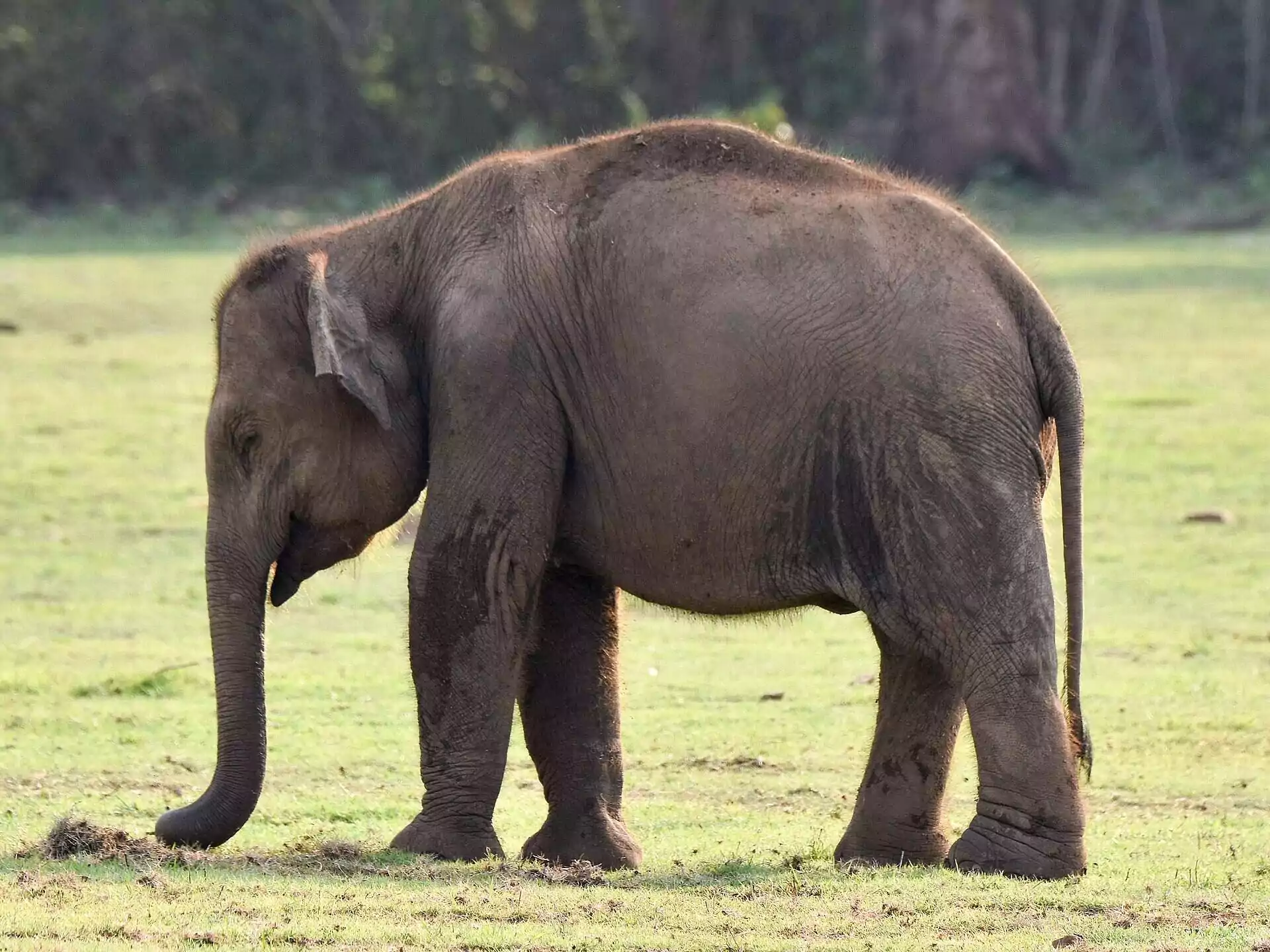
Photo: Timothy A. Gonsalves, CC BY-SA 4.0, via commons.wikimedia.org.